Graphic Standards Manual 2025 - 2026
Intro
For more than 100 years, Raymond has built a reputation based on top-notch quality, rugged reliability and exceptional customer service. We design and build the best lift trucks in the business. We provide technologies, systems and solutions that bring day-to-day warehouse and distribution operations to a new level of performance. And we support customers with a network of skilled service unmatched in the industry.
Our brand identity is the graphic expression of our reputation in these areas. The Raymond logotype and related brand elements, when used consistently, will create a unique, memorable impression in the marketplace and help Raymond distinguish itself from its competitors.
This manual provides guidance on how to present the Raymond brand image in a clear and consistent manner, helping to ensure that our reputation for the highest quality continues to grow.
Brand Identity
Visual Guide
Typography
Logo
Brand Colors
Visuals
Brand Guide
Events
Building Signage
Templates
Registration/Trademarks
Contact Us
Campaigns
Brand and Design:
Chrissy Wickham
607 656 2572
chrissy.wickham@raymondcorp.com
Amy McDermott
607 656 2415
amy.mcdermott@raymondcorp.com
Brand Marketing:
Megan Friedel
607 875 4686
megan.friedel@raymondcorp.com
Solutions and Support Center Liaison:
Meagan Cavanaugh
607 349 0818
meagan.Cavanaugh@raymondcorp.com
Tradeshow & Events:
Liz Buza
607 656 2734
elizabeth.buza@raymondcorp.com
Public Relations:
View the Team
Trademarks
Contact us
< Back to Home
The Raymond logotype is the corporation’s primary identifier and is the focal point of our brand identity program.
Logo Types
Variations of the Raymond logo have been developed based on a consistent foundation, all adhering to the established Raymond brand guidelines.
Raymond Brand
Raymond ILS Tagline
Sub-Brands
Sub-Brand Text
Logo Spacing
There are variations of the Raymond logo which are built around the same foundations which all stay in line with Raymond guidelines.
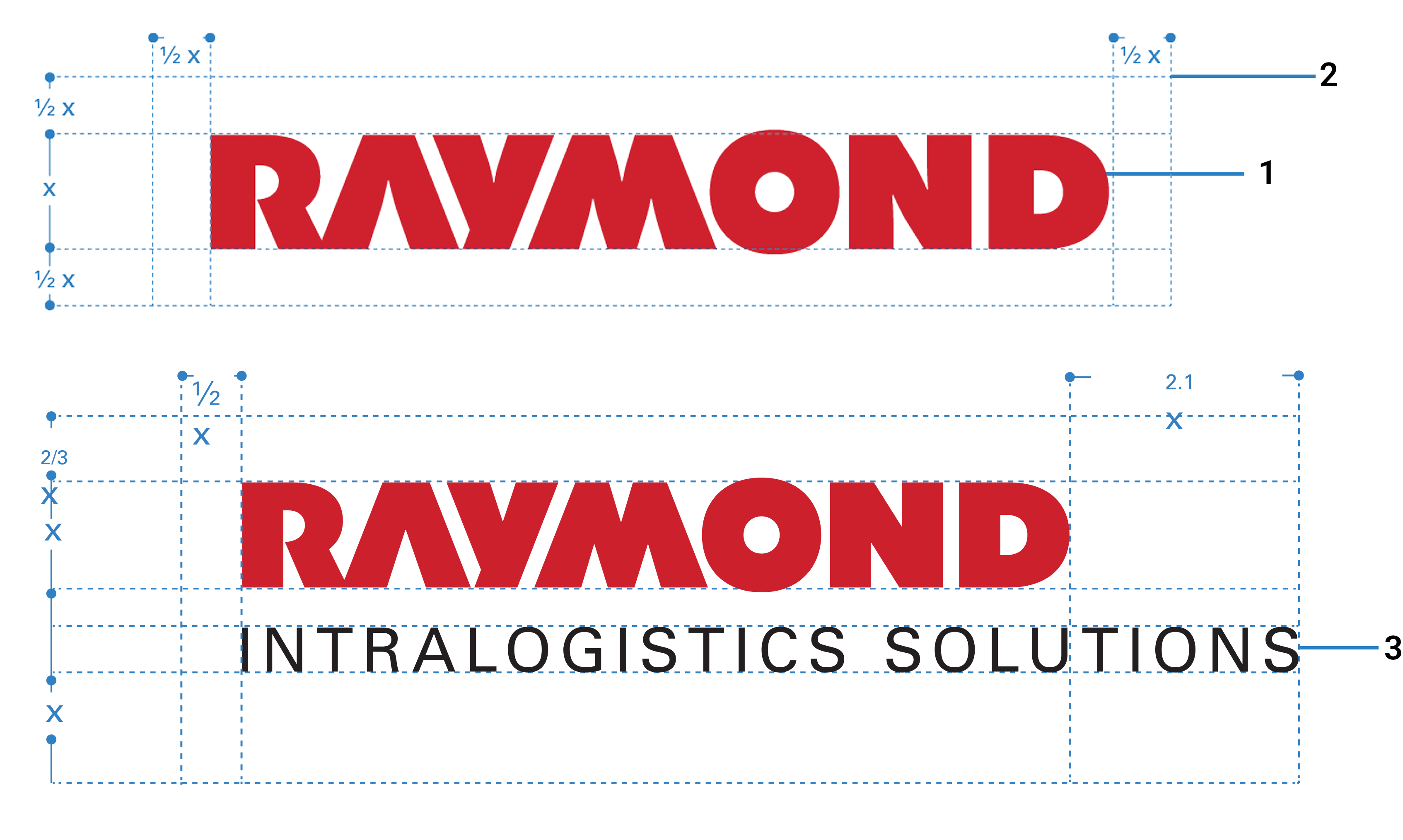
1. Logo
The clear area is a defined space around the Raymond logotype and the Raymond marketing signature. No other artwork or text should be placed within this area. The clear area also defines the minimum space allowable between the logotype or marketing signature and the edge of a business card, web screen, the corner of a display wall or similar situation. The clear area is defined as ½X. X is determined by the cap height of the Raymond logotype as shown here.
2. Spacing
Approved text or tagline.
3. Typography
Logotype Use
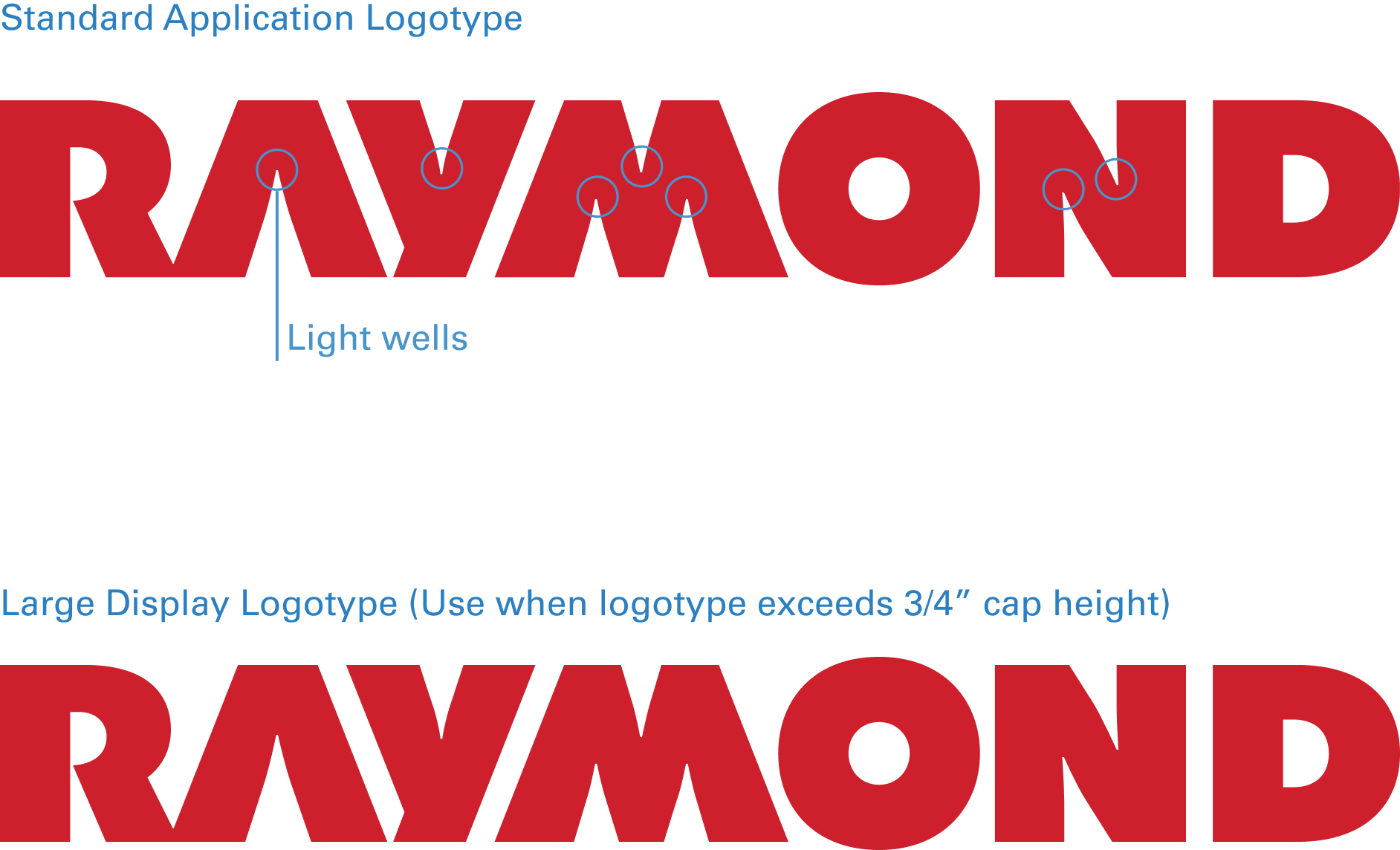
The Raymond logotype has been designed in two versions. The standard application logotype is designed for use when the cap height is less than ¾ inch. The large display version is used for applications such as signage, vehicles and lift trucks.
This version of the logotype has been designed for use in smaller applications in print and digital media. Light wells have been added to preserve the clean, crisp impression of the letters when viewed at smaller sizes.
1. Standard
This version of the logotype has been designed for reading at a distance.
2. Large
Use Raymond Logo
Instances to use the standard Raymond logo.
Use Sub-Brand Logo
Instances to use Raymond Sub-Brand logos.
Campaign Branding
Use Sub-Brand logo for campaigns for “Sub-Brand.”
Collateral
Use the Sub-Brand logo on single Sub-Brand collateral.
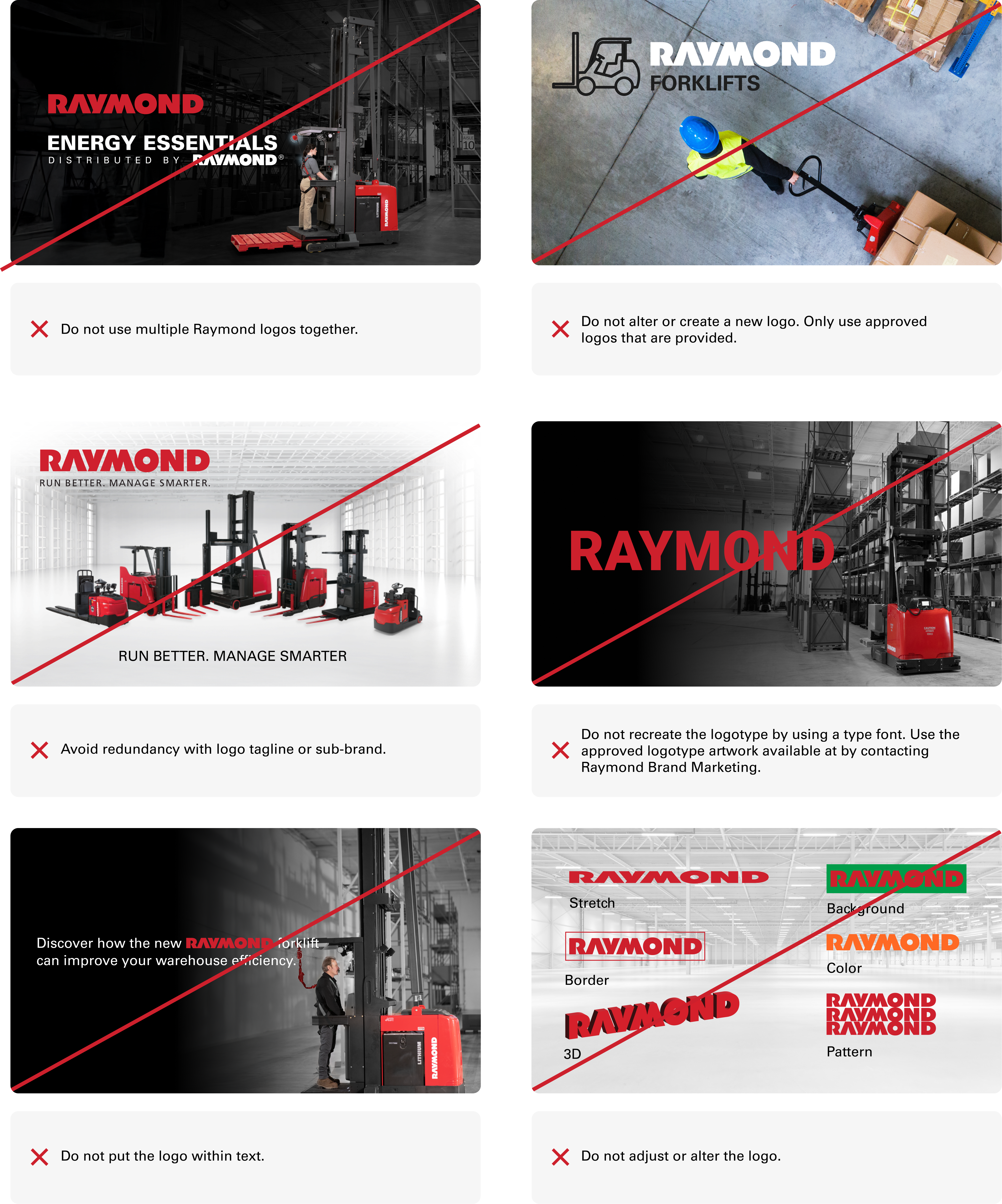
Logo Don’ts
Follow guidelines to avoid these examples of the improper use of the Raymond logotype.
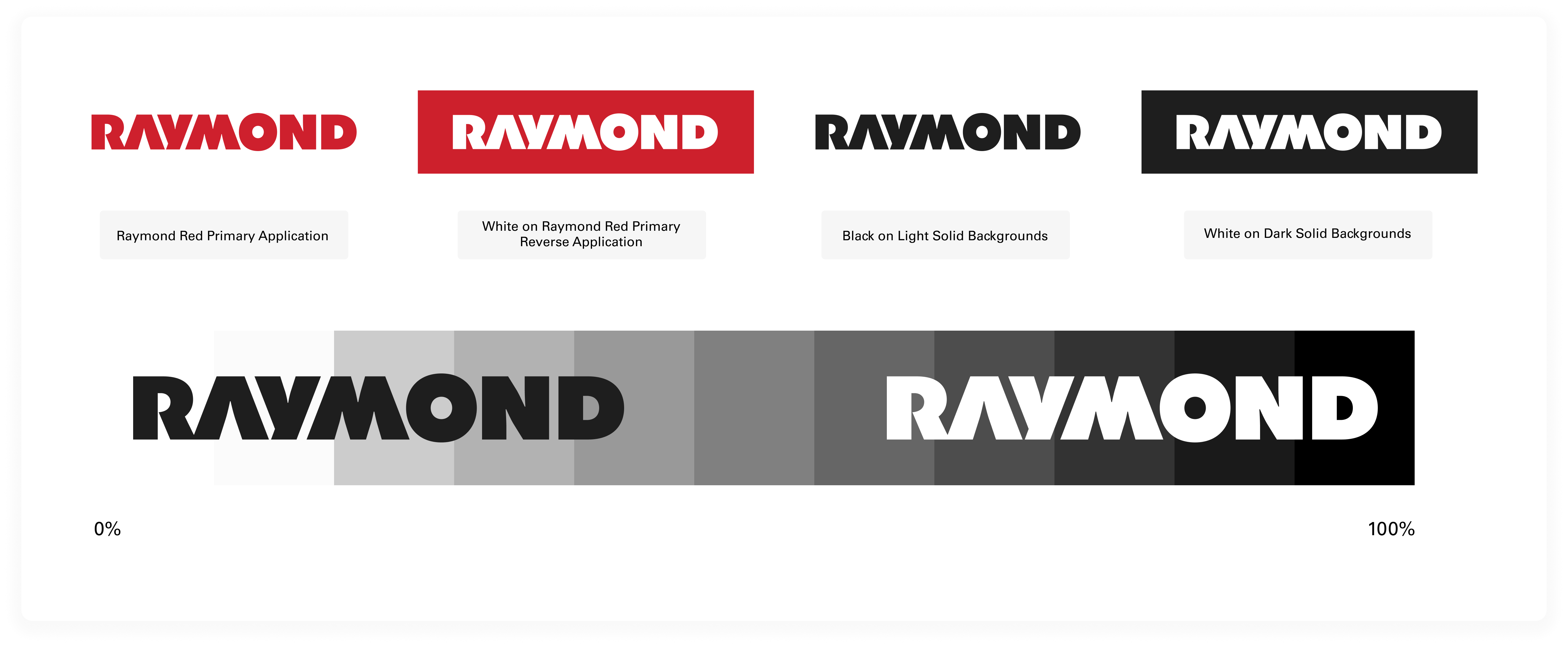
Logo Colors and Usage
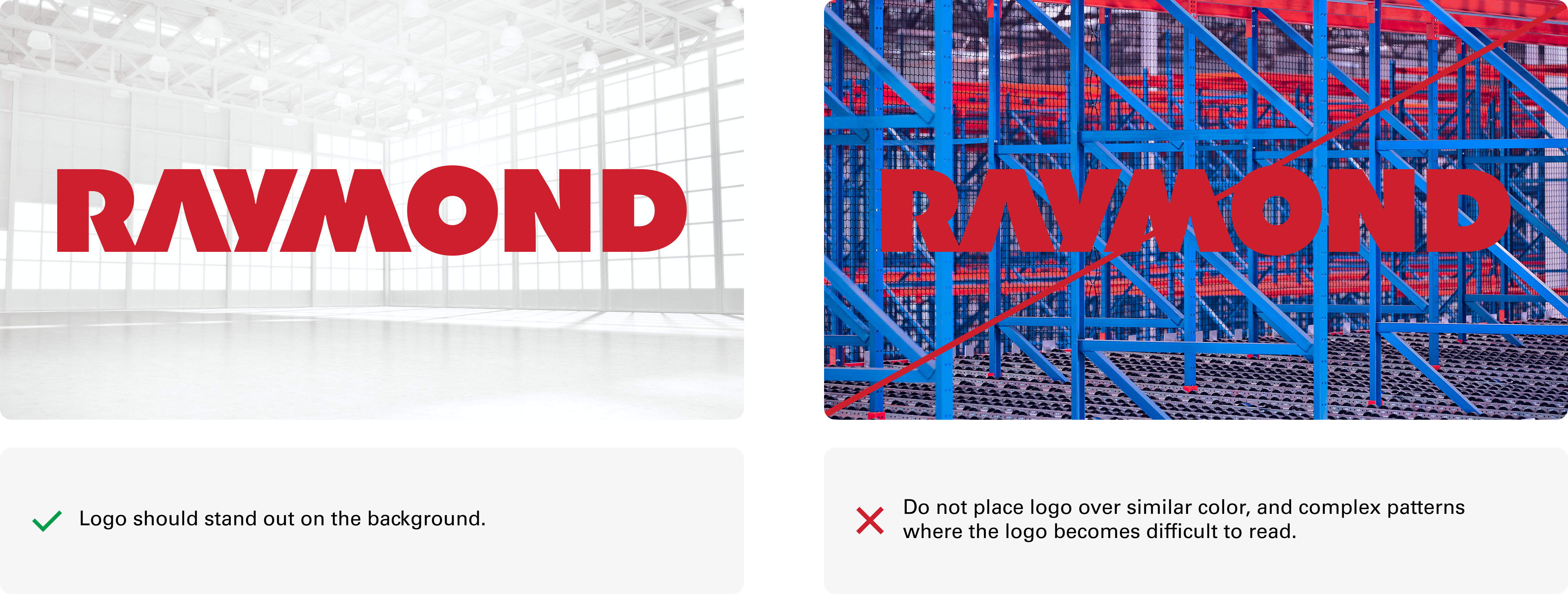
When to use different colors and watch outs for using logos on backgrounds.
The black Raymond logo can be placed on light backgrounds, white backgrounds and white gradients.
Black on black-and-white photography
The white logo can be used over more complex photography and on dark backgrounds.
White (reversed) over photography
The red Raymond logo can be placed over photography in plain light or dark locations or above a light or dark gradient overlay on a photograph.
Red over photography
The standard Raymond logo should be used in most applications, ideally on solid white, dark, or neutral backgrounds for maximum visibility and brand consistency.
Standard color logo
The white logo can be used over more complex photography and on dark backgrounds. It can be used as a second option on dark backgrounds.
Secondary color logo (White)
A black logo can be used on a black and white print or on light backgrounds.
Secondary color logo (Black)
The Red Raymond logo can be used over black-and-white photography or over a dark or light gradient.
Red over dark photography
Stand-alone Brands and Products
Stand-alone brands should be developed by the Raymond Brand Marketing team.
Creating a logo or adding an identifier without going through the Marketing and Communications team. Double use of Raymond and Ray in a product name are prohibited (ie. Raymax, eRay, Raydrive). If you need a new or an update to an existing logo, please contact Marketing and Communications for further assistance.
Unauthorized use:
Use the Raymond logo to identify campaigns to our brand.
Use the Raymond logo when marketing multiple Sub-Brands.
Headlines
Use the Raymond logo for all headlines and product branding.
Apparel
Use the Raymond logo for apparel products.
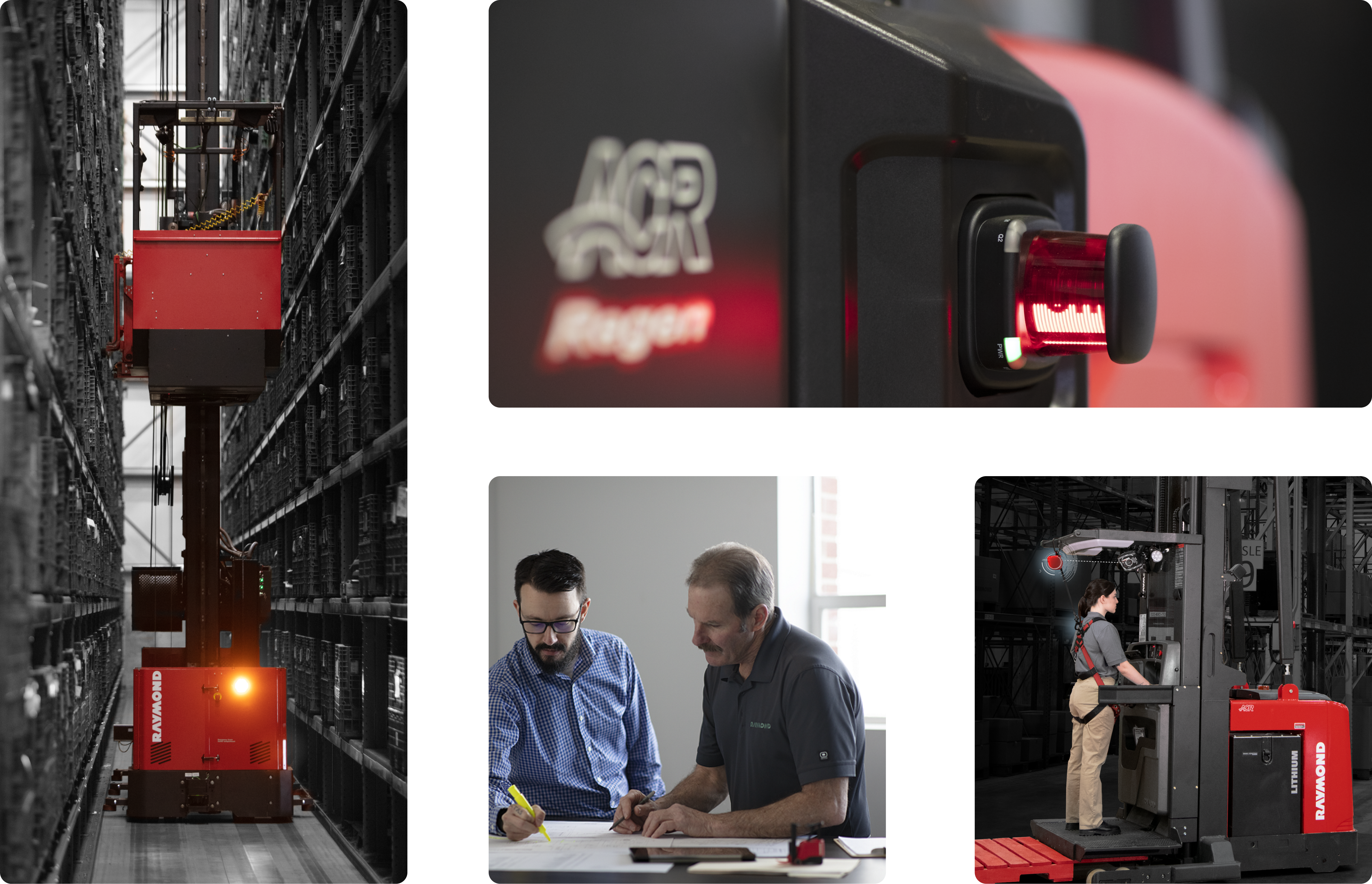
Our imagery showcases how Raymond forklifts, solutions, and support services are integrated into everyday operations.
Photo Approach
The goal in each instance is to emphasize important aspects of the customer value of Raymond’s products and solutions.
Photography Goals
Photography plays a key role in expressing the Raymond brand. Every image should reflect our commitment to innovation, quality, and service. Our visual approach should be guided by brand values and design principles, ensuring consistency across all touchpoints. As you develop or select imagery, keep the following goals in mind to maintain clarity, purpose, and brand alignment.
This photography style shows Raymond products in real-world use, highlighting both the customer’s need and how Raymond provides the solution. The product must be in use.
Our Solutions at Work
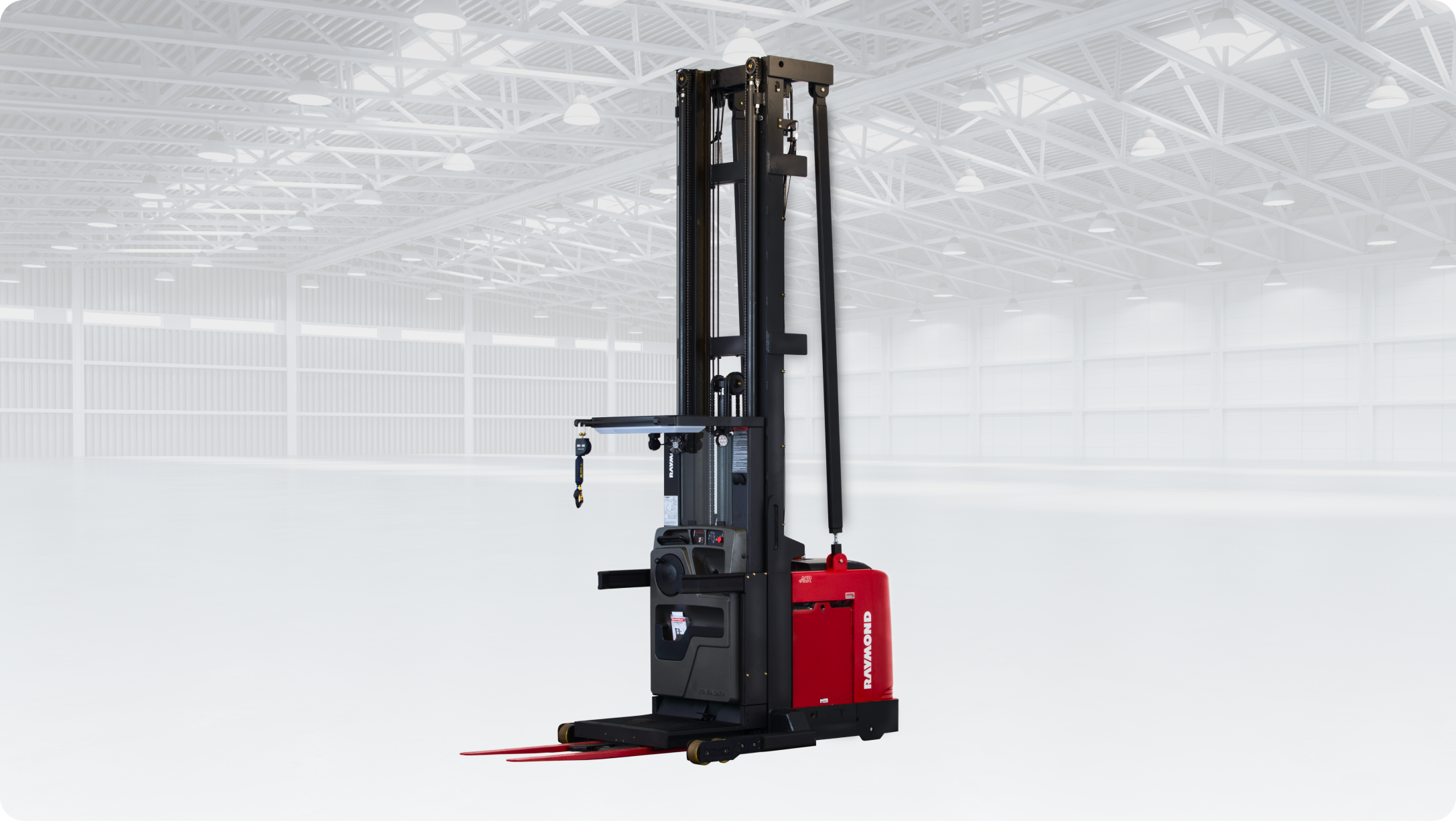
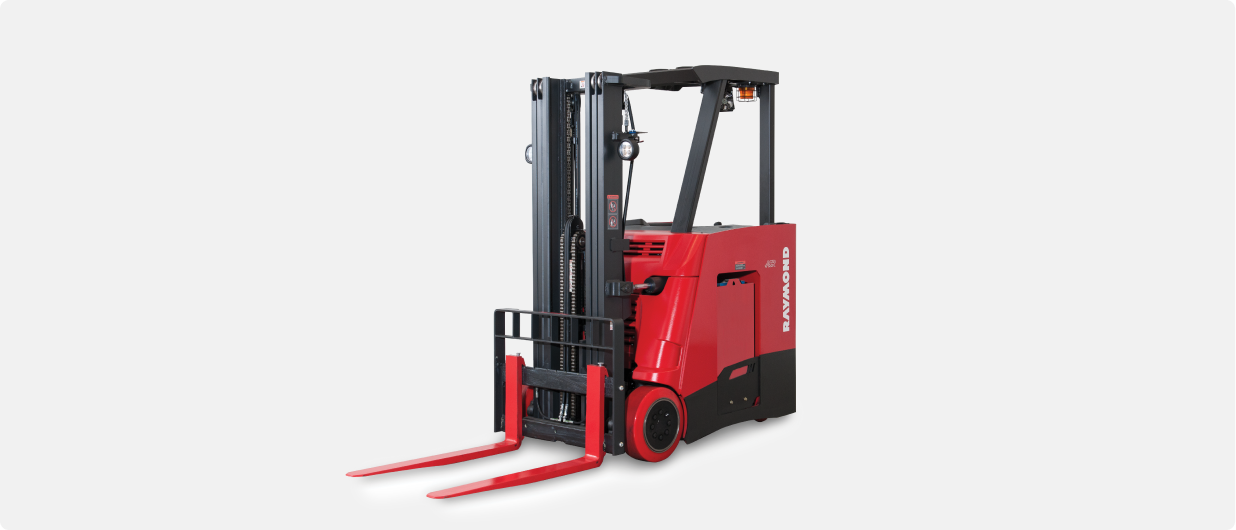
Full shots of a Raymond product can be used to display a product type or its primary use. They can either be used in silhouette or in the environment.
Product Stand-alone
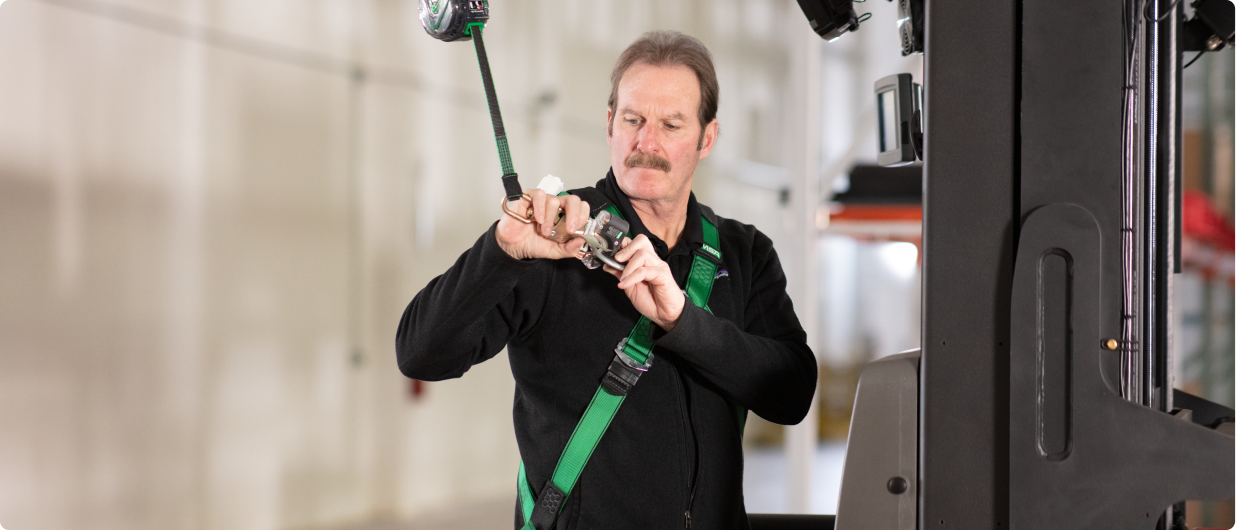
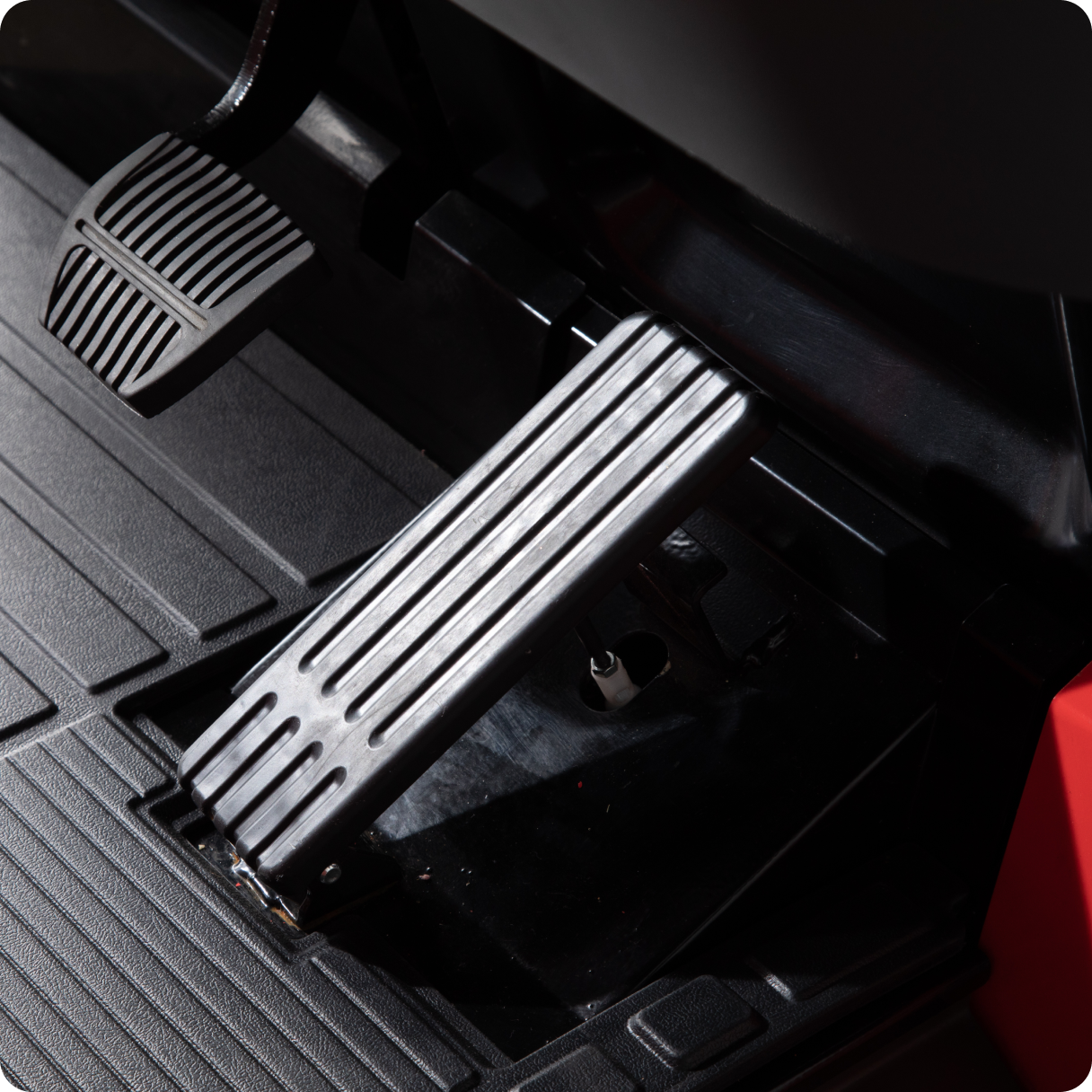
Close up shots can be used to show a particular feature, design element or option. These details should be used to communicate a value or benefit for the customer.
Product Detail
Display best practices and operator safety in all images.
Best Practices
Images showcasing analytics, warehouse management, product in use with on-screen data or standalone visuals of analytics dashboards, the focus should be on utility, clarity, and real-world application. Ensure the information presented is easy to understand and highlights how Raymond empowers smarter, data-driven decisions.
Analytics
Images of people should capture moments that reflect the spirit of Raymond. Whether showing teamwork, individual focus, or customer interaction, photos should feel natural and genuine. Highlight diversity, professionalism, and the positive energy that drives our brand.
Communication
Lead/Beauty
For lead shots and beauty shots, the Raymond product is the main focus.
Supporting
In a supporting role shot we see Raymond products supporting clients and operators.
Background
The shot focuses on a facility or warehouse where Raymond’s products are visible.
Photography Type
Follow the guidelines for each type of product photography, and consider the role Raymond forklifts will play in the shot. The trucks can take on a lead, supporting, or background role. Each type of photography is used to effectively tell the Raymond brand story. Use these roles thoughtfully to ensure the equipment is portrayed in a way that aligns with the brand’s values and communicates the intended message of the scene.
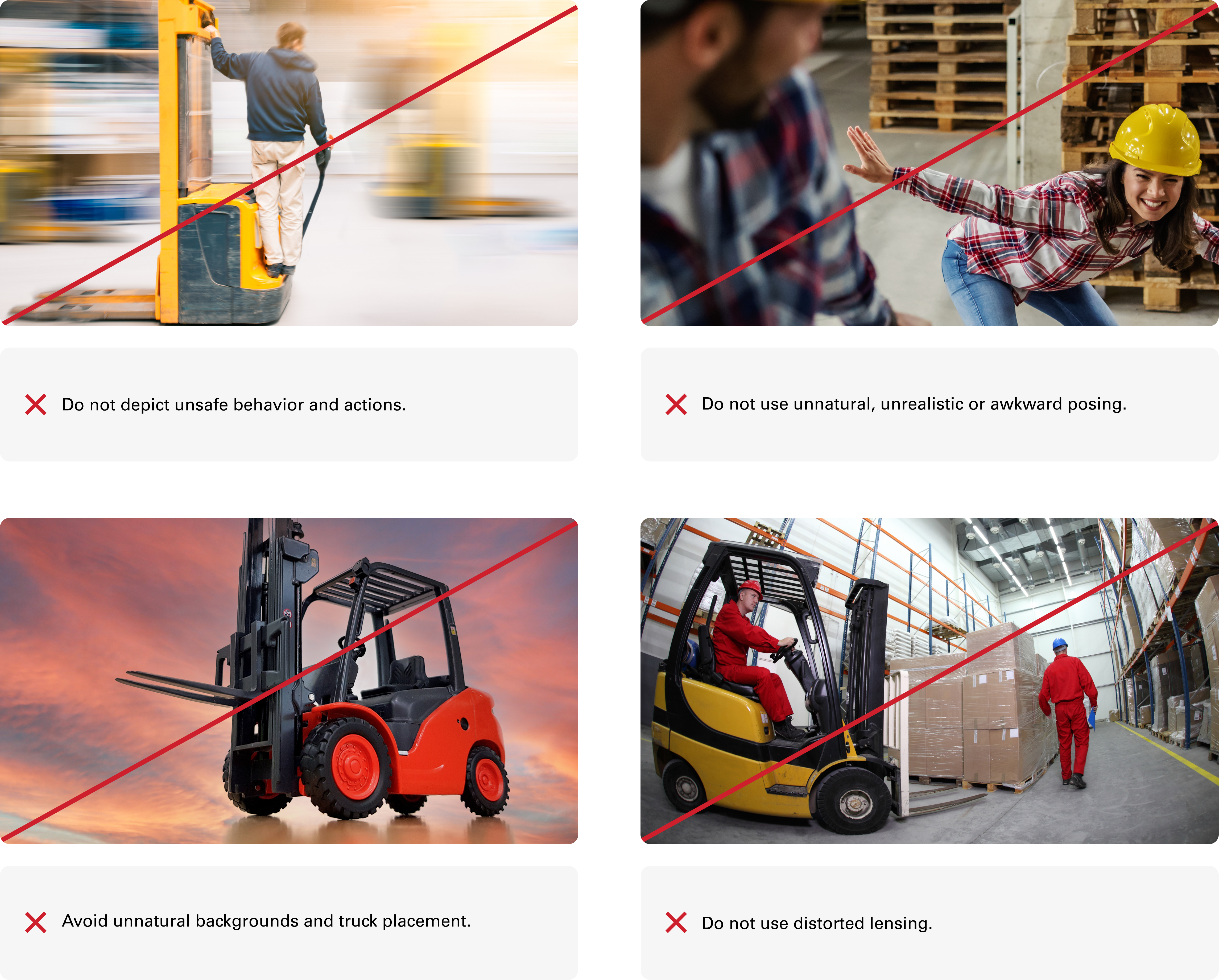
Photo Don’ts
Follow guidelines to avoid these examples of the improper use of Raymond photography.
Composition
Utilize distance to effectively capture features, uses, and details of trucks.
Close-up
Mid-range
Wides
Close-up shots can show details on the trucks.
Medium range shots show the entire truck and demonstrate use cases.
Wide angle shots can show environment, multiple products and full capability of products.
Photography
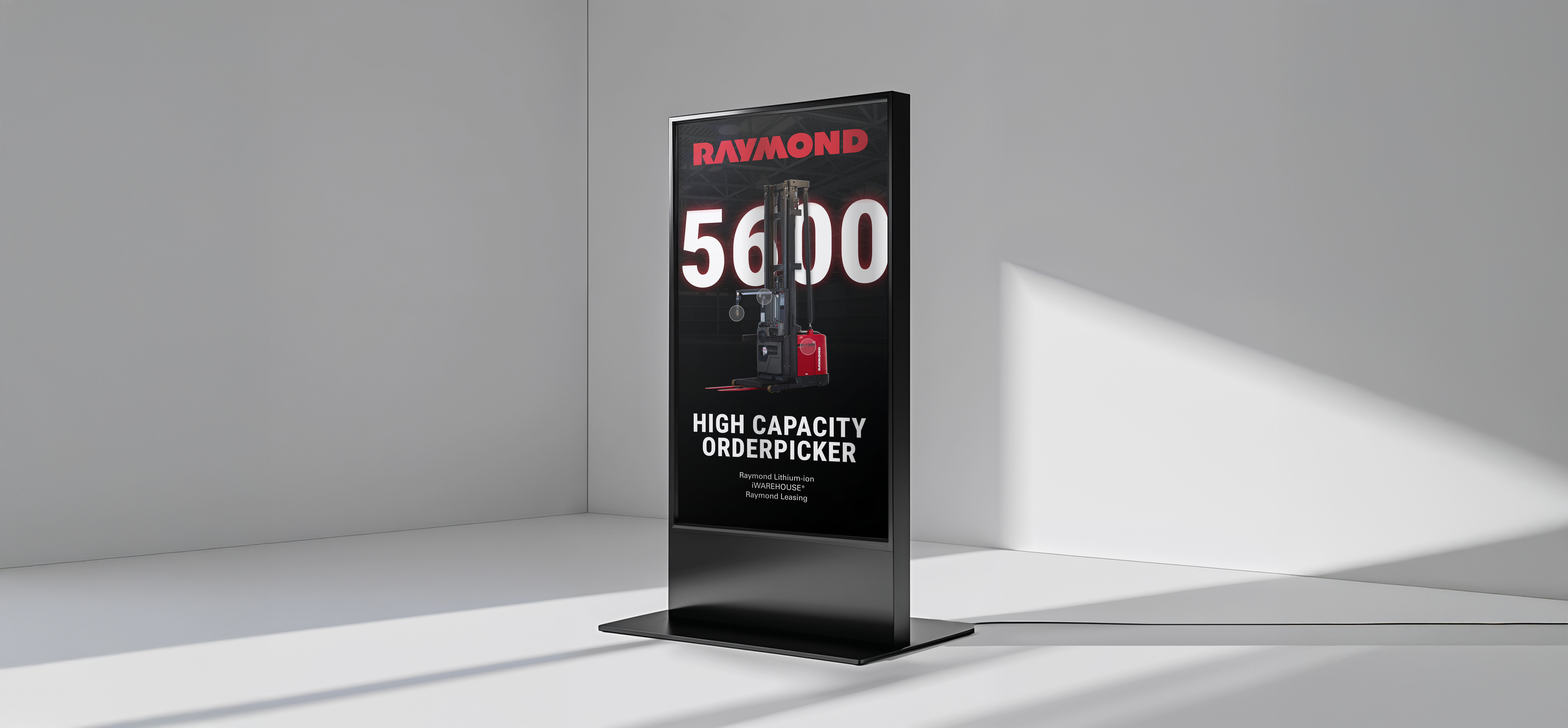
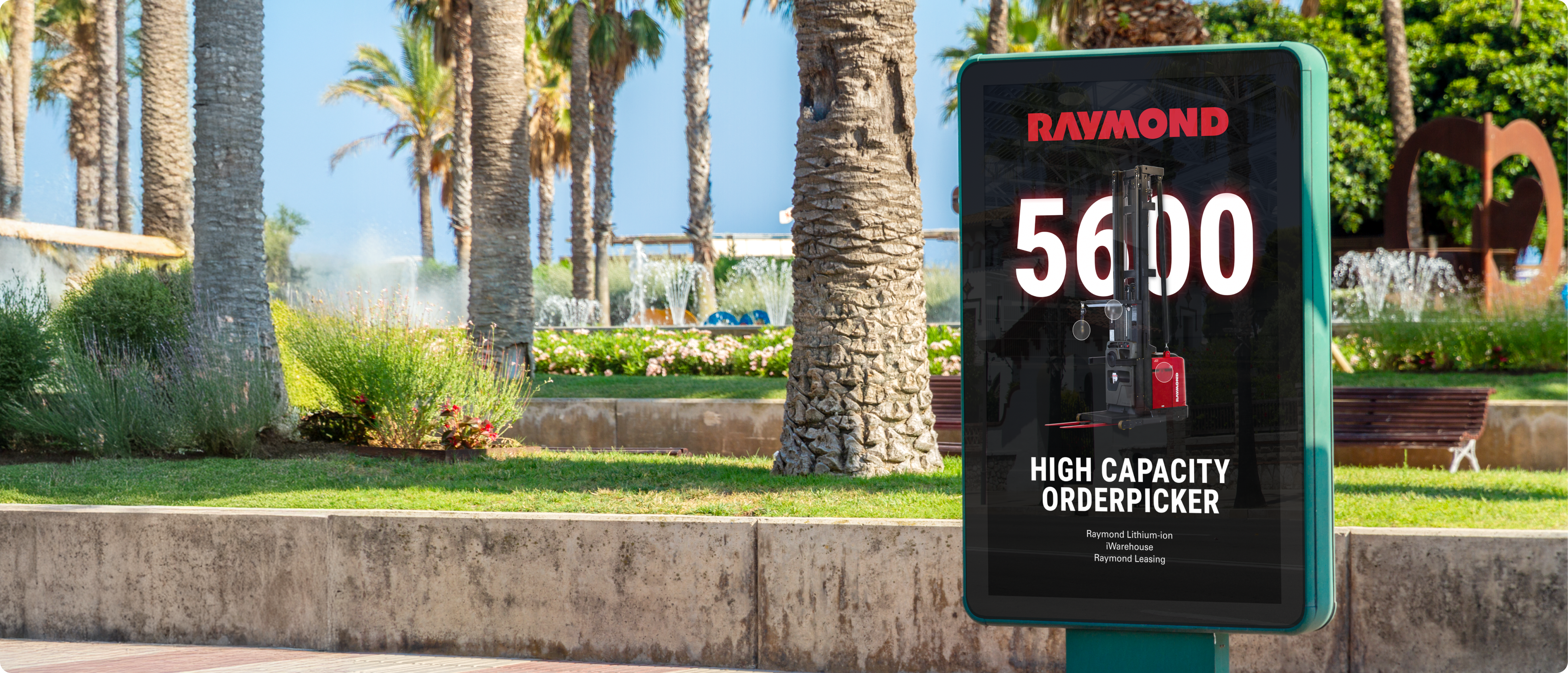
Campaigns and Tradeshows
CGI
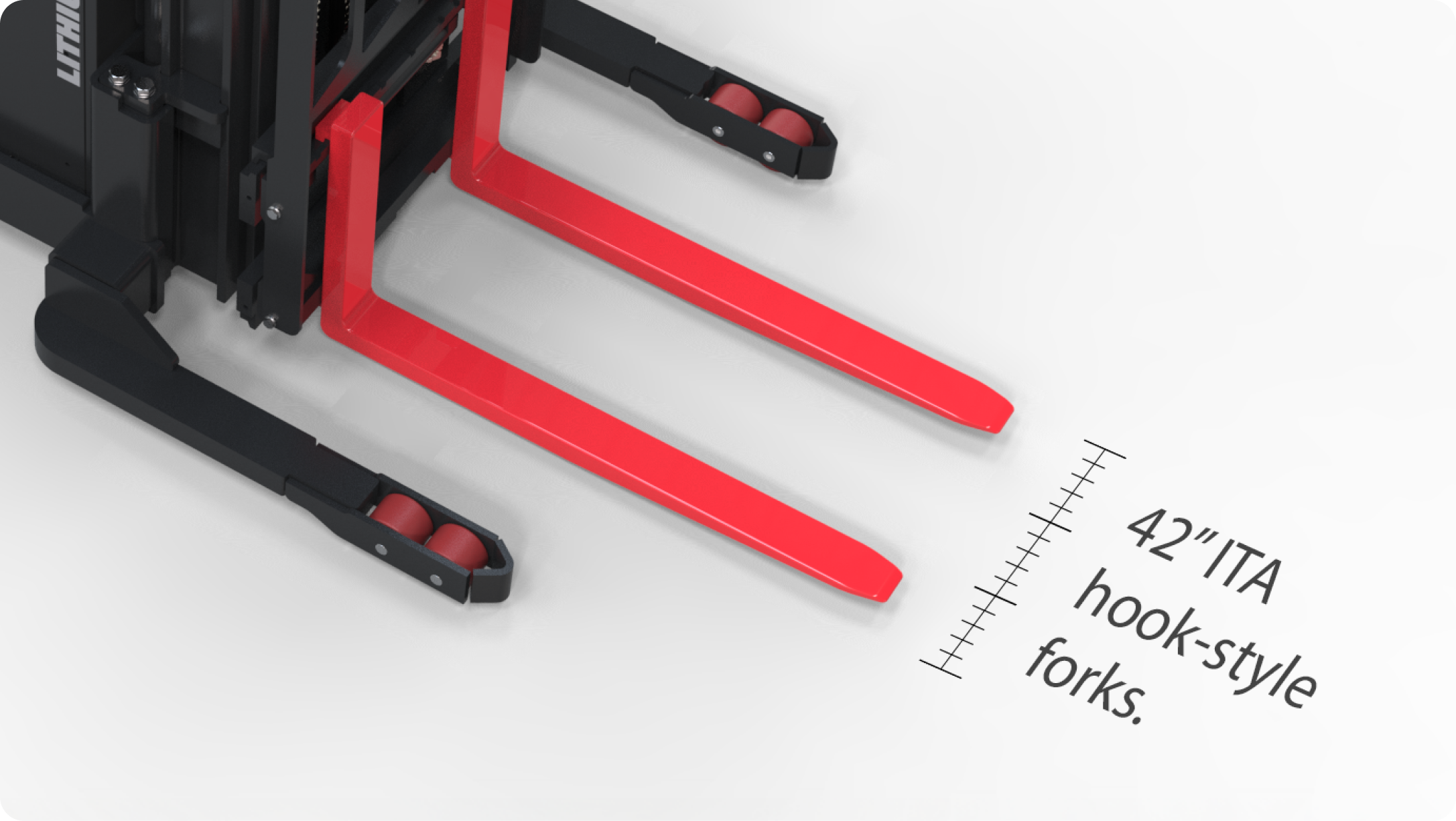
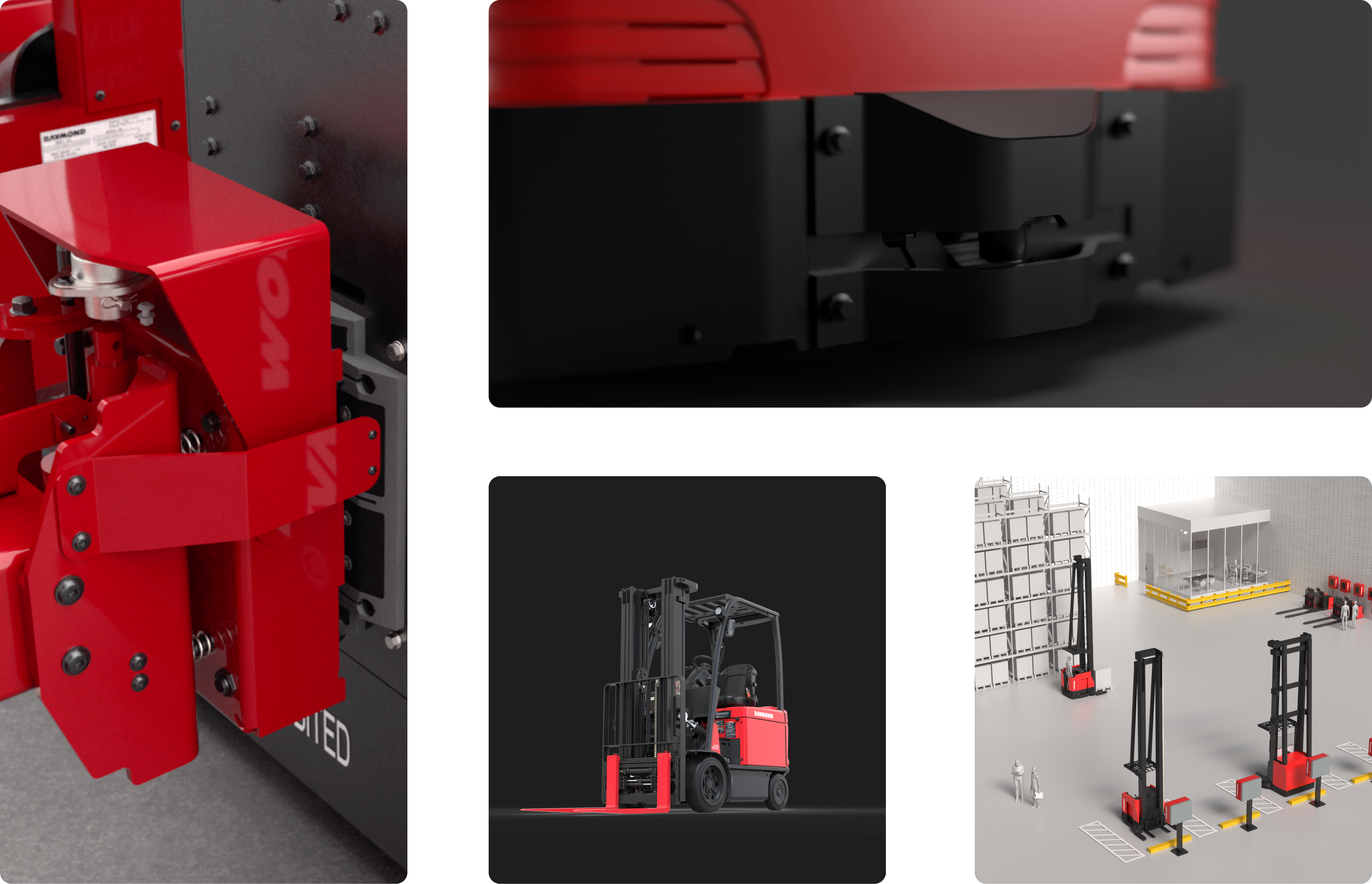
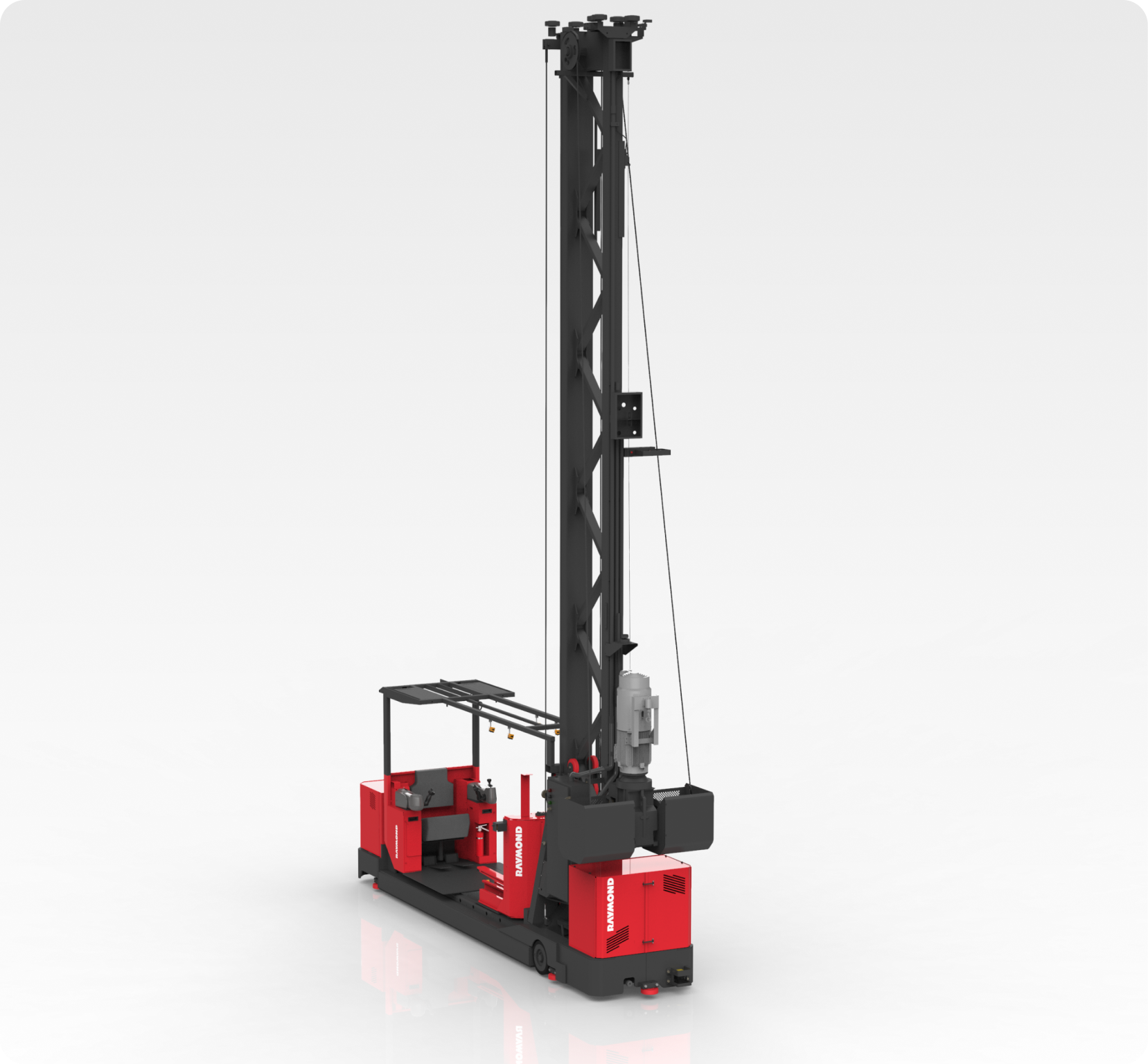
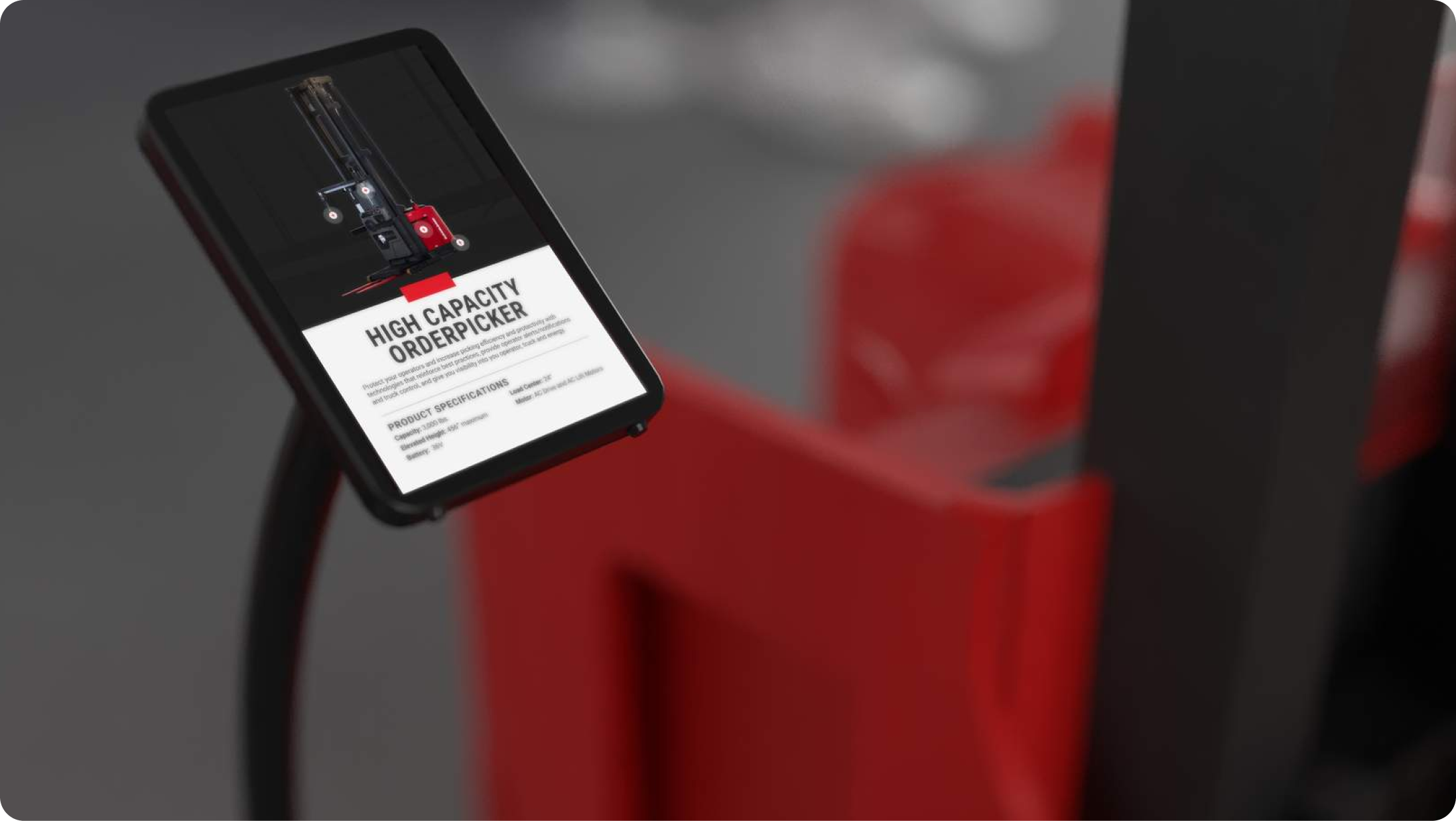
CGI is used to create high-quality, photo-realistic renderings of Raymond products. It allows for precise control over lighting, composition, and environment to highlight product features, showcase technology, and build visually compelling scenes that may not be possible through traditional photography. CGI supports storytelling, digital experiences, and consistent brand visuals across channels.
CGI Approach
CGI is used to emphasize key aspects of Raymond’s product innovation and customer value. It supports product launches, digital experiences, and marketing content by visualizing our solutions in idealized environments.
CGI Design
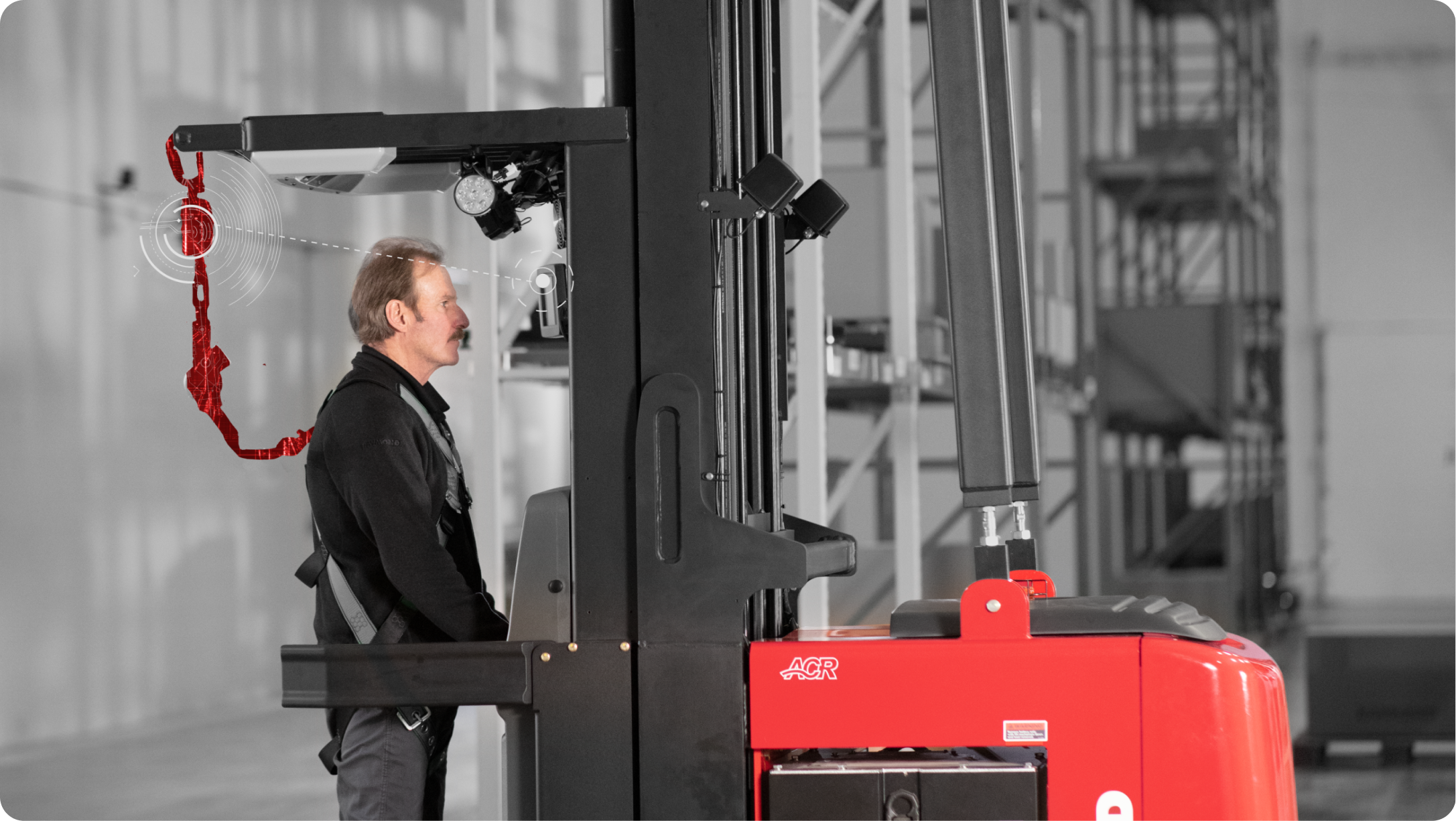
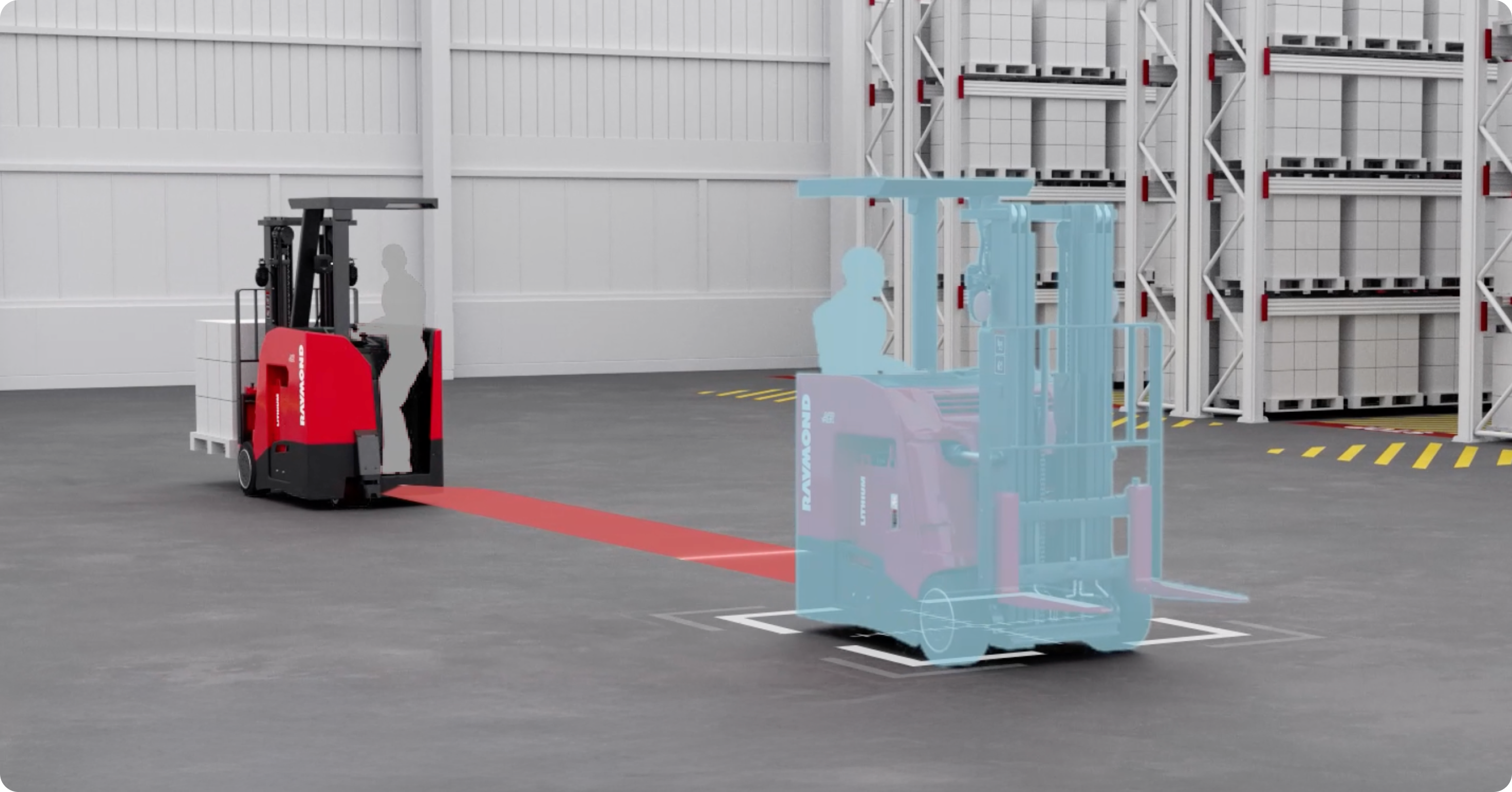
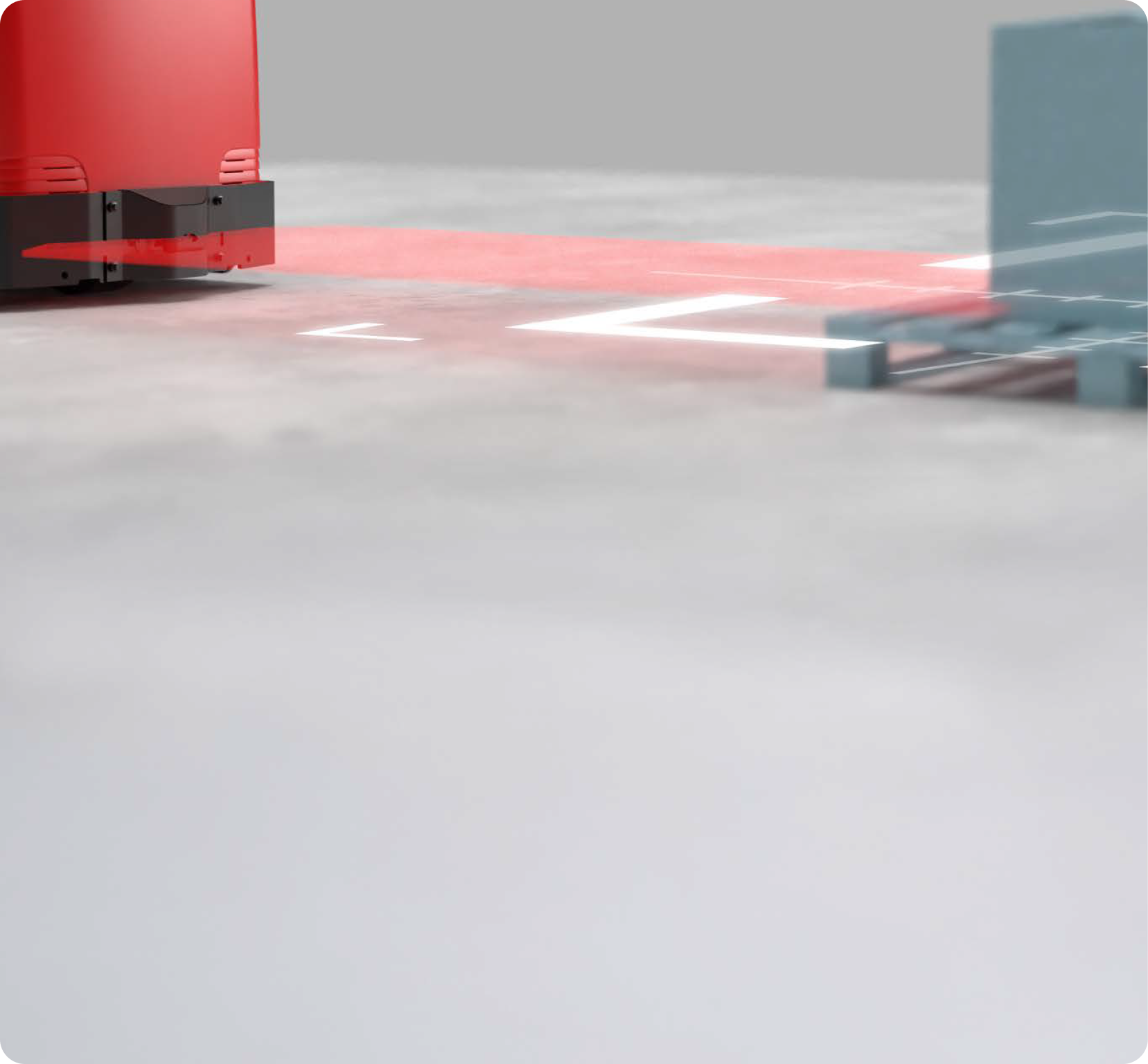
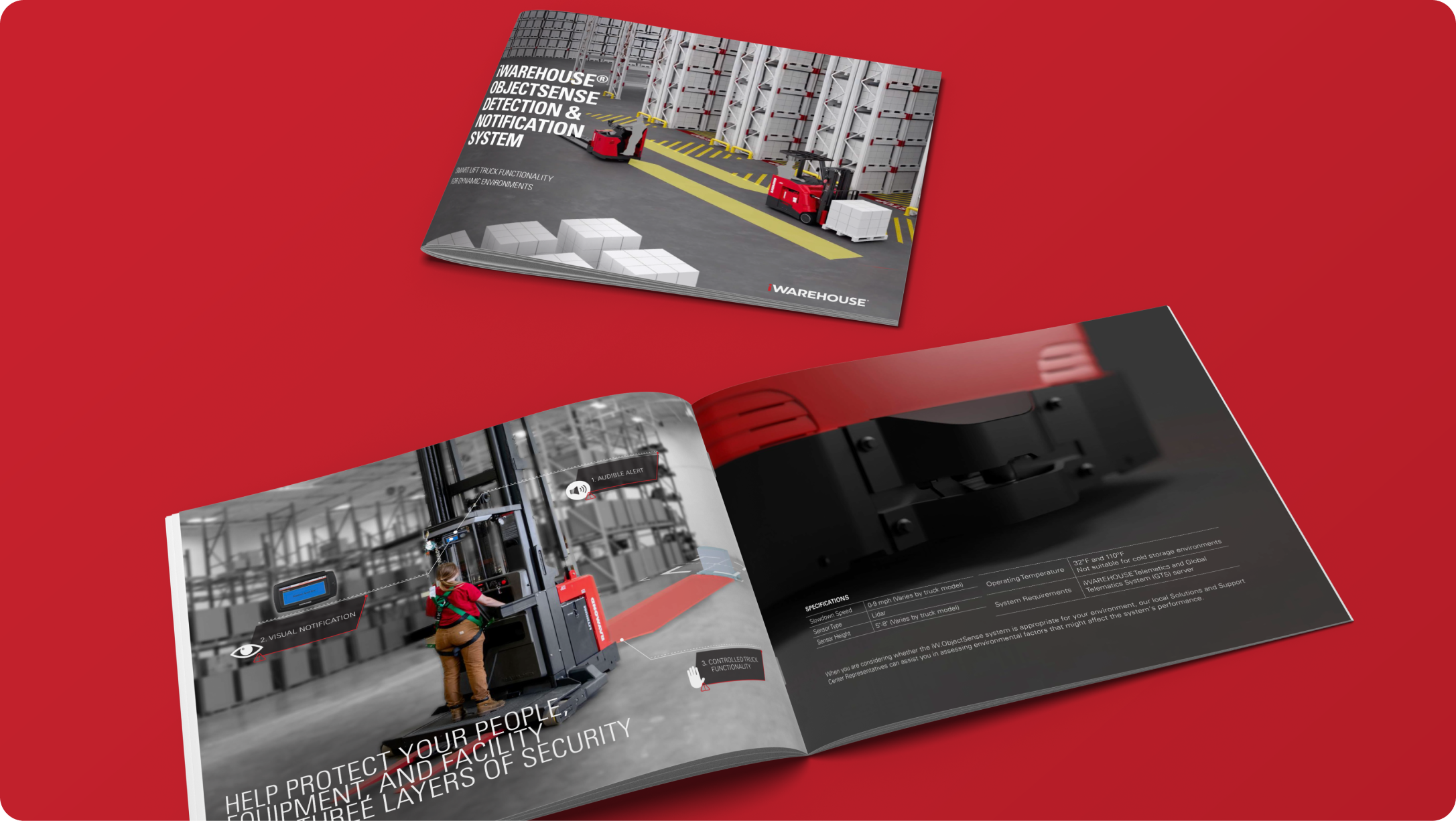
CGI should be managed through the Raymond Brand Marketing team. It must feature strong visual contrast, with a clear focus on the trucks or technologies being highlighted. Visual elements can be added to help illustrate technology in a more engaging and digestible way. For example, an iWAREHOUSE® or ObjectSense™ sensor field visualization.
Beauty Shots
CGI beauty shots can be used to showcase products that have not yet been released or photographed by the Brand Marketing team. These images must be produced and released by Raymond Brand Marketing.
CGI beauty shots can also be used to capture shots that would otherwise be difficult to capture through the traditional photography process.
Static Demonstration
Video Demonstration
CGI can be used to visually demonstrate Raymond technologies and truck functions through static or video CGI. These renderings demonstrate advanced features such as telematics, sensors, or automation function in context.
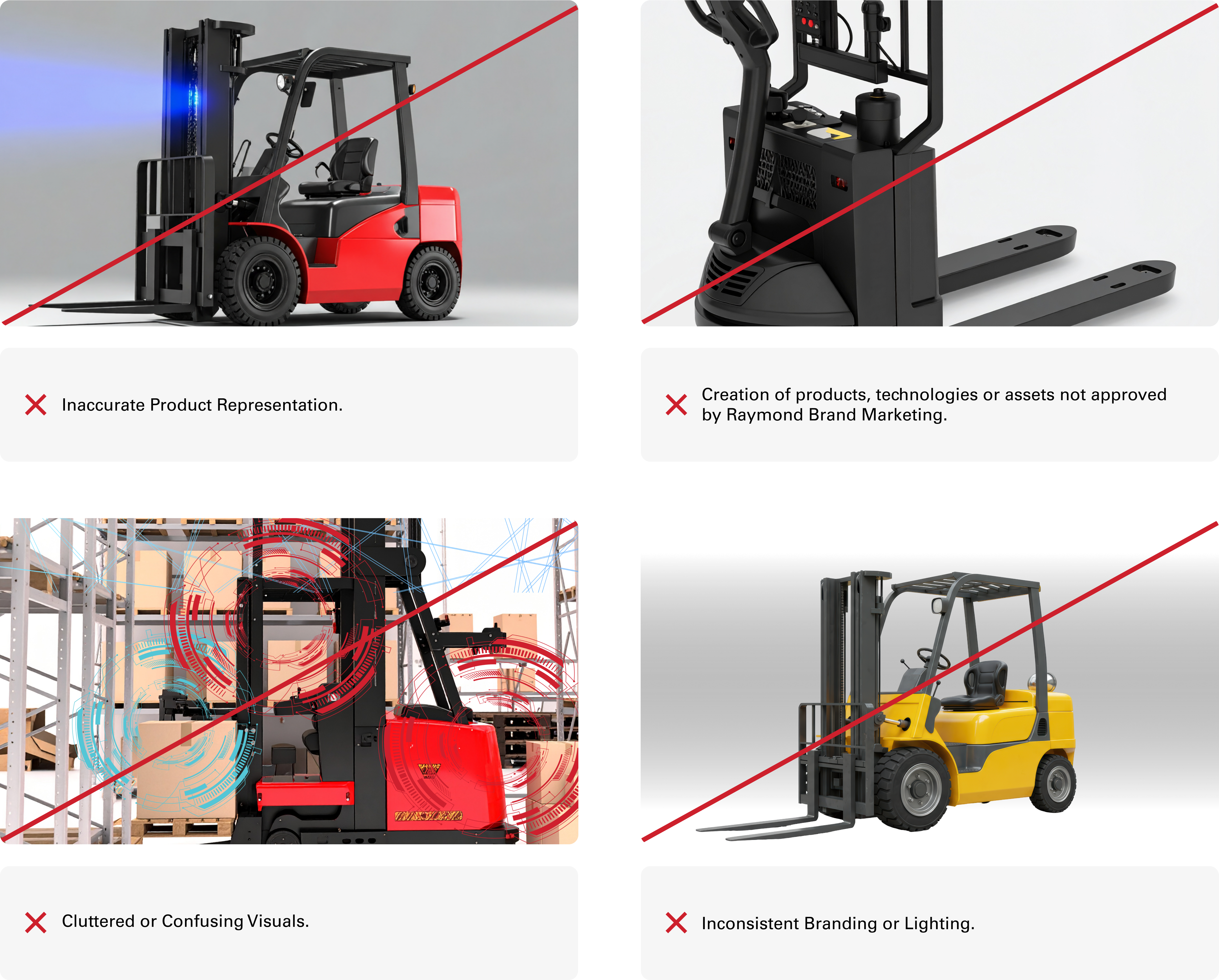
CGI Don’ts
Follow guidelines to avoid these examples of the improper use of CGI.
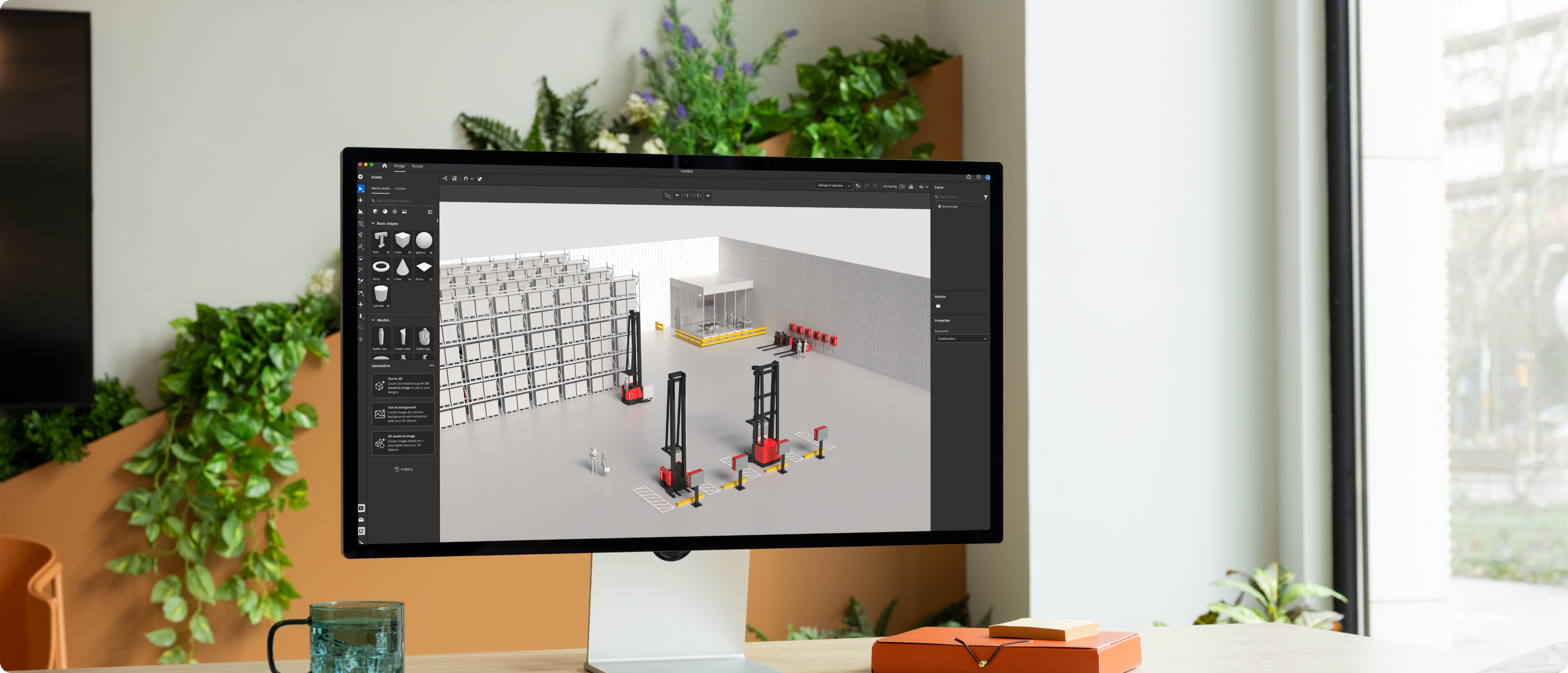
Ai Visuals
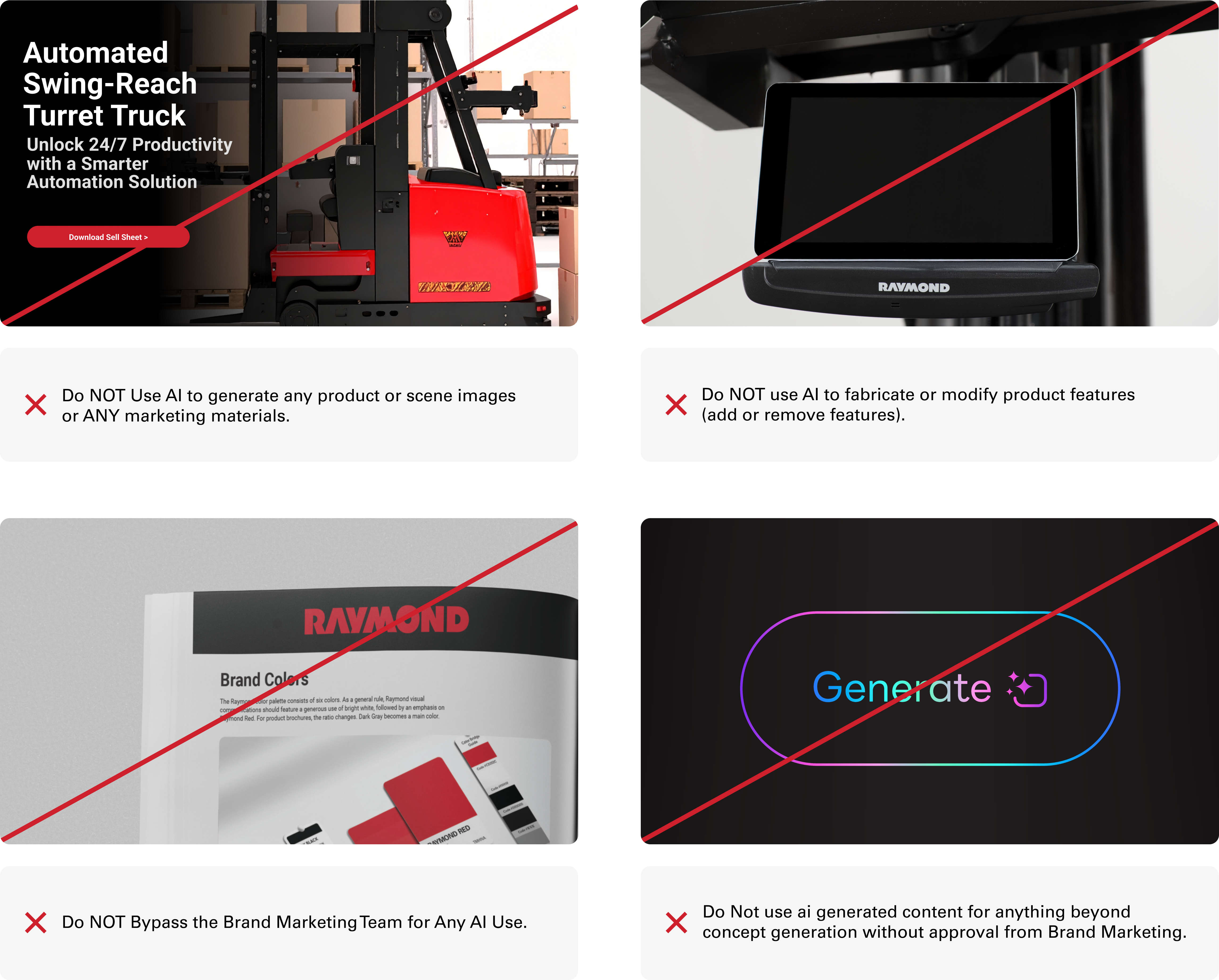
Ai visuals are used to quickly generate a variety of concepts and explorations. They can be leveraged to visualize abstract ideas, create mood boards, and generate a high volume of content for A/B testing. Ai visuals should not be used in marketing materials. Assets edited or created using ai should be approved by the Raymond Brand Marketing team.
Ai Utilization
Ai Don’ts
Ai usage should be extremely limited for visuals and must be approved by the Raymond Brand Marketing team.
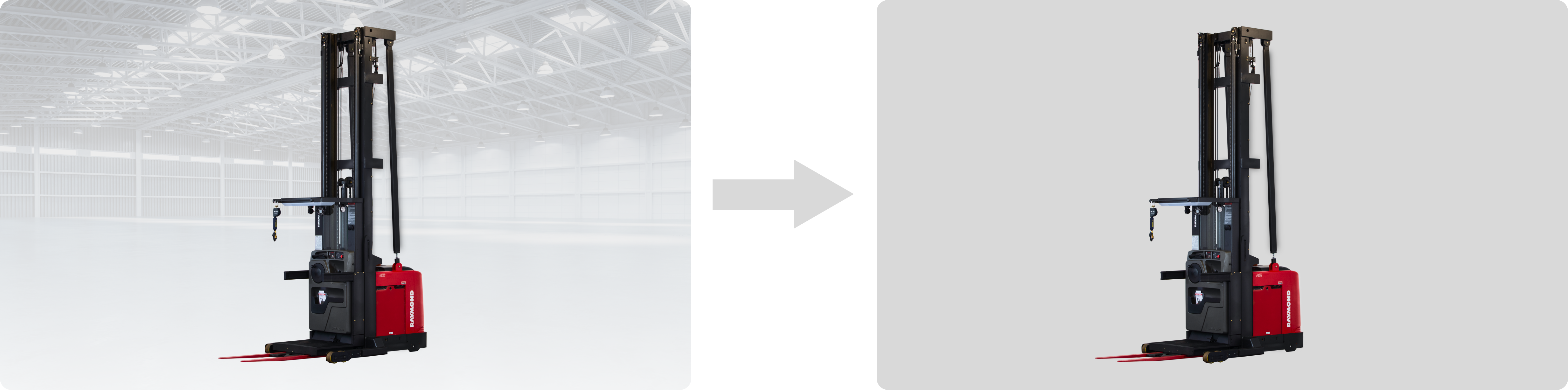
Use ai tools to remove backgrounds from an image. Review the image carefully to ensure no essential parts or visuals have been unexpectedly removed.
Background or Object Removal
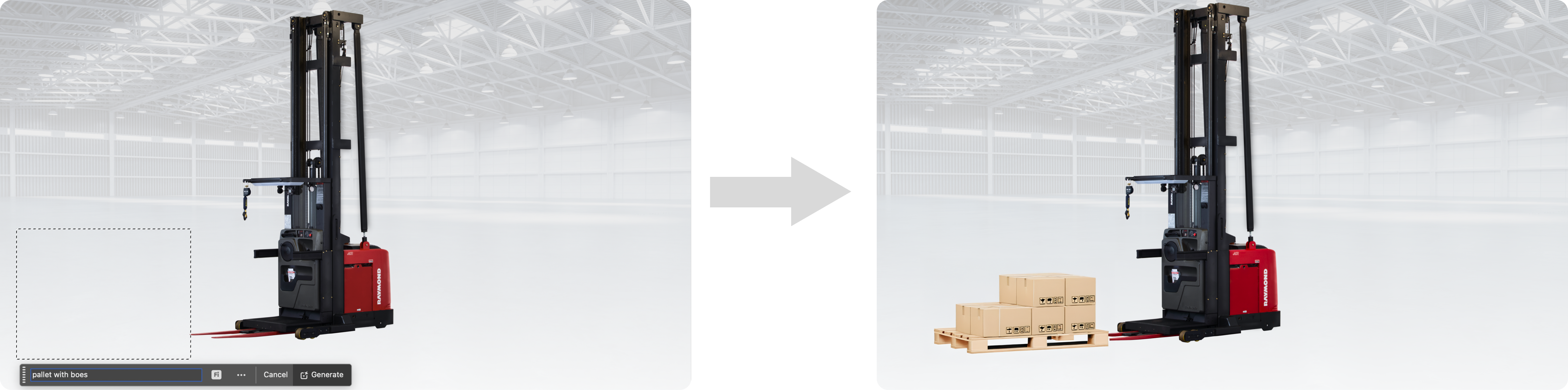
AI may be used to add elements to images (such as boxes in front of a forklift) as long as the additions are on-brand and follow all Raymond guidelines. All AI-generated modifications must be reviewed and approved by the Raymond Brand Marketing team.
Generative Ai Additions
Use ai to generate story boarding, concepts and assist the creative process. Generated images should NOT be used for communication or marketing purposes and are strictly for creative processes.
Concept Generation
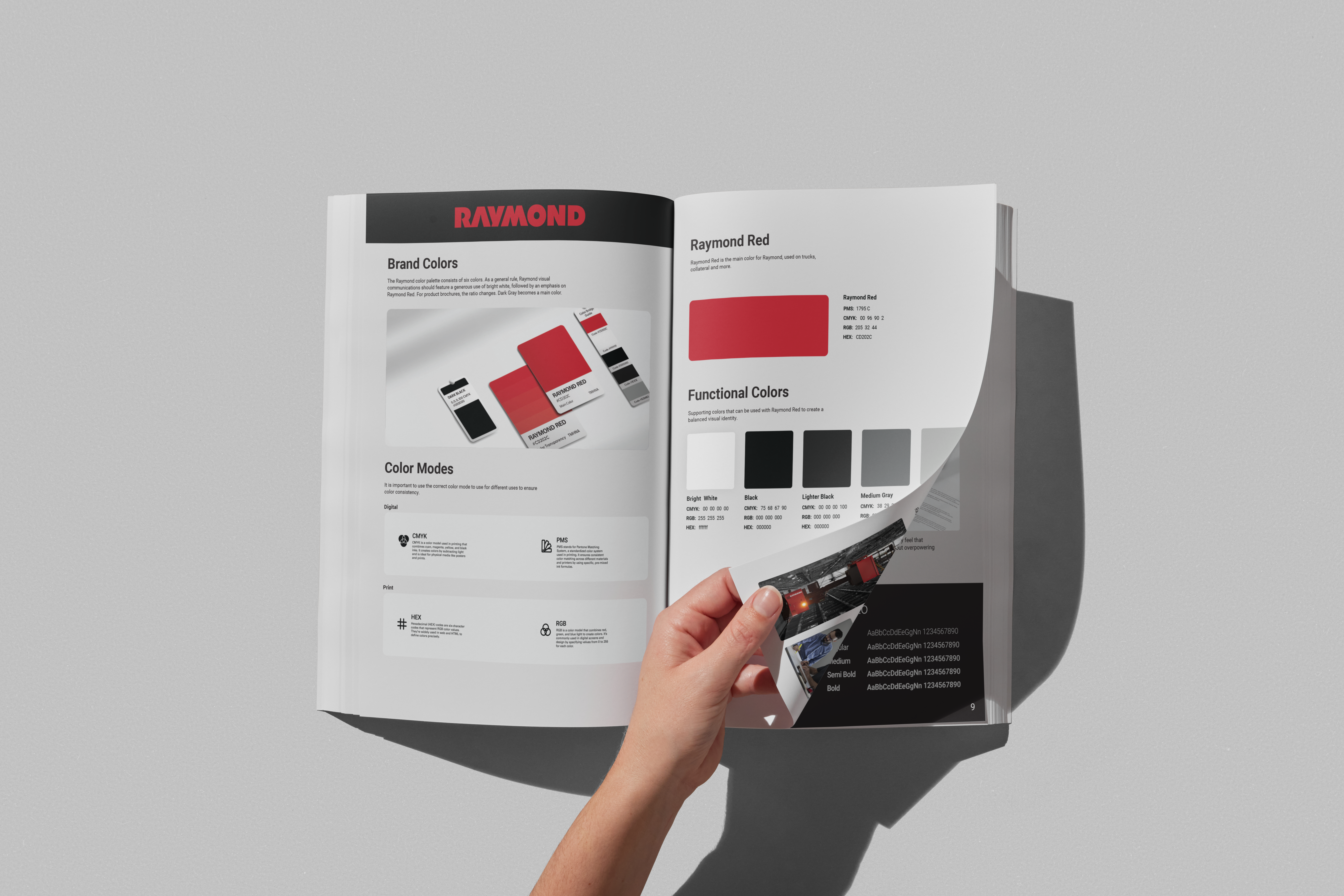
Color Modes
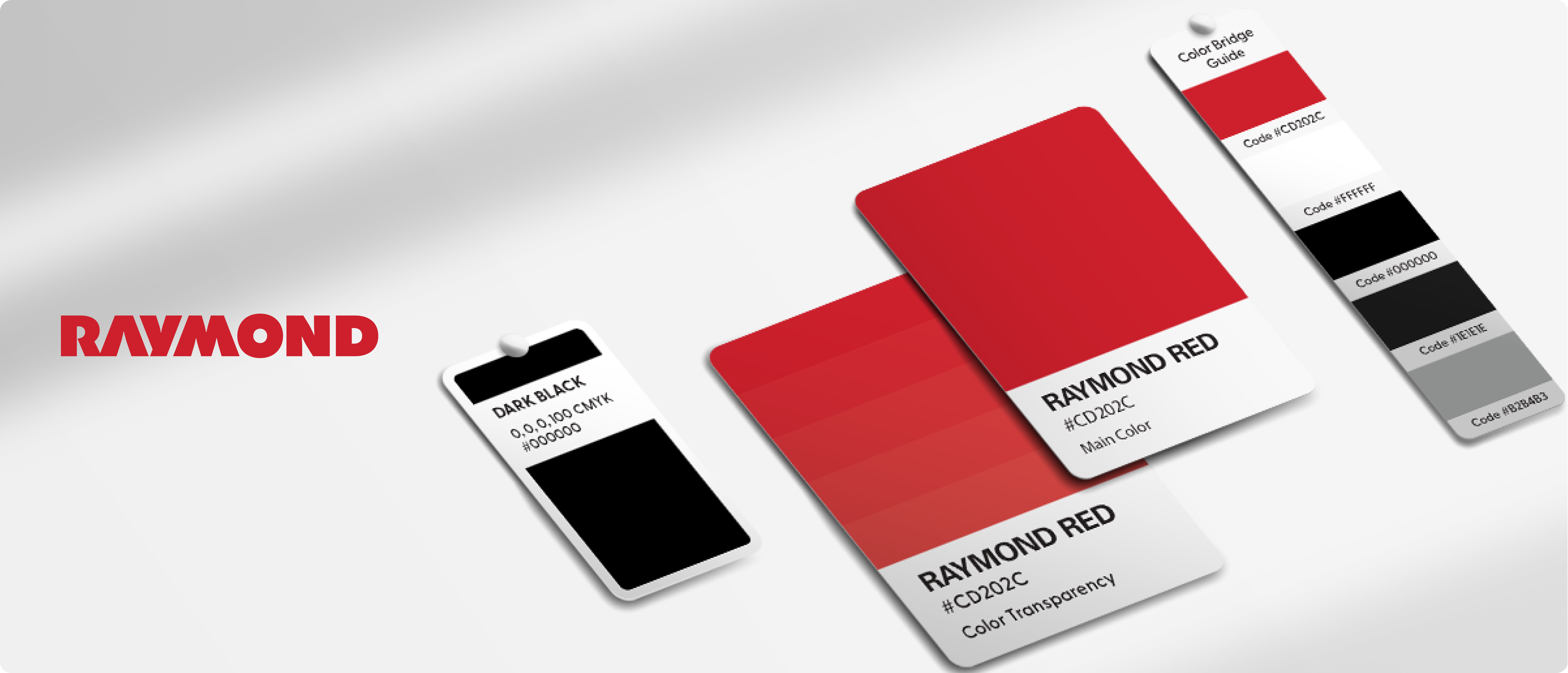
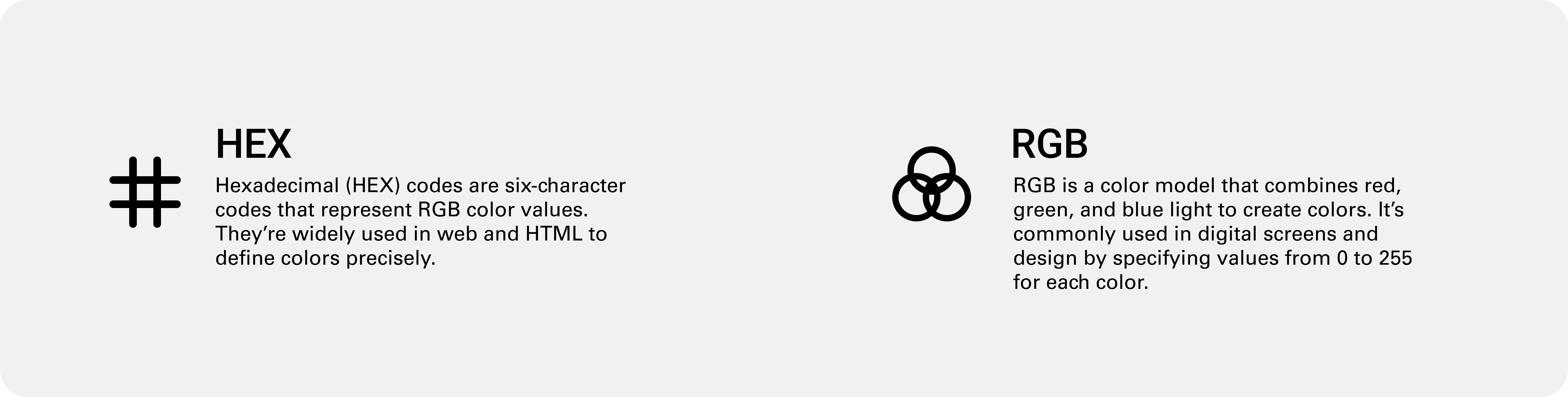
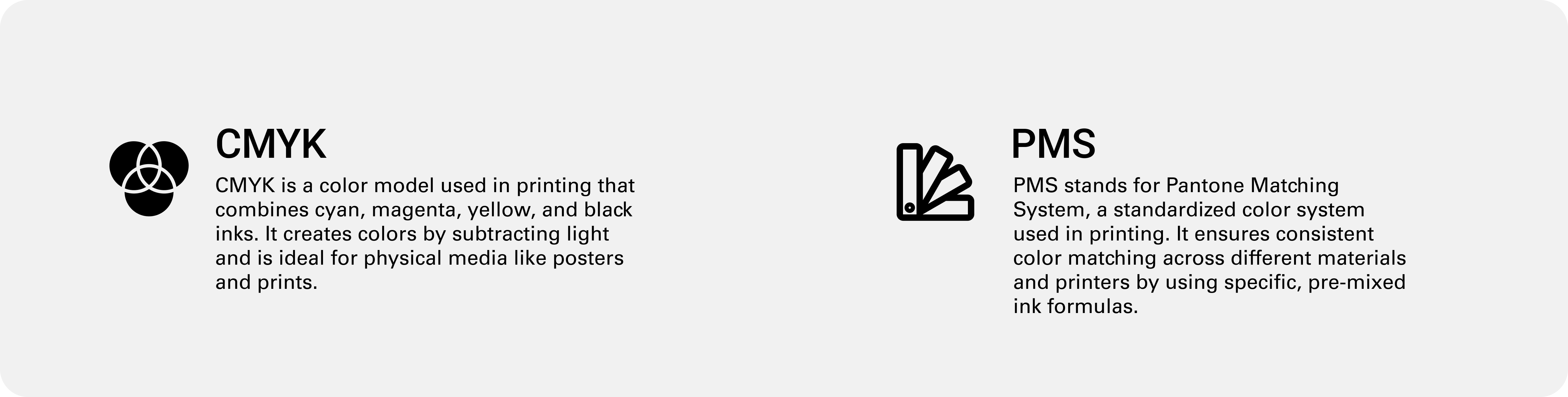
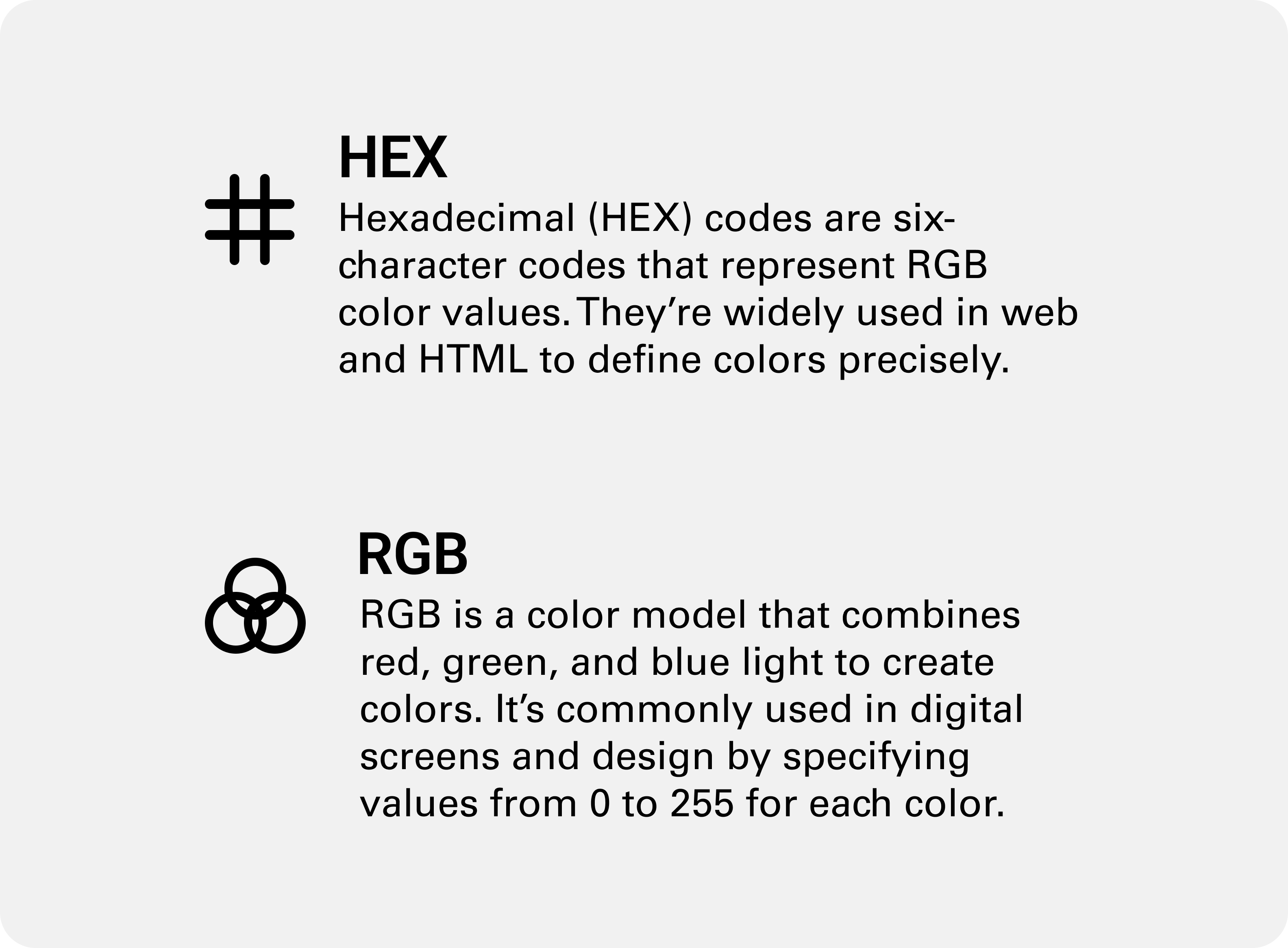
The Raymond color palette consists of six colors. As a general rule, Raymond visual communications should feature a generous use of bright white, followed by an emphasis on Raymond Red. For product brochures, the ratio changes. Dark Gray becomes a main color.
It is important to use the correct color mode for different uses to ensure color consistency.
Digital
Print
Raymond Red
Raymond Red is the main color for Raymond, used on trucks, collateral and more.
Raymond Red PMS: 1795 C CMYK: 00 96 90 2 RGB: 205 32 44 HEX: CD202C
Functional Colors
Supporting colors that can be used with Raymond Red to create a balanced visual identity.
Bright White CMYK: 00 00 00 00 RGB: 255 255 255 HEX: ffffff
Black CMYK: 75 68 67 90 RGB: 000 000 000 HEX: 000000
Dark Gray CMYK: 72 66 65 75 RGB: 30 30 30 HEX: 1E1E1E
Medium Gray CMYK: 38 29 20 58 RGB: 97 99 101 HEX: 616365
Light Gray CMYK: 15 09 08 22 RGB: 178 180 179 HEX: B2B4B3
Fonts & Font Weight
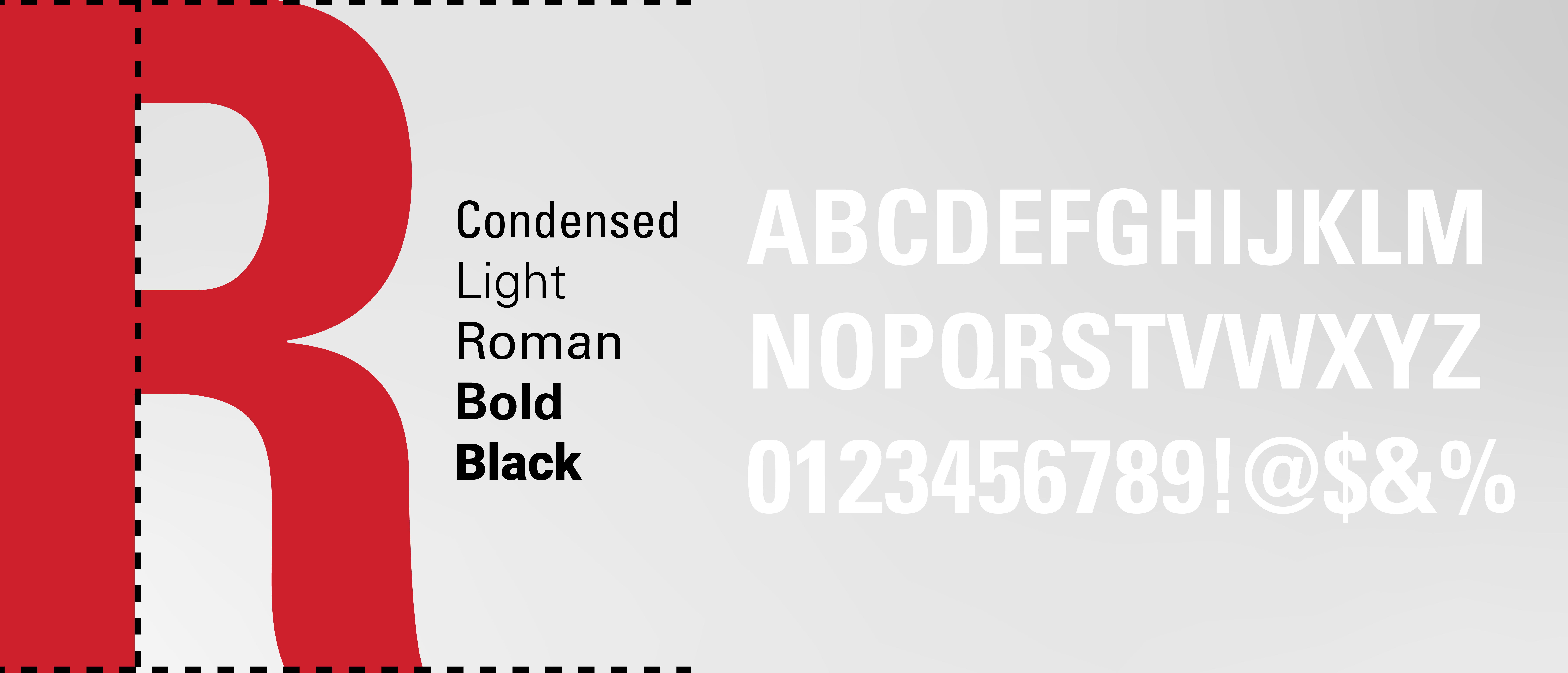
The Univers font family is the primary font for Raymond. Use it in Raymond communications when setting headlines, body copy, secondary copy, bullet points, overview and callouts.
Whether in bold headlines or fine print, our chosen typefaces are selected for clarity, consistency, and a tone that feels professional yet approachable.
Bold Font
Lighter Fonts
The Bold font weight brings energy and visibility to headlines. Use all caps, scale, spacing, and layout thoughtfully to create bold, dynamic compositions.
Black is the heaviest font weight, offering a sense of strength and stability. It's ideal for applications that demand bold presence.
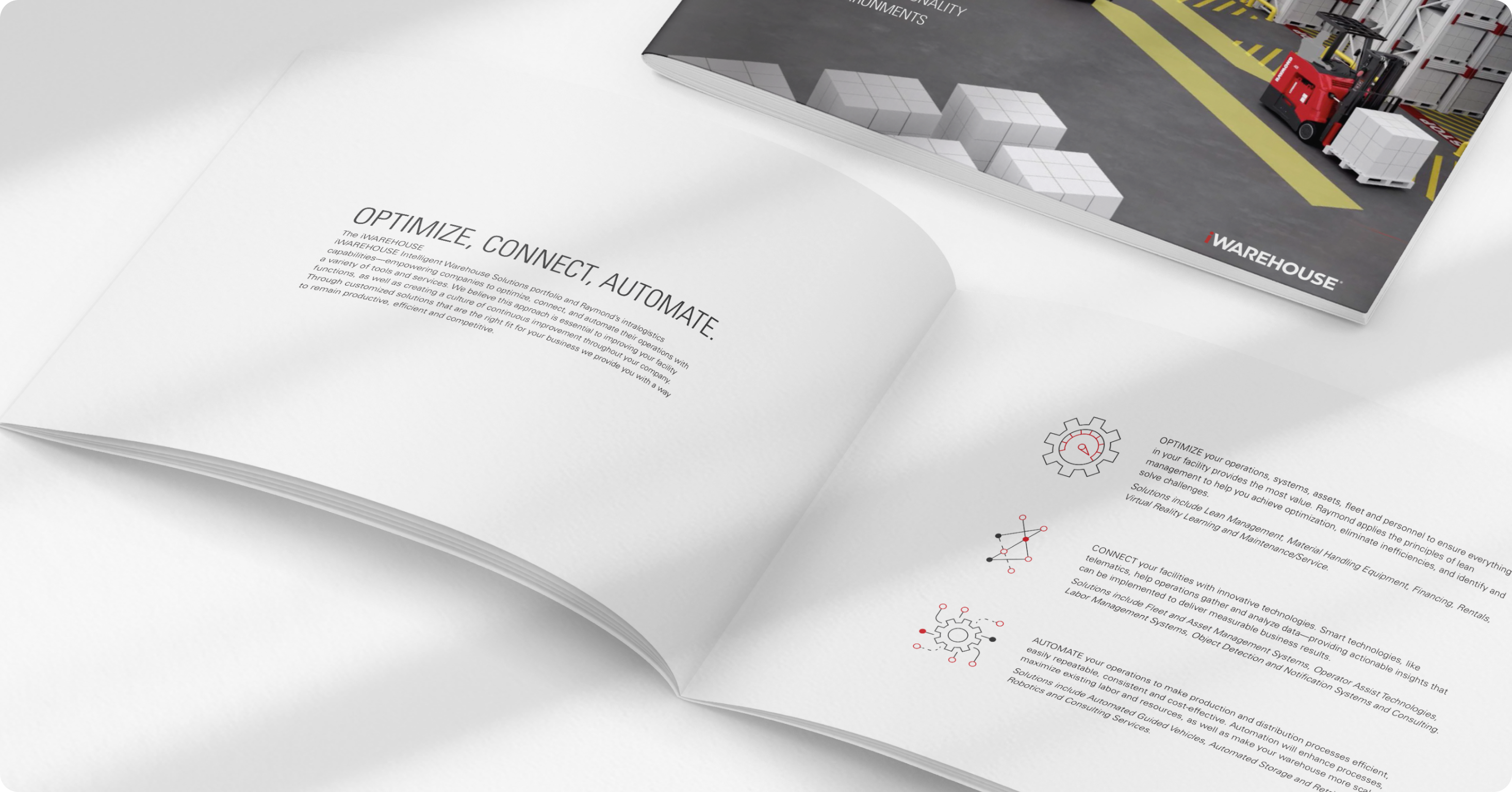
Light weight type works well in roles where subtlety and clarity matter, offering a modern presence that complements primary elements without competing for attention.
The Light font weight offers a clean, contemporary feel that supports clarity and a sense of refinement without overpowering the message.
Standard Usage
Regular weight type provides balance and versatility. Ideal for everyday communication where readability and a neutral tone are key. It supports content with clarity and consistency across applications.
Mixed Usage
Varying font weights add structure without sacrificing simplicity. Book weight handles detail-oriented text like subheads and small copy with clarity, while Regular stays strong and legible even when layered over images or busy backgrounds.
Precise and readable, the typeface holds up in the finer details. Ideal for numbers, interface elements, and auxiliary text.
Typesetting
Thoughtful text arrangement ensures clarity, consistency, and a unified brand presence across all touchpoints.
Caps-lock
Weight: Bold, Semi-Bold, and Black Alignment: Flush left, centered Leading: 95% or auto height Letter Spacing / Kerning: 0% or visual kerning
Weight: Bold, Semi-Bold, and Black Alignment: Flush left, centered Leading: 95% or auto height for digital, 100% or auto for print Letter Spacing / Kerning: 0% or visual kerning
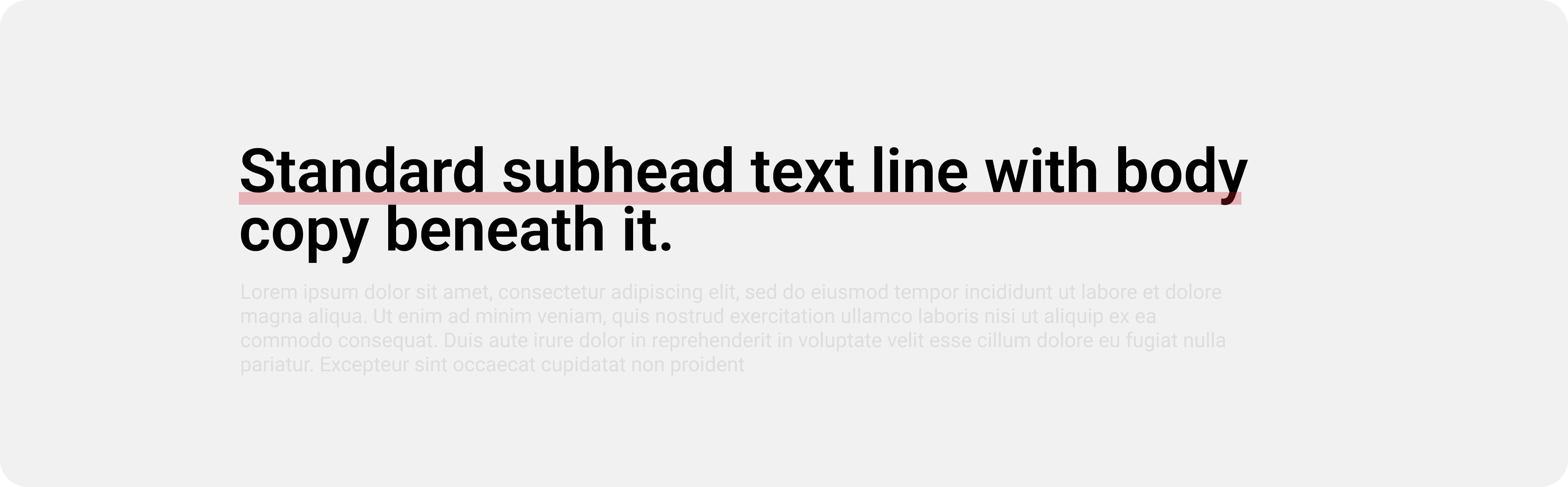
Standard Headline
Subheading
Weight: Semi-Bold Alignment: Flush left, centered Leading: 100% or auto height for digital, 110% or auto for print Letter Spacing / Kerning: 0% or visual kerning
Body Copy
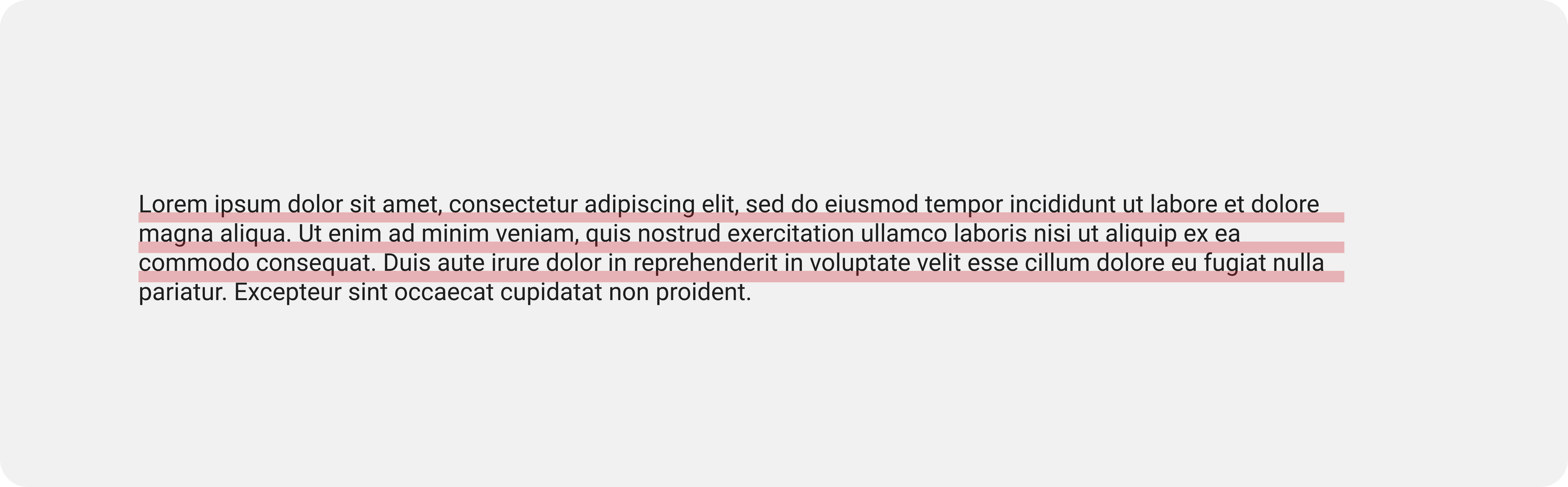
Weight: Regular, Roman Alignment: Flush left, centered Leading: 122% or auto height for digital, 135% or auto for print Letter Spacing / Kerning: 0% or visual kerning
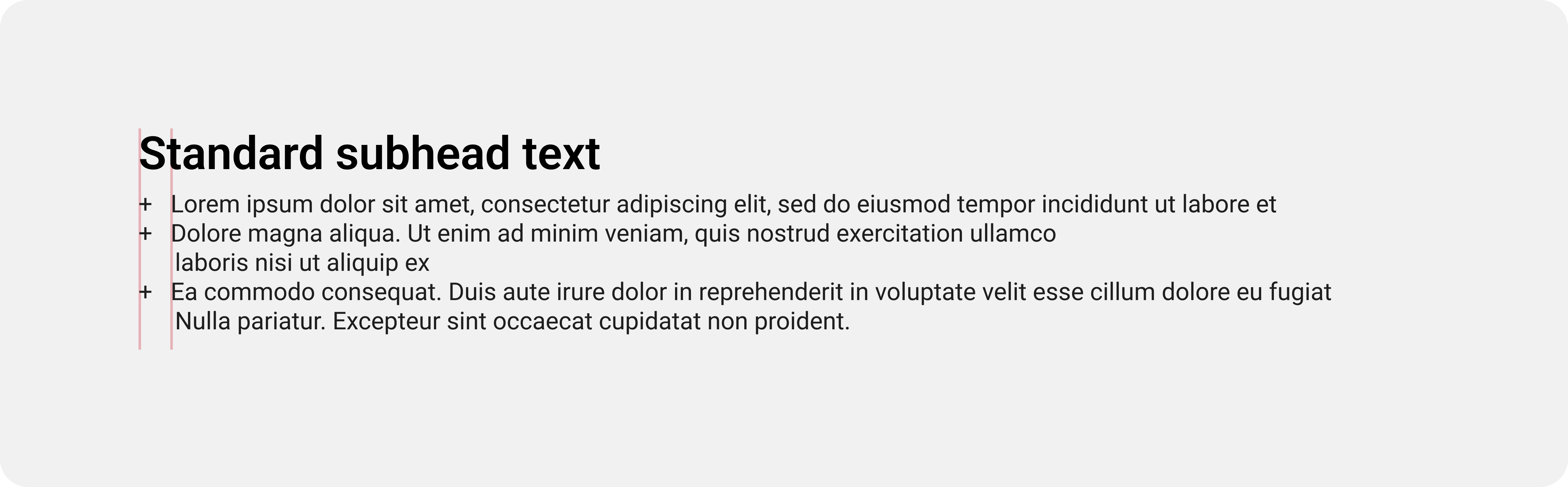
Bullet Points
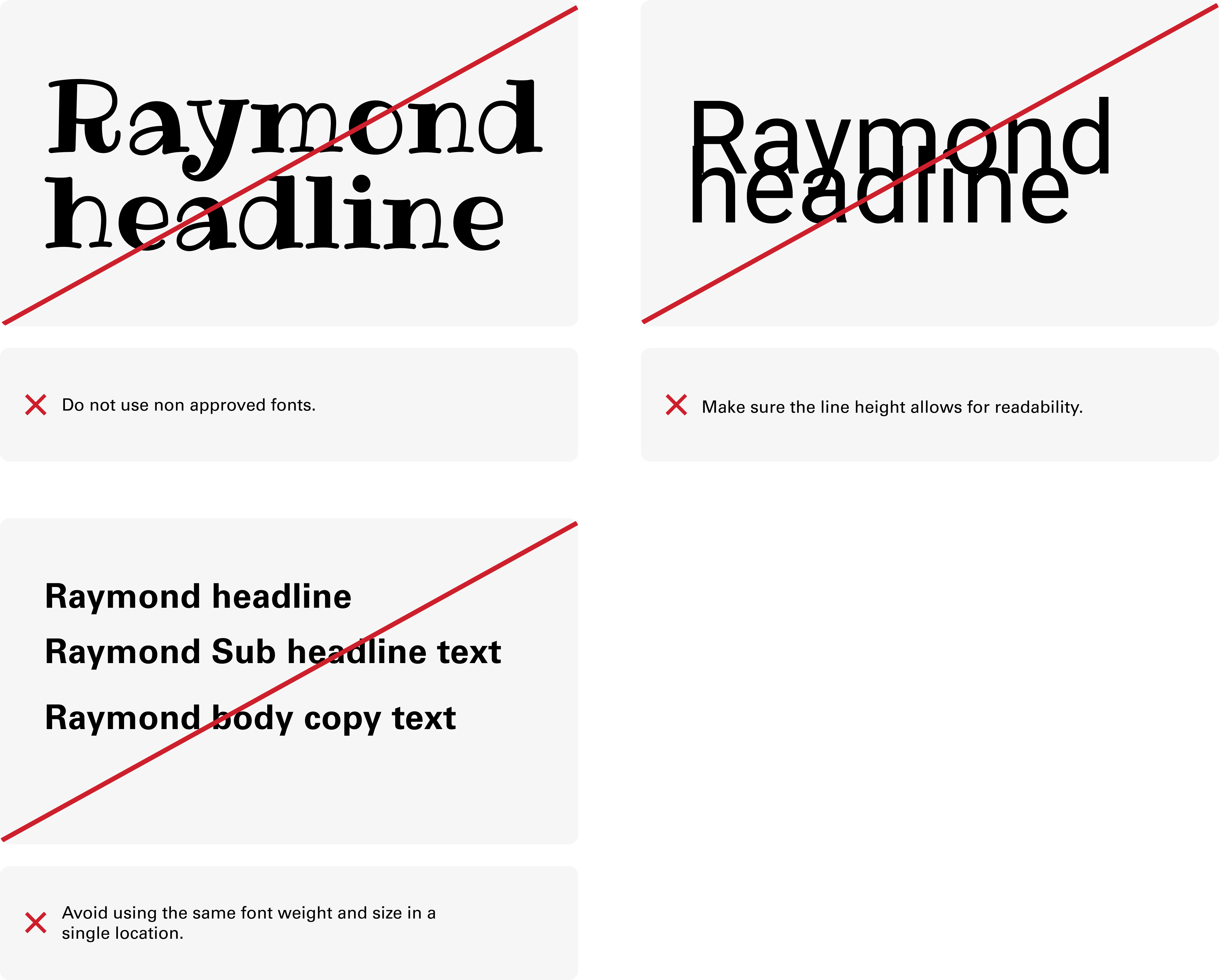
Typography Don’ts
Font Family
Univers is Raymond’s primary font and should be used on all materials when available, while Roboto serves as the alternative for web content or when a Univers license is unavailable.
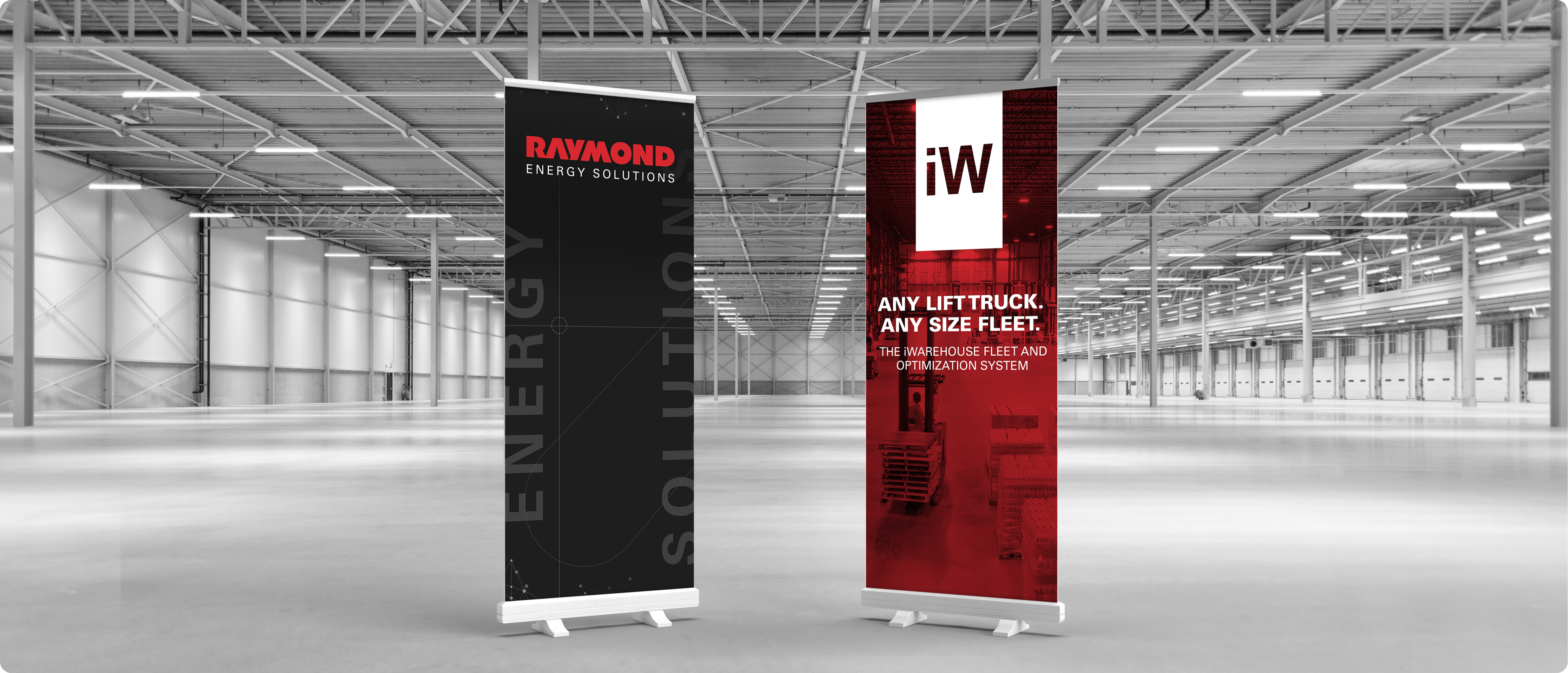
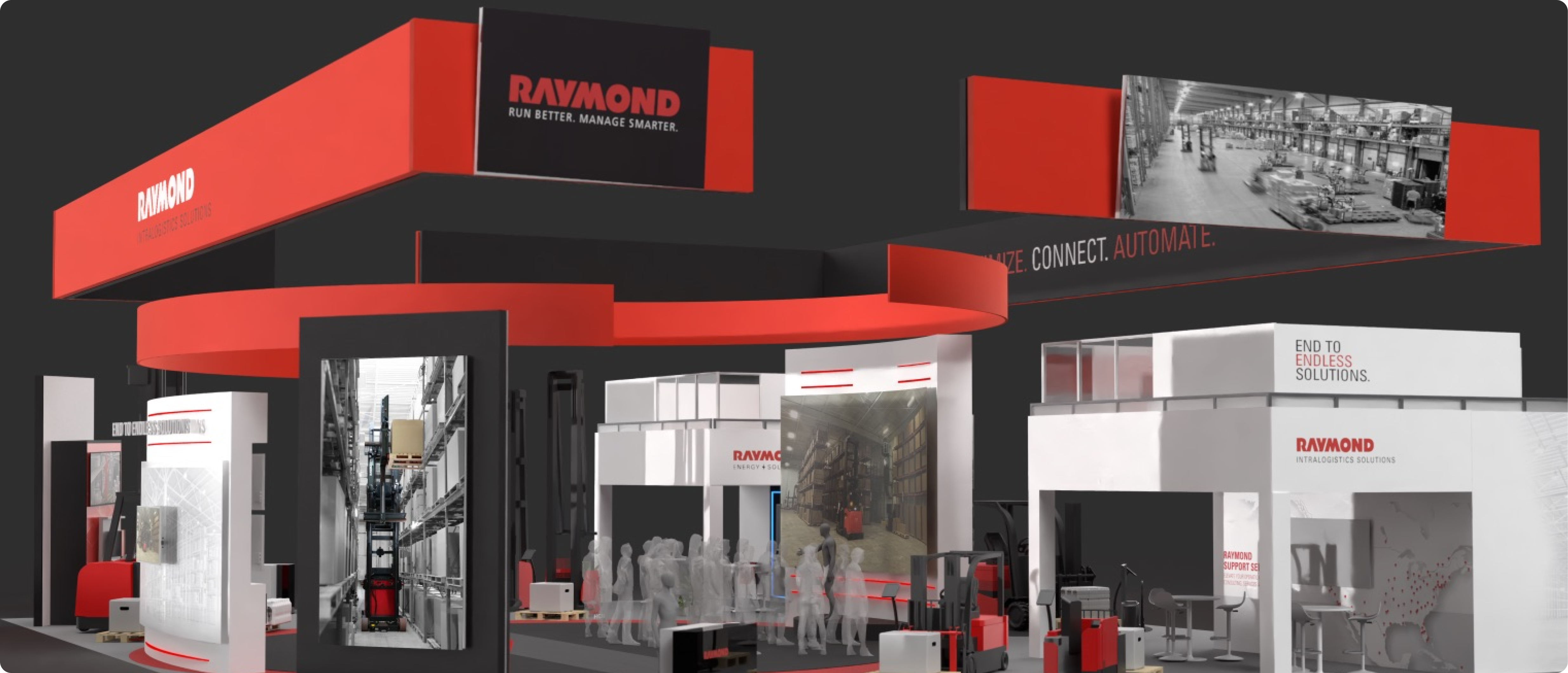
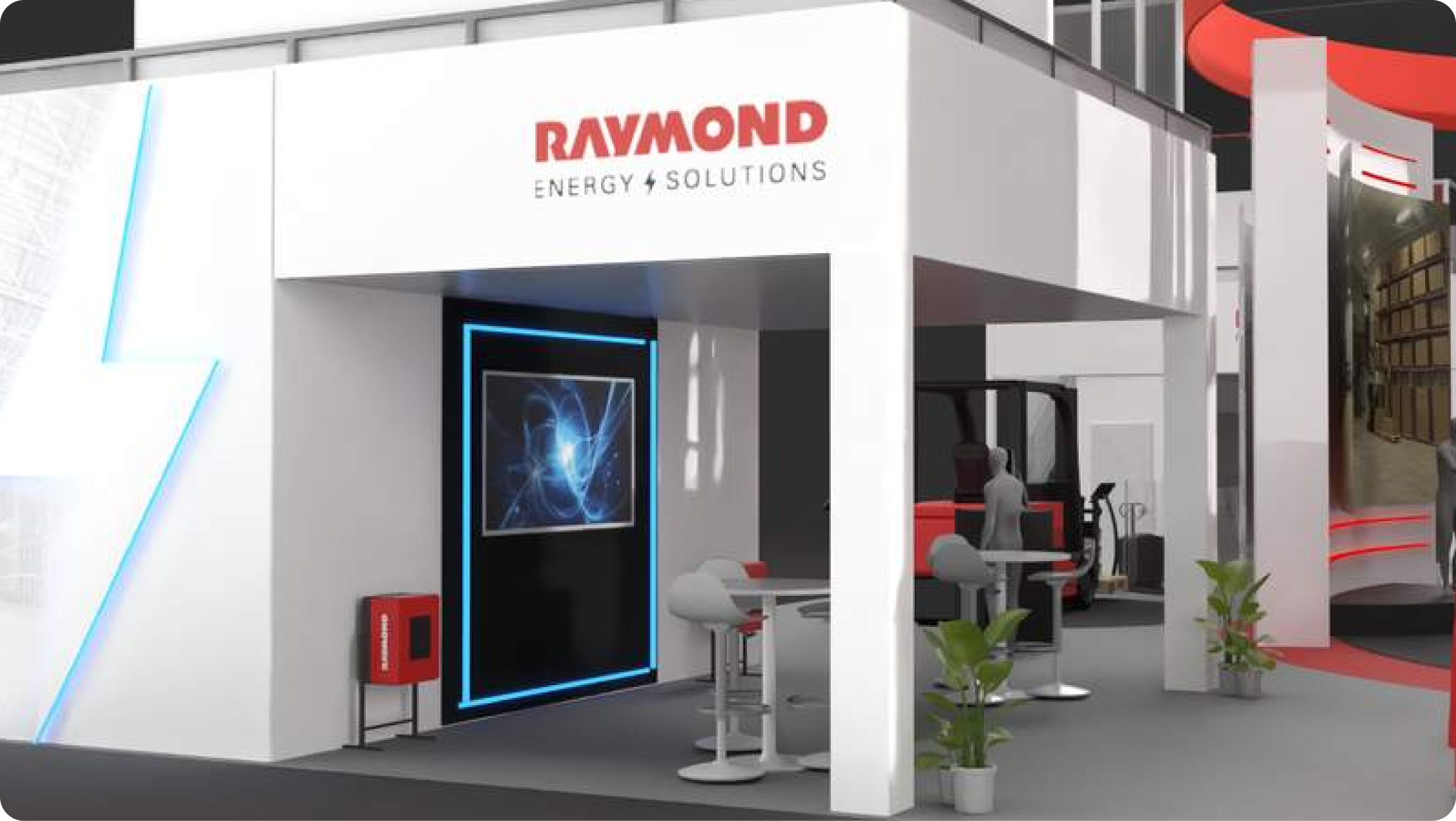
At various times throughout the year, Solutions and Support Centers may require the use of a Raymond tradeshow booth for a regional show or Open House.
Booth Design
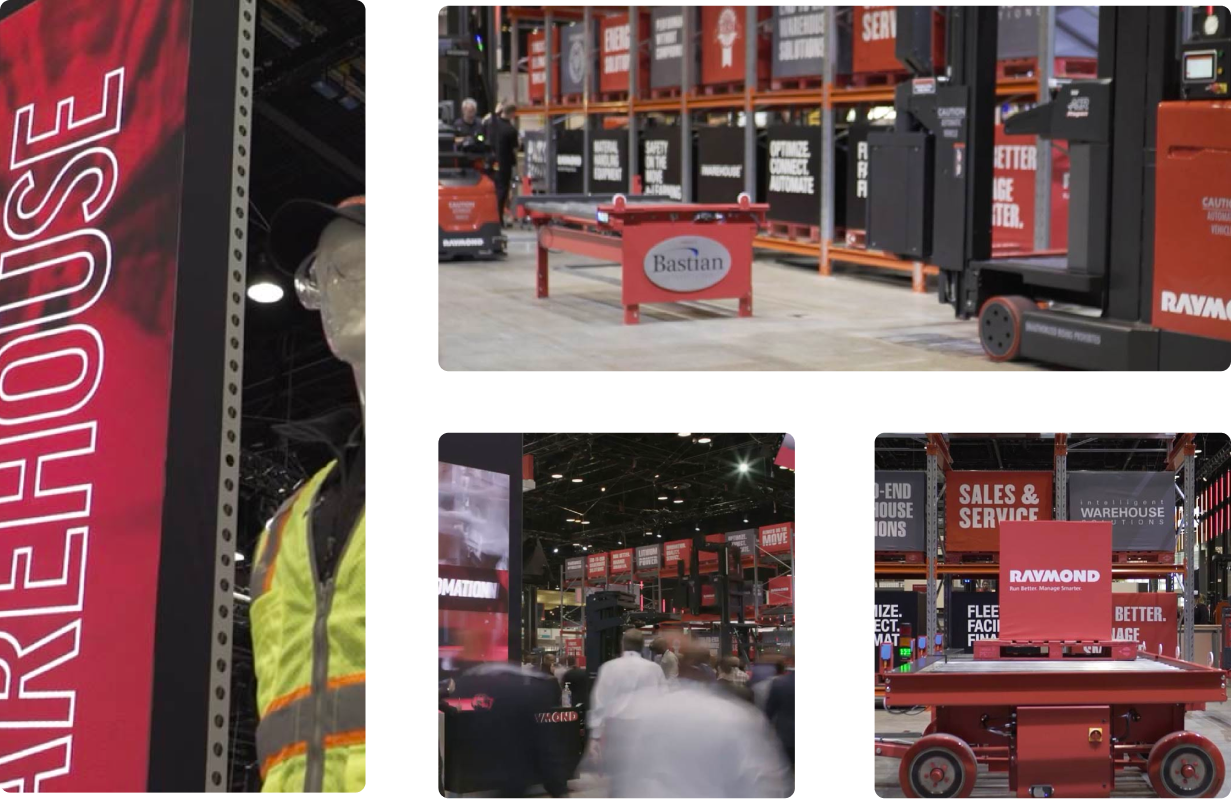
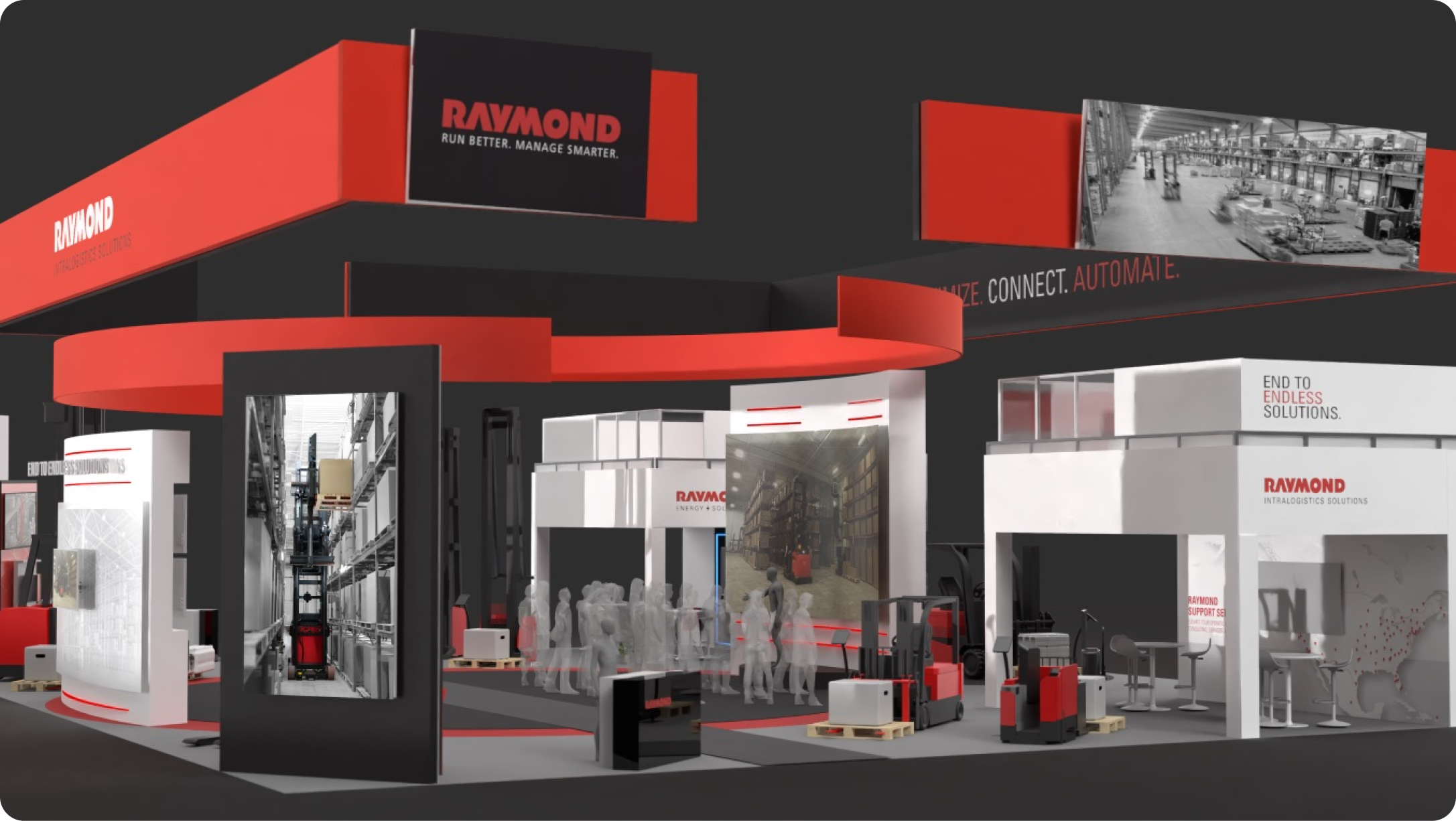
The Raymond Corporation’s tradeshow booths are an extension of our brand experience, bringing our end-to-endless intralogistics solutions to life. Whether showcasing automation, energy, or intelligent warehouse technologies, each booth must clearly communicate how we help customers Run Better. Manage Smarter.
Use the Sub-Brand logo on Single Sub-Brand collateral.
Use Sub-Brand logo for campaigns for “Sub-Brand”.
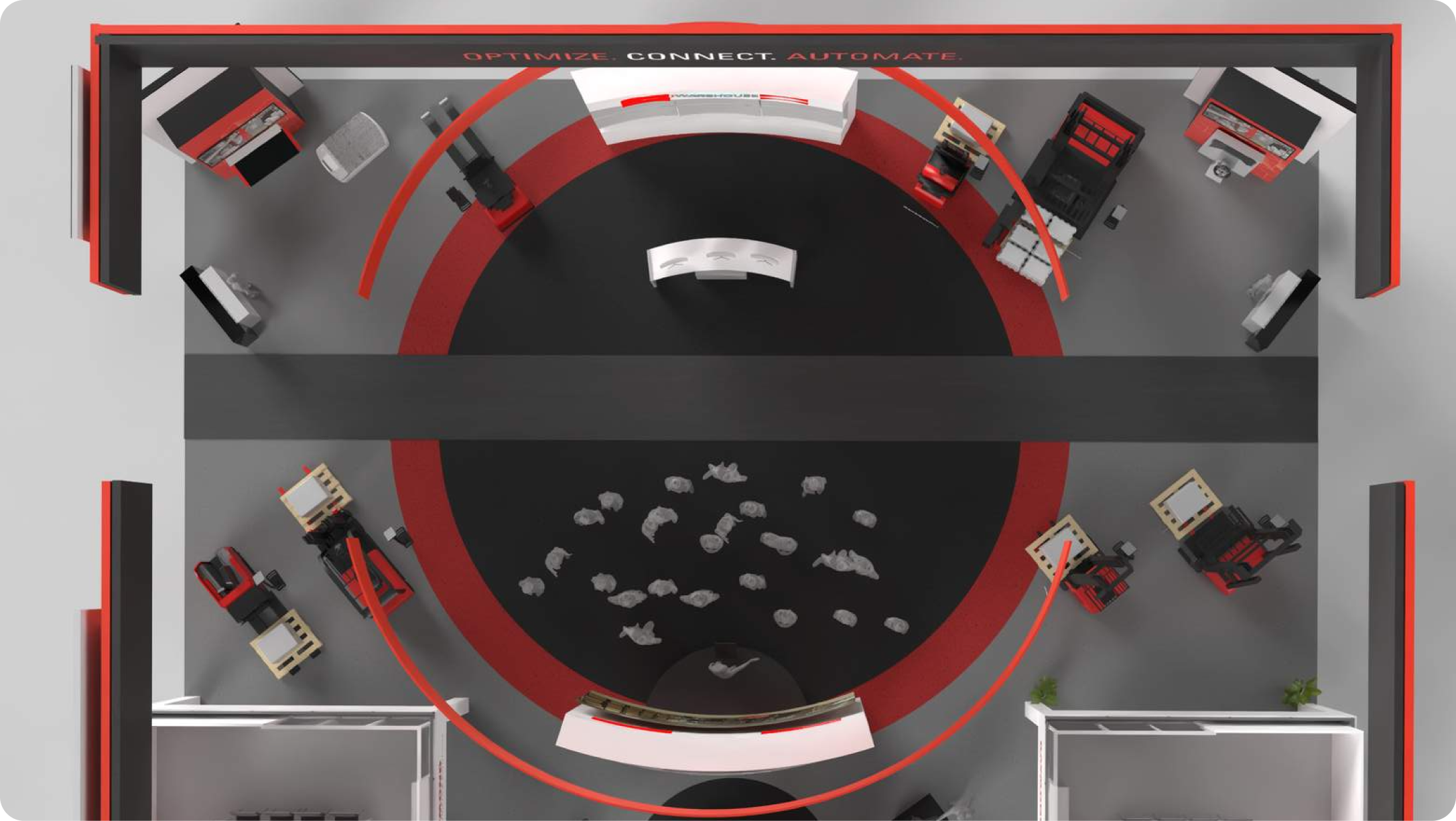
Booth layouts should reinforce our commitment to integrated, scalable intralogistics solutions. Every element, layout, and visual should support product exploration, customer engagement, and impactful conversations.
Design with Purpose
All graphics and messaging must work together to tell a unified story. Use focused headlines, clean visuals, and intentional space to avoid clutter and ensure clear communication of Raymond’s value proposition.
Prioritize Clarity and Cohesion
Booths should include distinct yet connected areas for product and solution displays, brand messaging, meetings, and, when applicable, seminar or presentation zones. Each space should be designed to support its function while maintaining a cohesive visual identity and flow throughout the booth.
Create Zones for Experience and Engagement
All booth design elements must follow Raymond’s brand standards. This includes using approved logos, colors, typography, and imagery. Visuals should be high-resolution and professionally rendered. All messaging must reflect Raymond's tone which is professional, solution-focused and forward-thinking.
Maintain Brand Consistency
Reservations, Shipping, Booth Return
To reserve a tradeshow booth, contact Meagan Cavanaugh in Raymond Brand Marketing at (607)349-0818 or meagan.cavanaugh@raymondcorp.com. Raymond Solutions and Support Centers are responsible for related shipping charges to and from the show or event. For asset usage please contact Meagan Cavanaugh at (607)349-0818 or meagan.cavanaugh@raymondcorp.com Christa Reese at (607)644-5026 or christa.reese@raymondcorp.com.
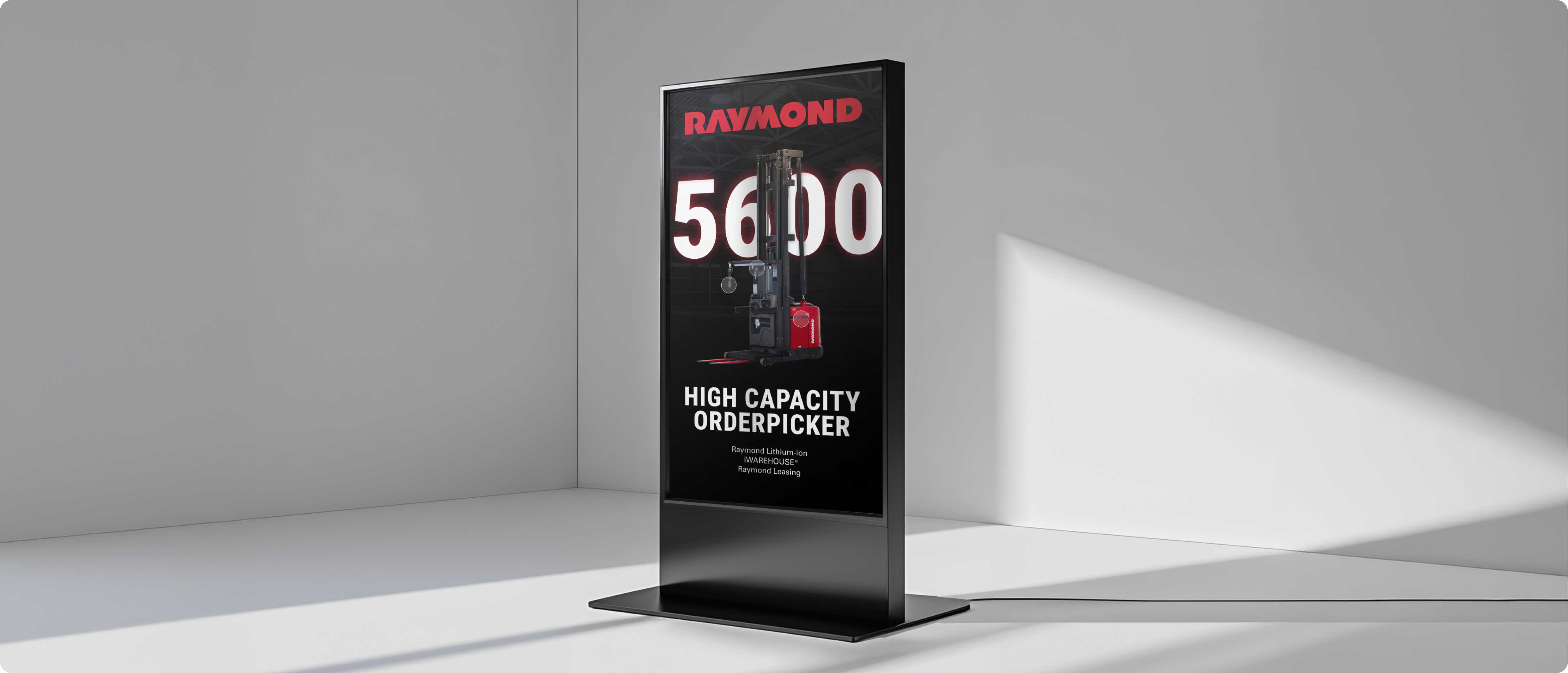
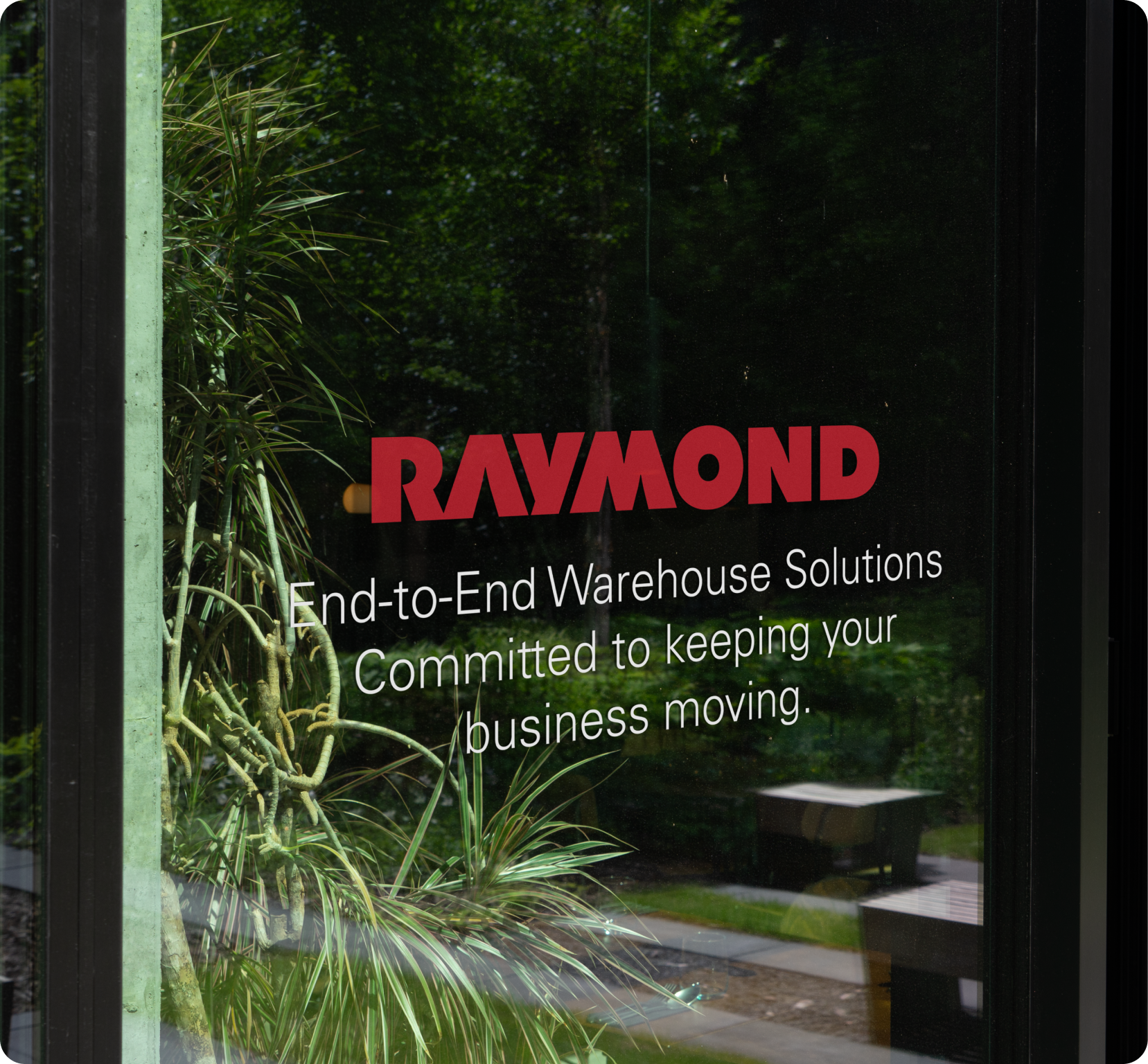
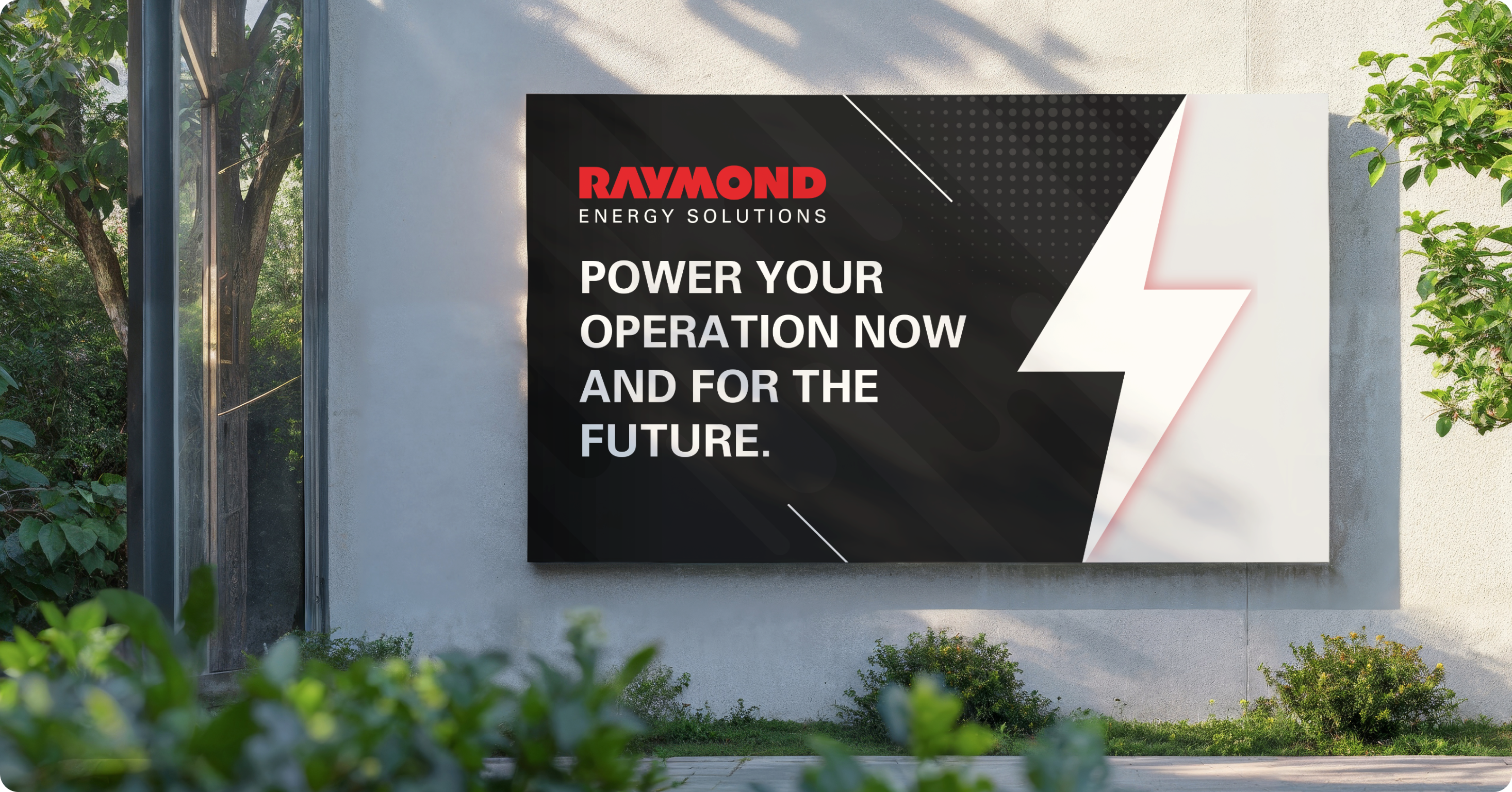
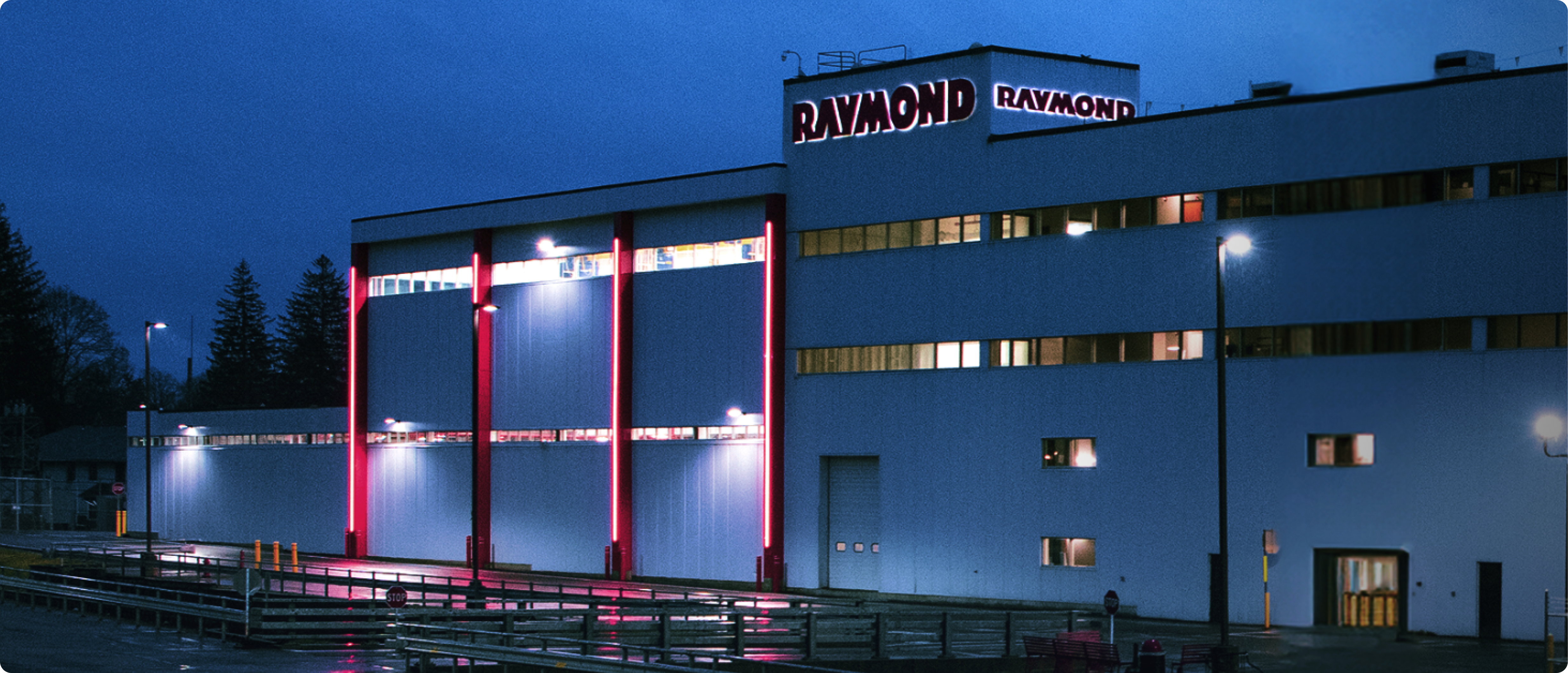
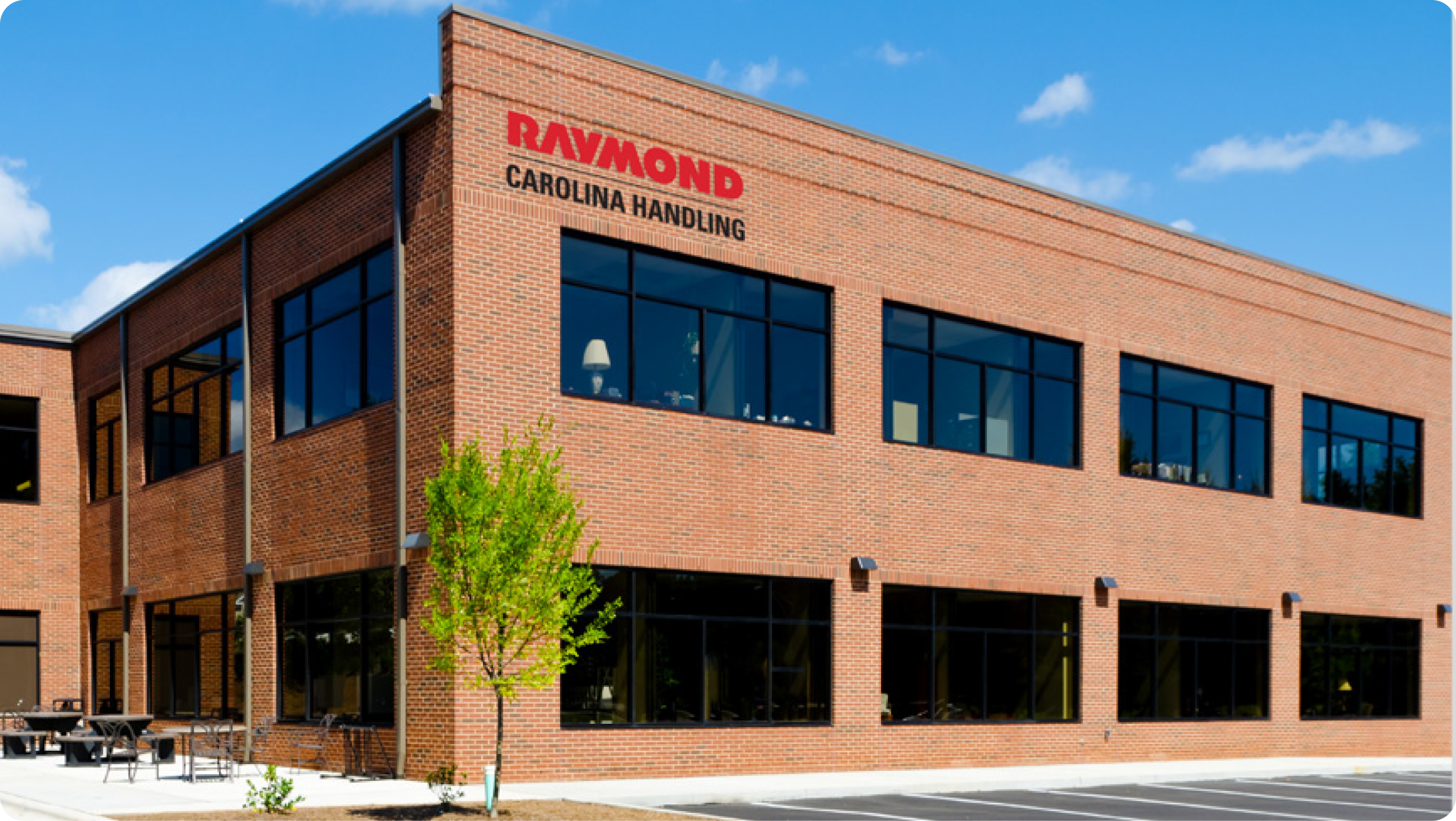
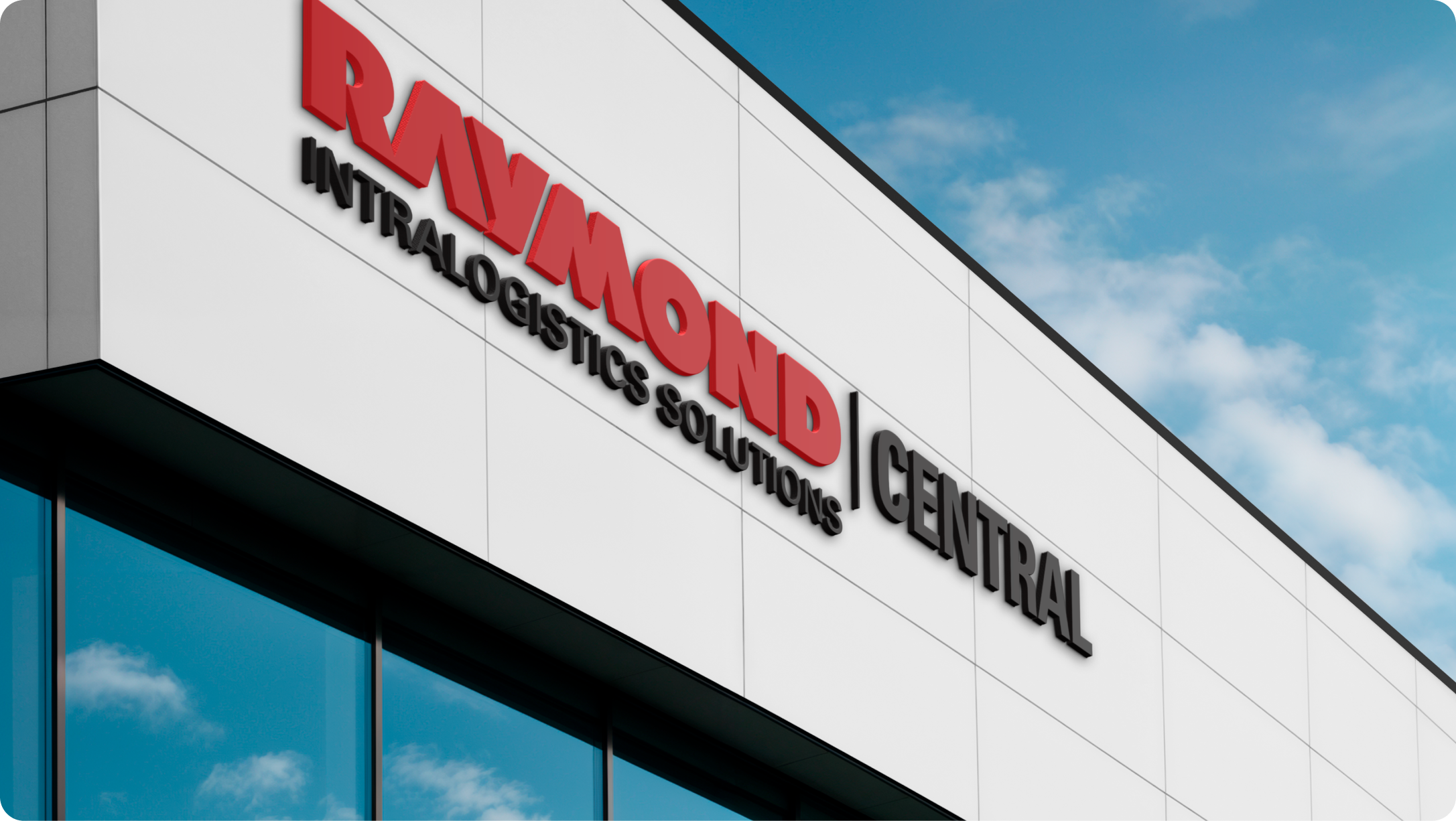
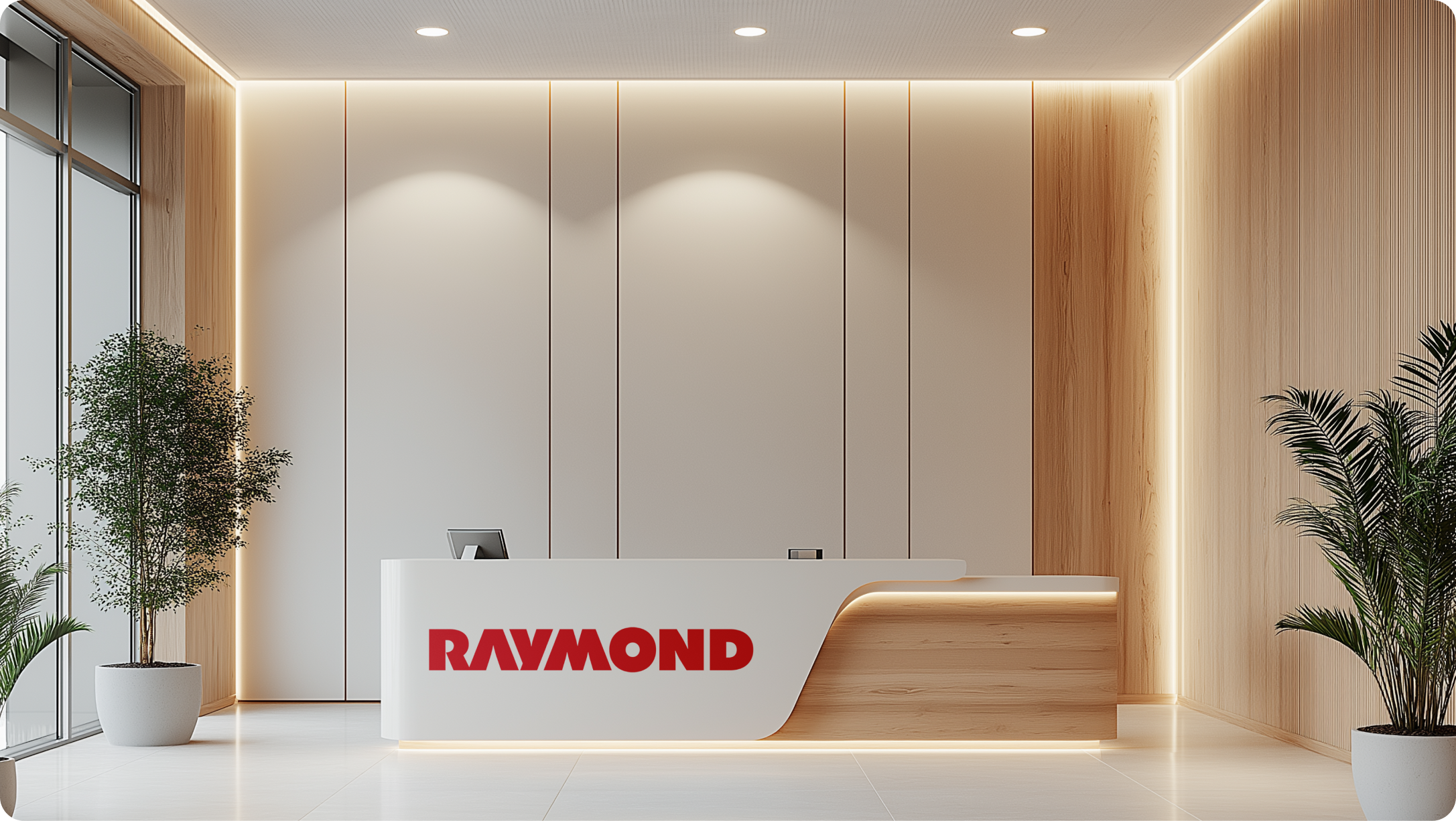
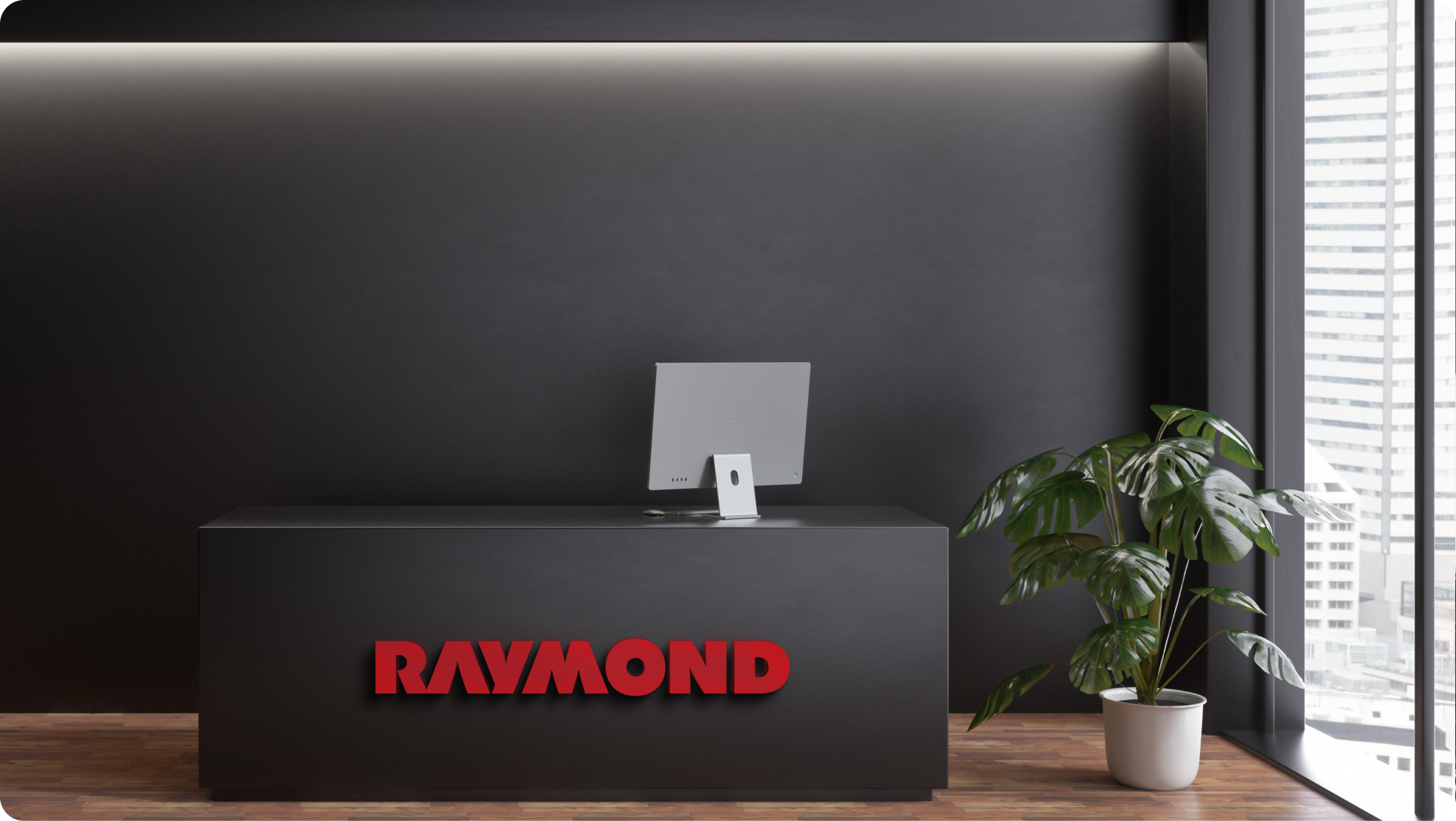
Signage provides visitors with an impression of The Raymond Corporation company as they arrive at the facility and tour the interior. For Raymond corporate facilities, work with the Brand Marketing team to develop signage.
Exterior Signage
Raymond Brand Marketing will partner with each Solutions and Support Center to create signage that meets their specific needs while maintaining brand consistency. As new exterior or interior signage is considered.
Interior Signage
Solutions and Support Centers are encouraged to consult with the Brand Marketing team to review design plans before moving forward with final production.
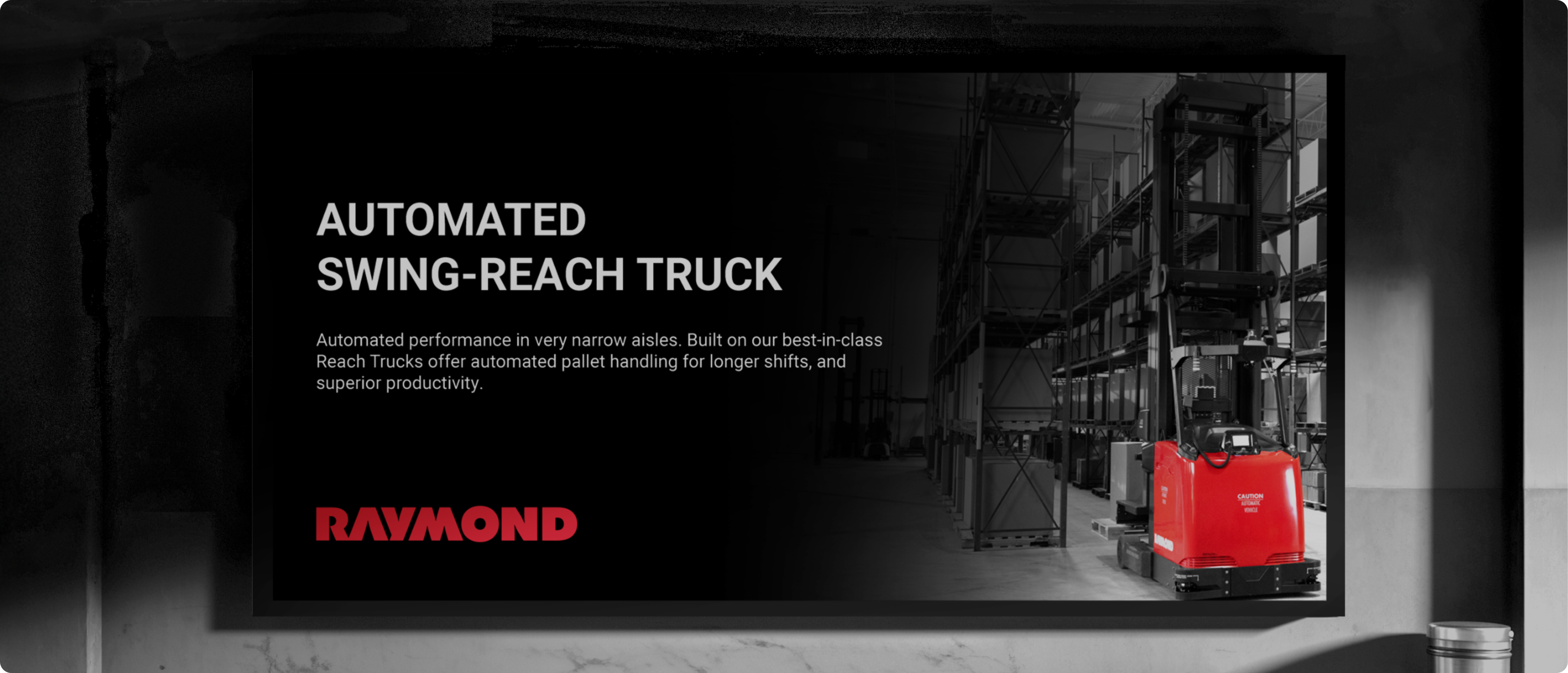
Wall Murals
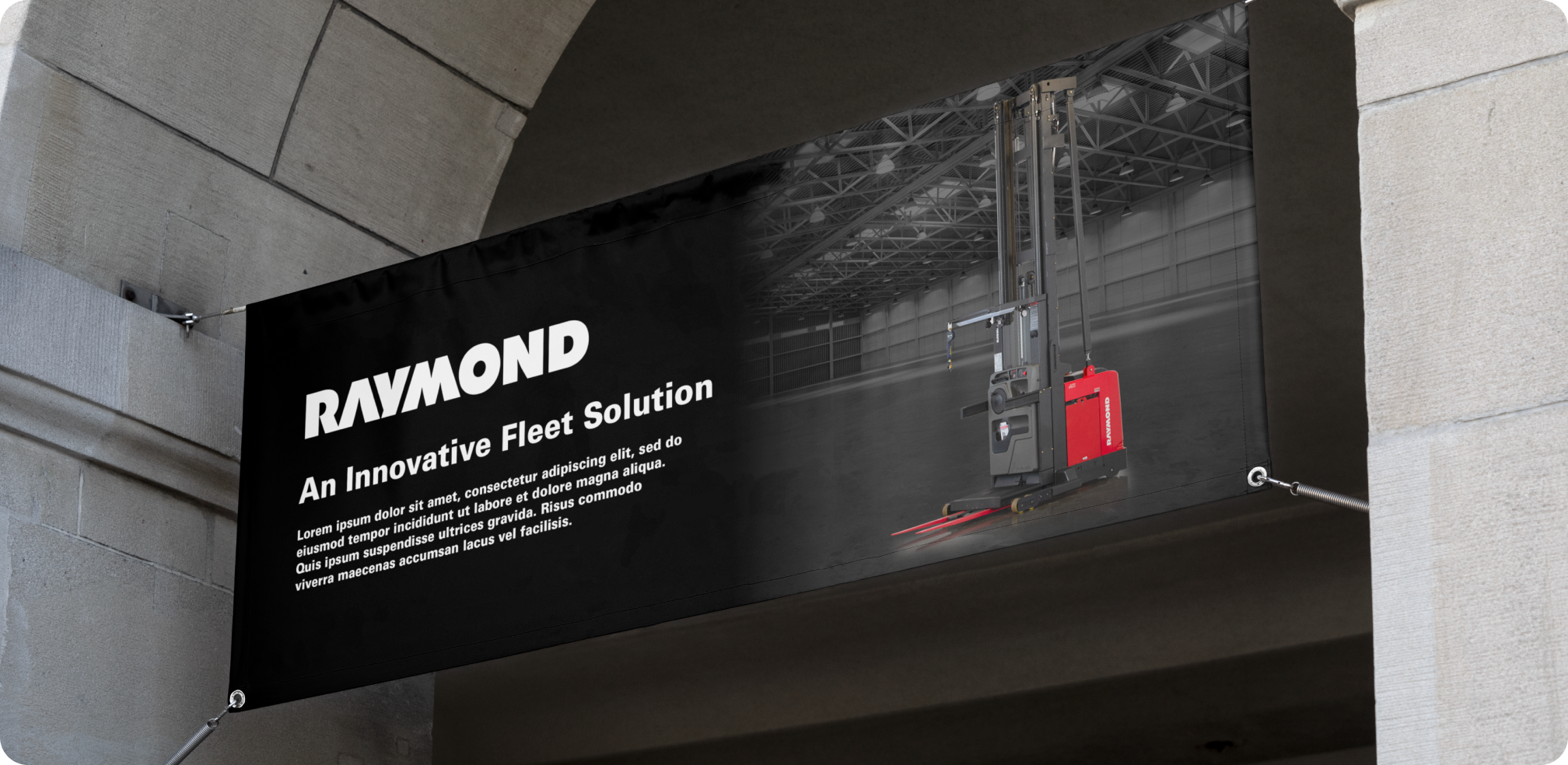
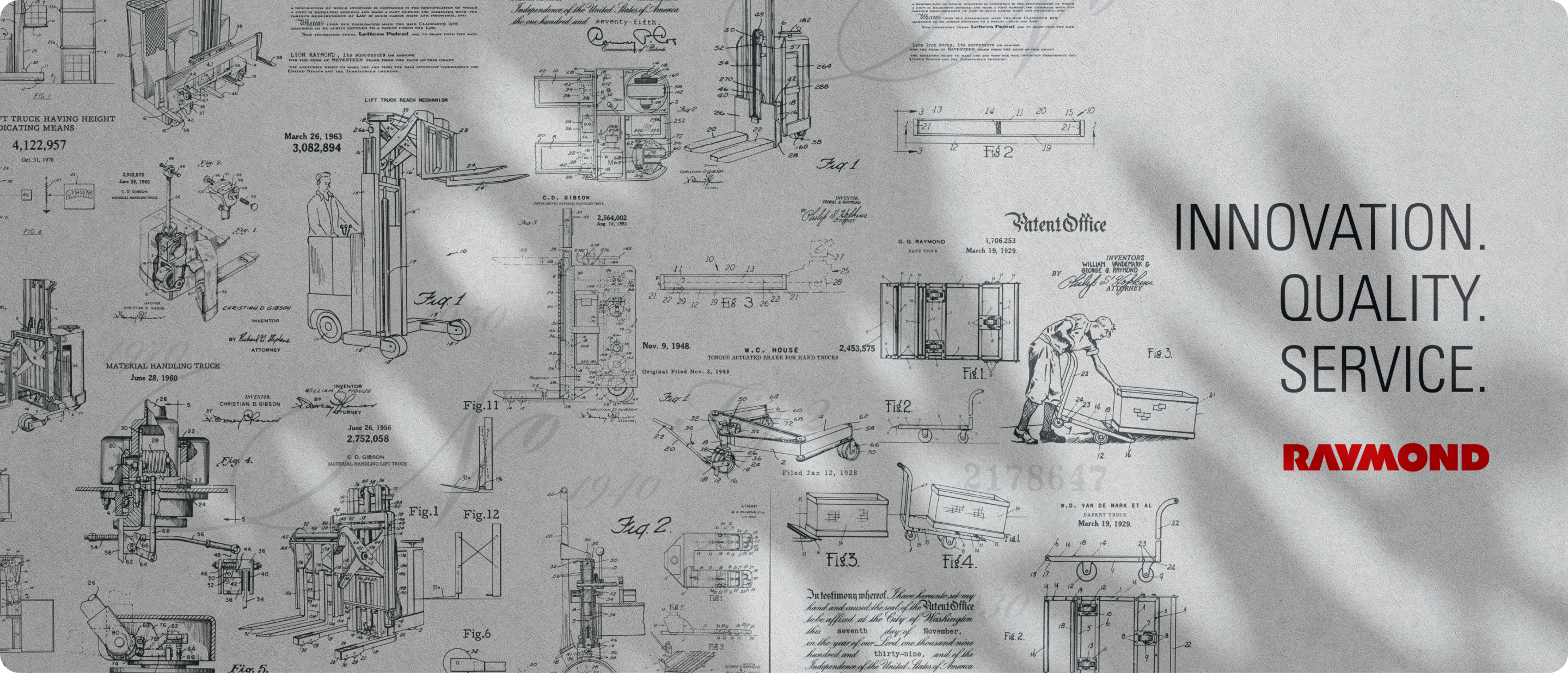
To request interior design elements such as wall murals, banners, and vinyl graphics, please contact the Raymond Brand Marketing team. When submitting your request, a wall survey with accurate dimensions and photos of the space to assist the design team with proper scale, layout, and production is recommended. All designs will align with Raymond’s brand standards to ensure consistency across environments.
Tips for Creating Effective Wall Designs
Contact Raymond Brand Marketing for mural design services. Use approved brand elements—like logos, colors, and fonts—to ensure a consistent visual identity. When using text elements choose large, legible fonts and high-contrast colors that are easy to read from afar. Consider wall size, viewing distance, lighting, and surroundings when creating your layout.
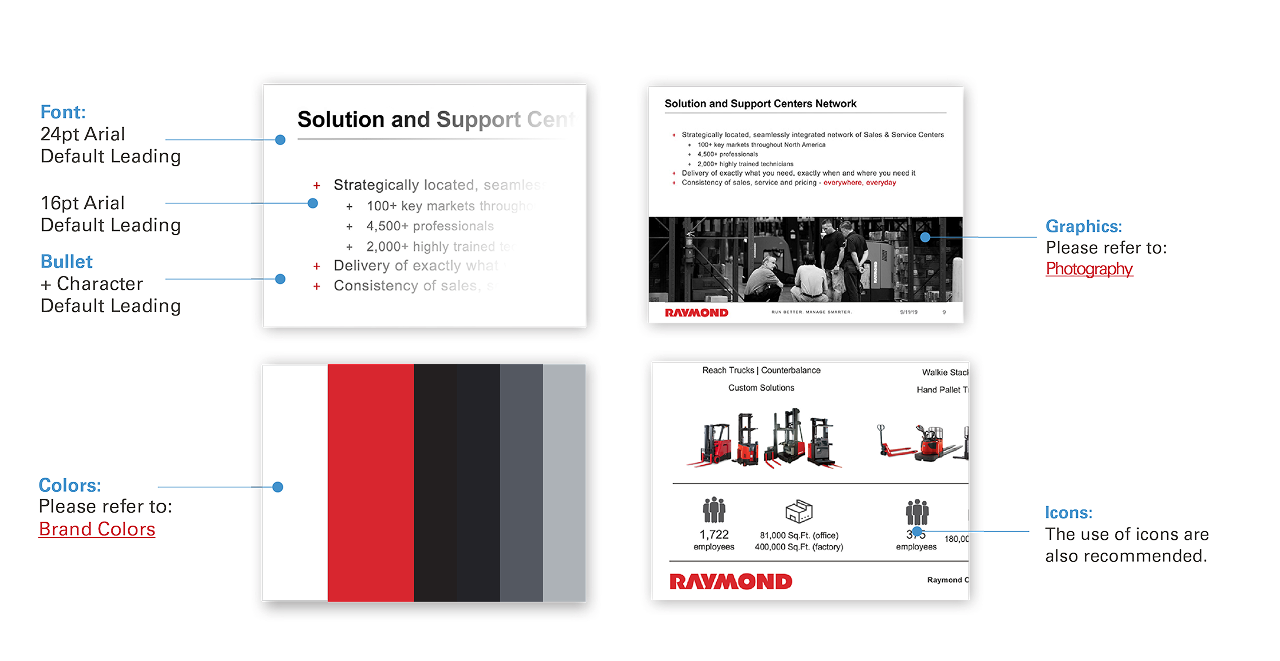
Templates provide the foundation for clear, consistent communication across Raymond materials. From presentations to formal correspondence, each template is designed to reflect our brand values and visual identity. Using these tools ensures a unified look and feel, reinforcing our professionalism and attention to detail.
PowerPoint
Raymond internal and external powerpoint templates are available for download on Insight. Please be sure to check often as modifications are made frequently.
PowerPoint Basics
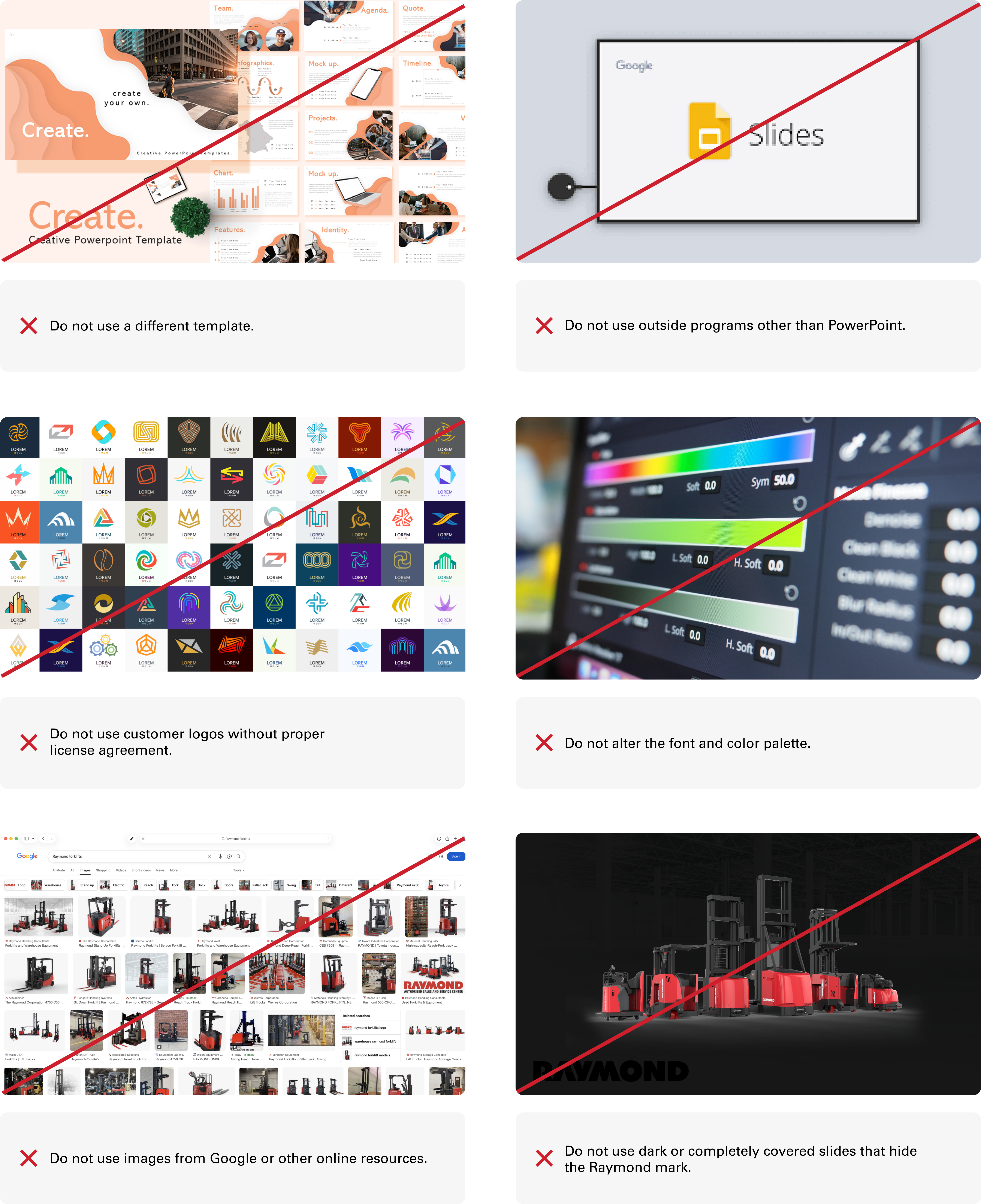
The corporate template is designed to work with the Toyota Material Handling template using similar header and footer space for easy cross sharing. When designing your presentation, please make sure you use the right ratio. High definition screens use 16:9 ratio and older technology generally uses 4:3. Our corporate approved program is Microsoft PowerPoint. All other presentation software ie. Prezi, Keynote are not supported by IT.
PowerPoint Don’ts
How to avoid brand guideline violations.
Tips for Creating Effective Presentations
Minimize the number of slides. Choose a font style and size that your audience can read from a distance. Keep your text simple by using bullet points or short sentences. Check the spelling and grammar.
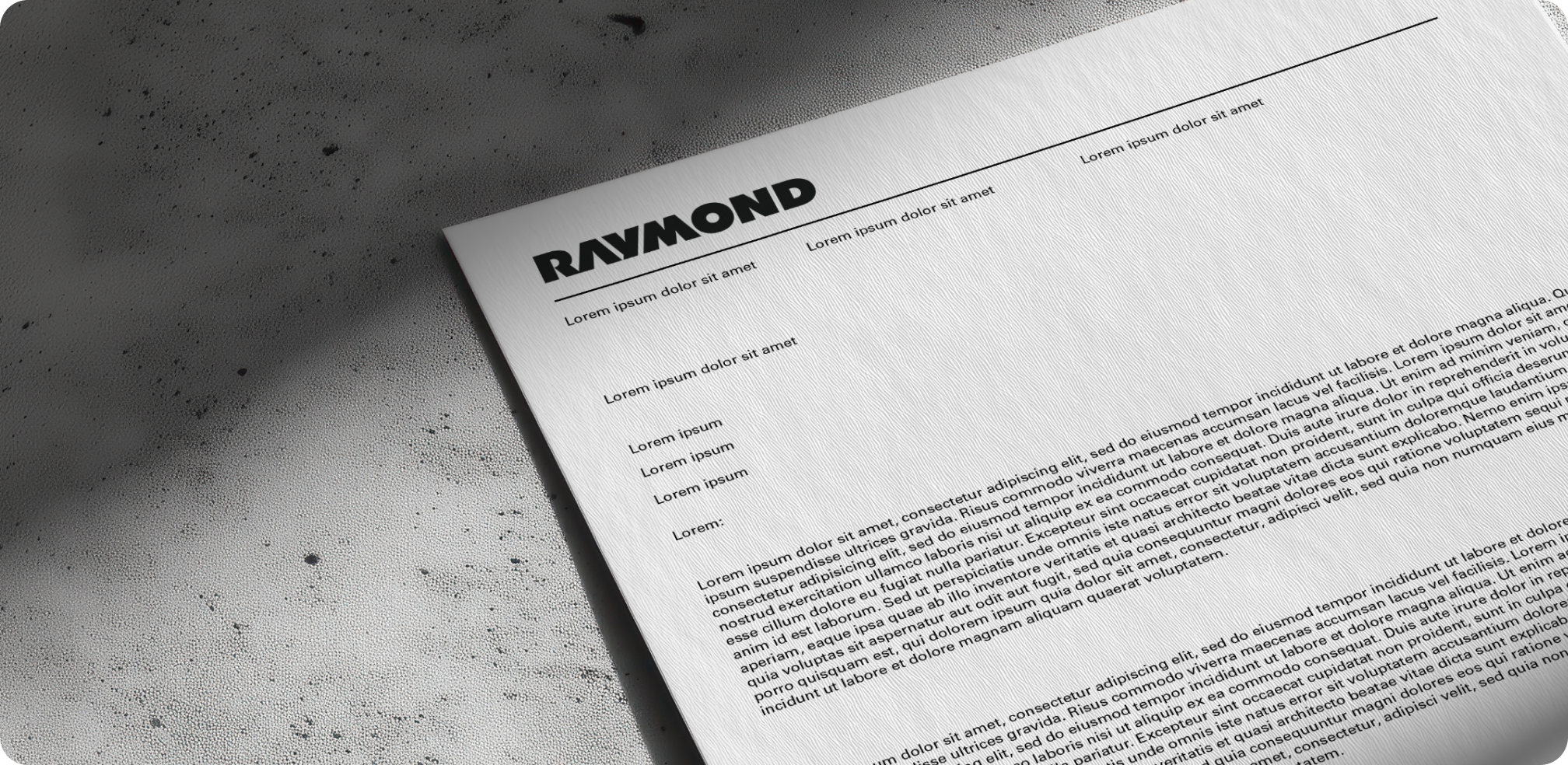
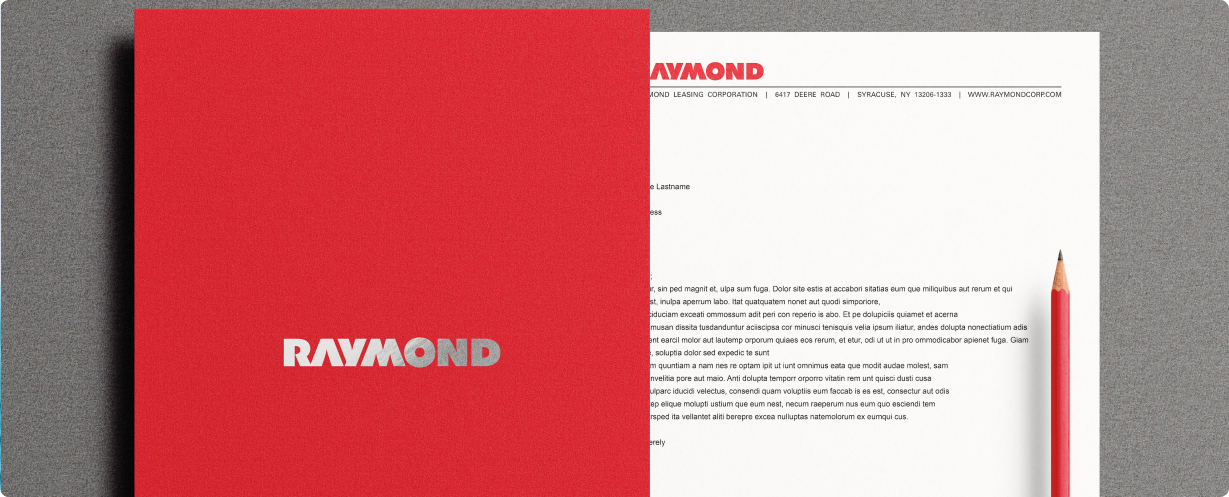
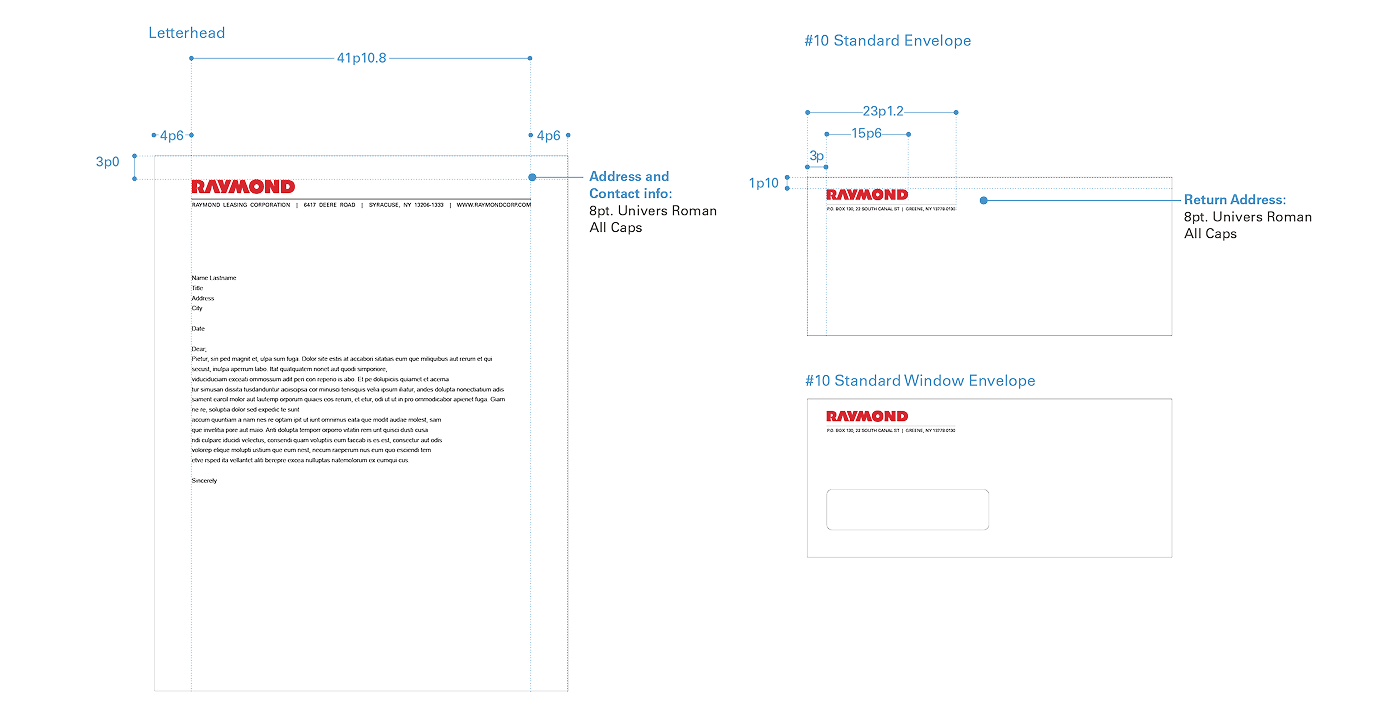
Letterhead
Use only production templates for all Raymond stationery available through Insight.
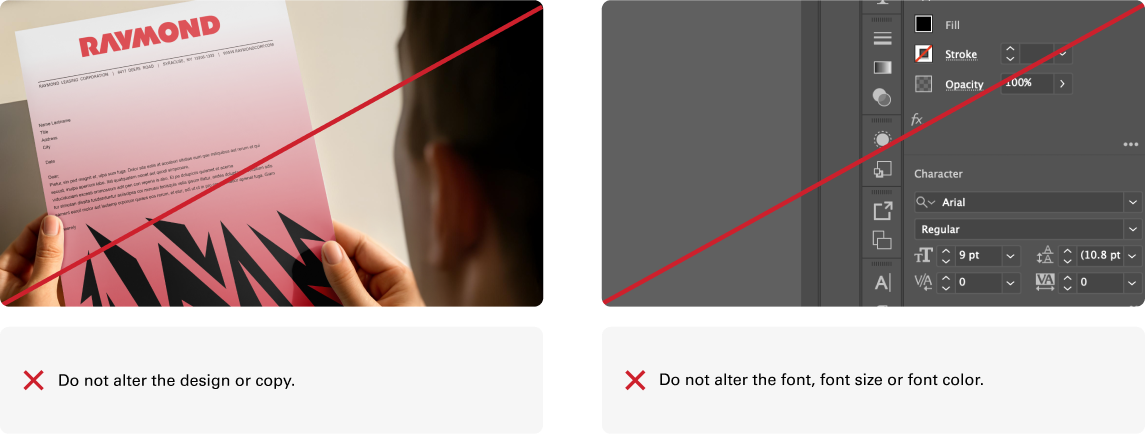
Letterhead Don’ts
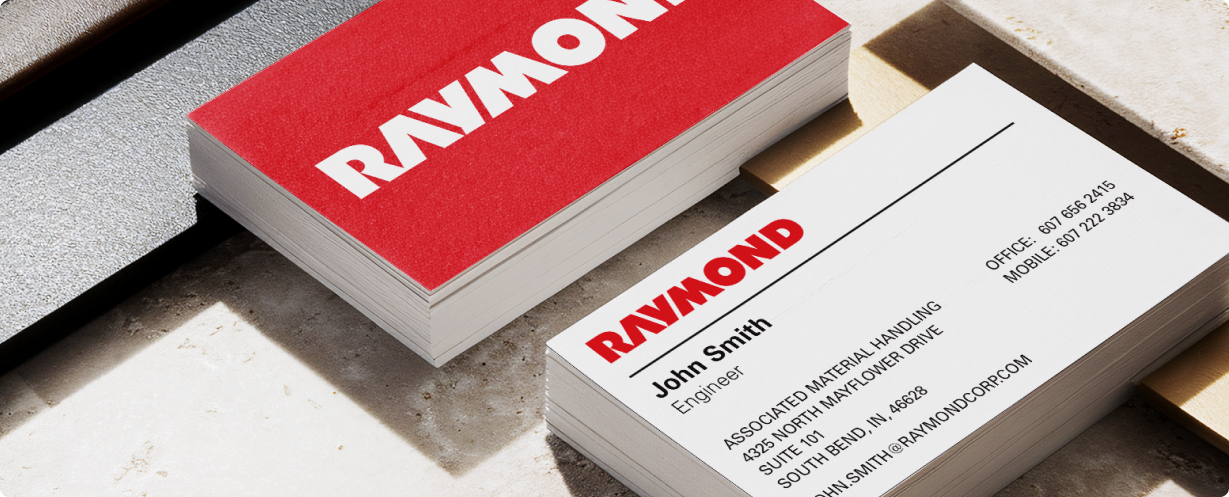
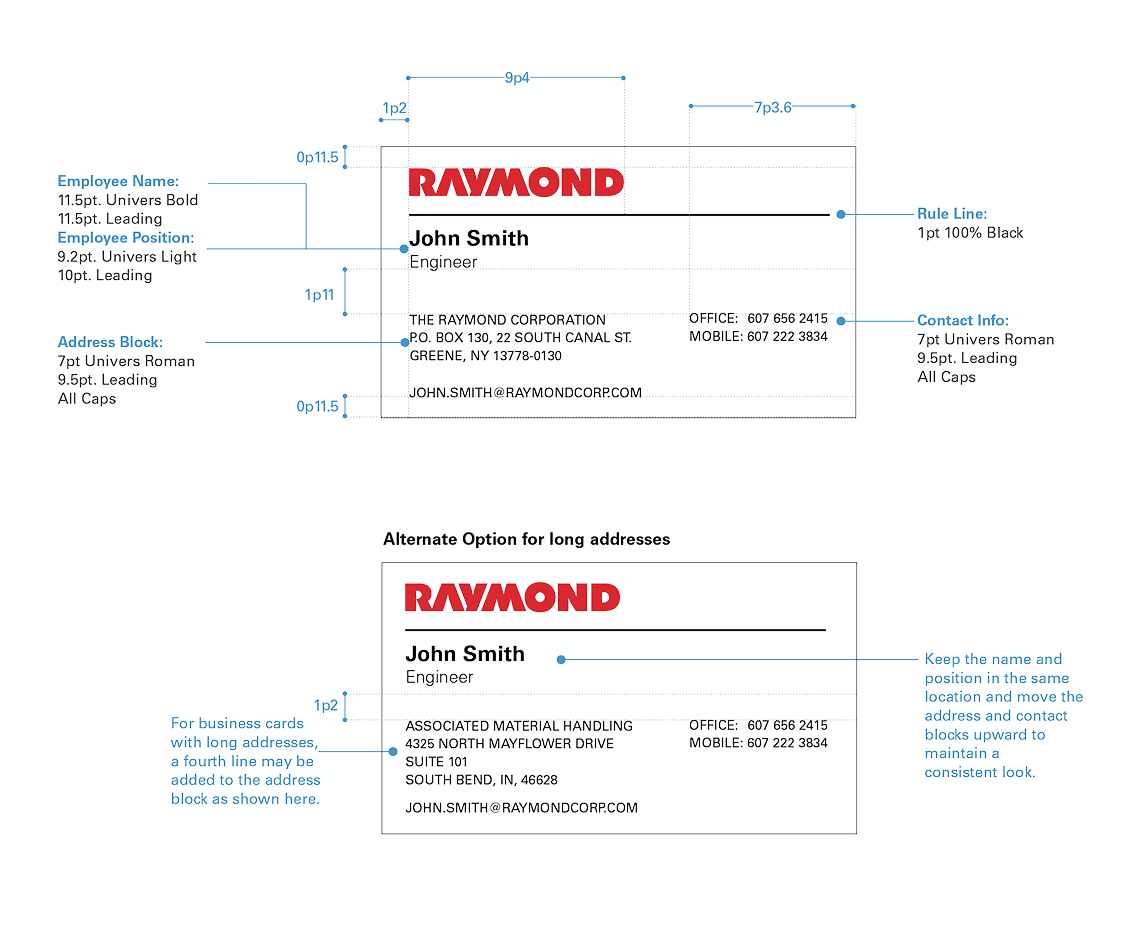
Business Cards
Please use Ariba to order business cards.
Please follow all other guidelines for Logo Usage, Typography and Visuals.
Email and Teams
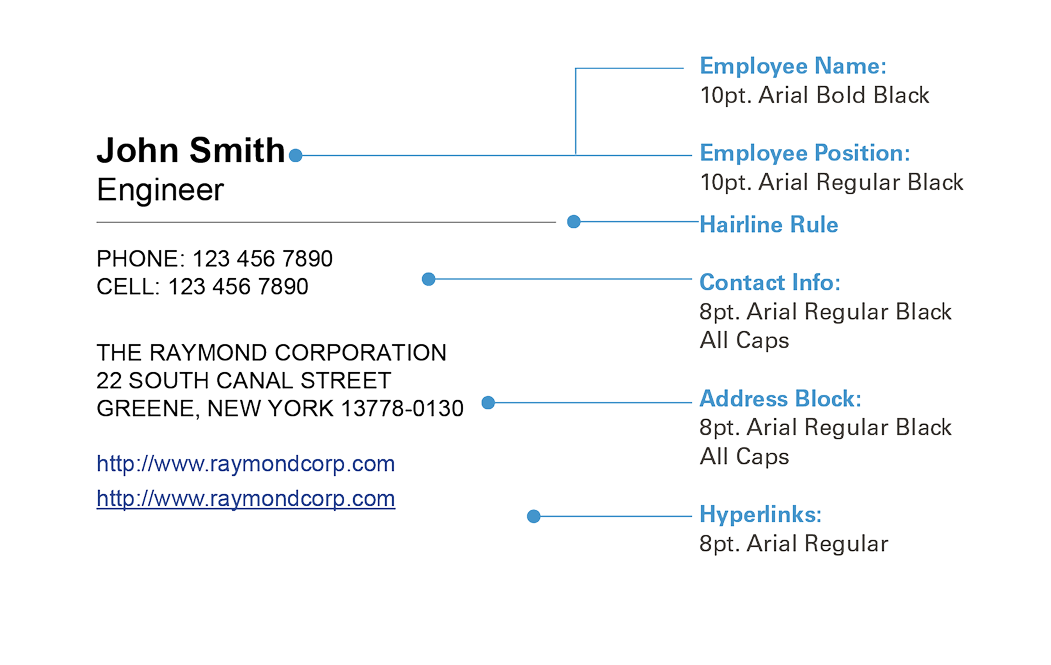
Use only production templates for all Raymond stationery available through the marketing section on Insight.
Email Signature
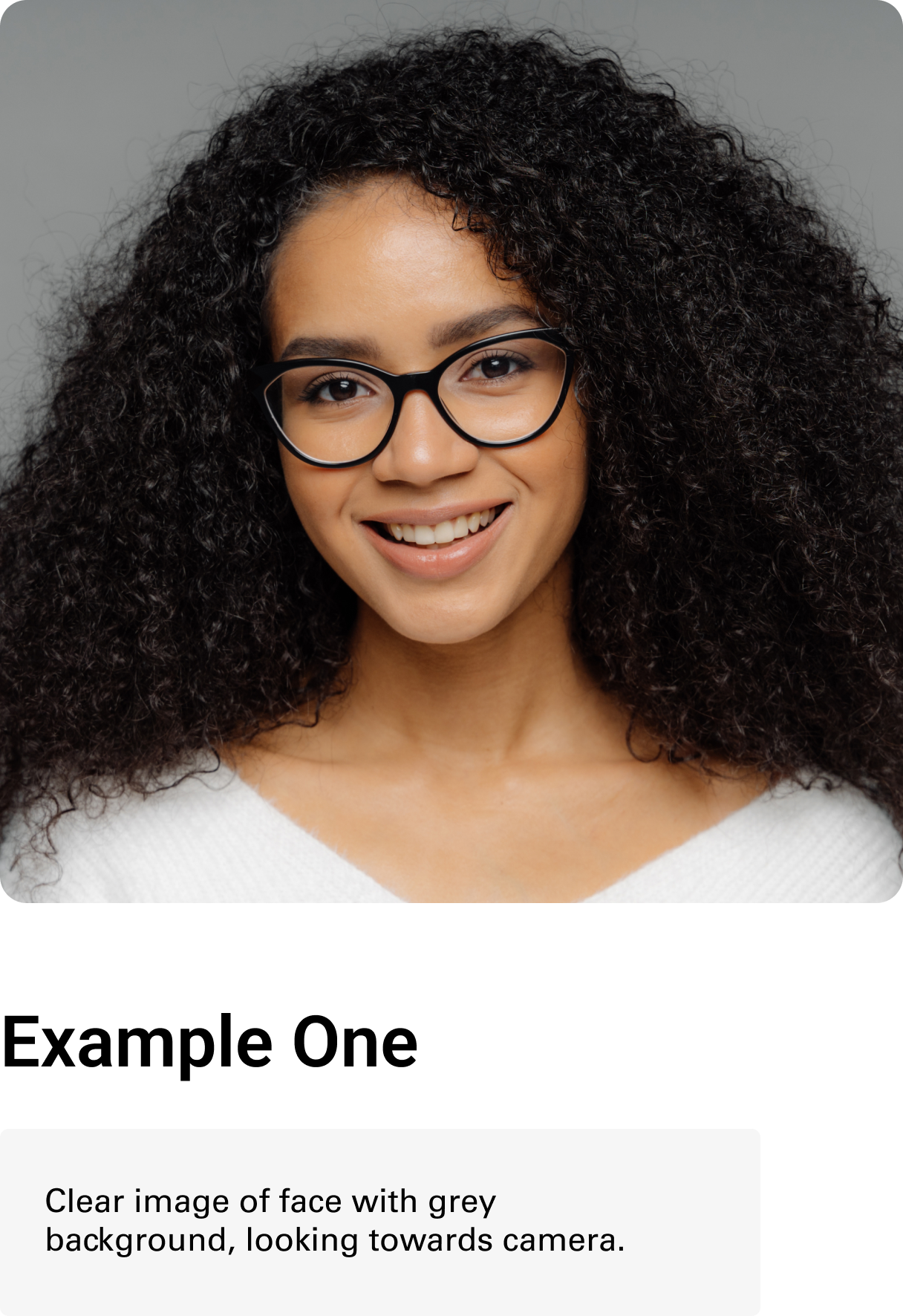
Individual Headshots for Email and Teams
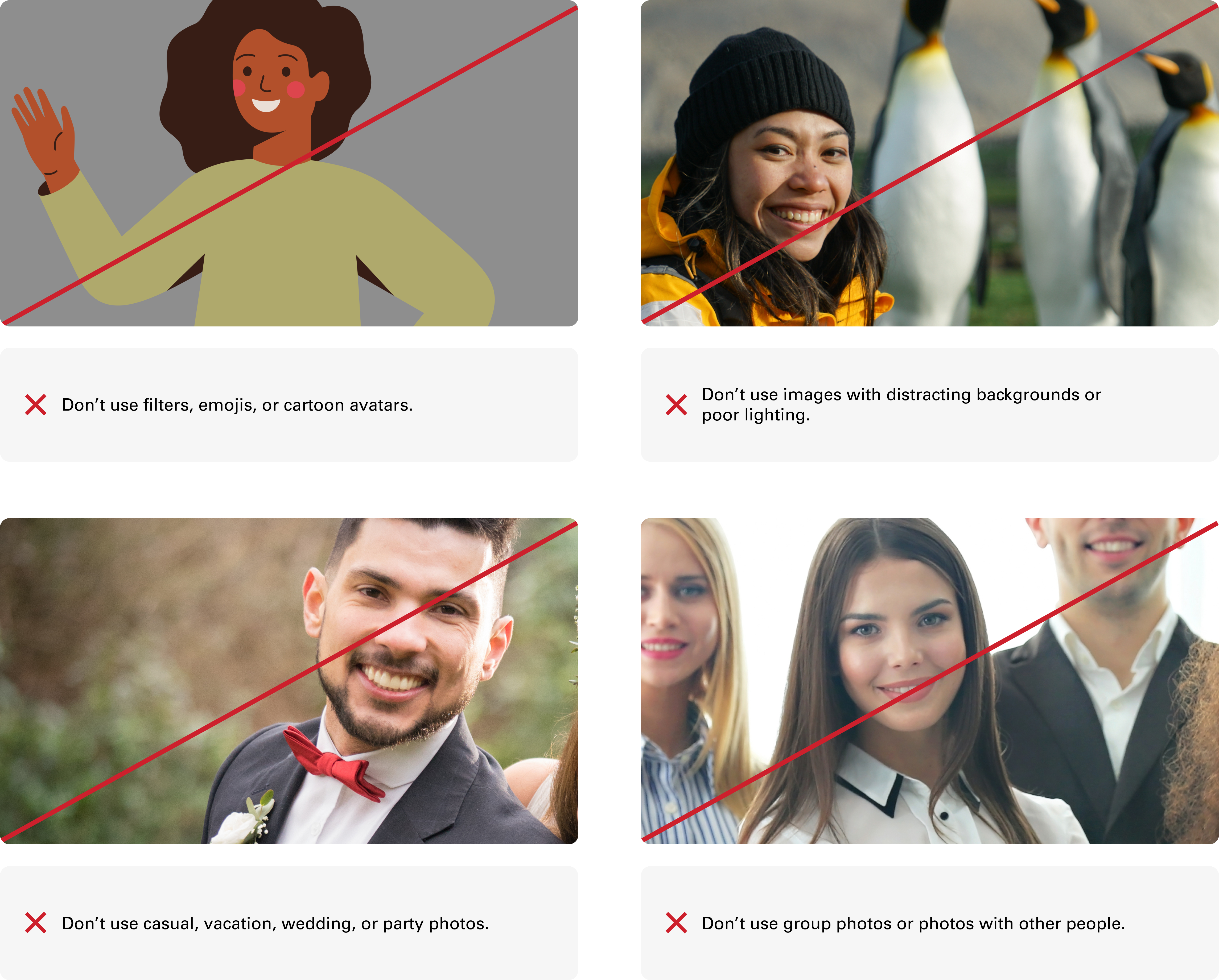
Please use a recent headshot of yourself for your Teams profile photo. You should be facing the camera with a neutral or grey background, dressed appropriately for work. Avoid group photos, filters, logos, or casual settings to maintain a consistent and professional appearance.
Headshot Don’ts
Go to Templates
properly branding apparel.
Uniforms
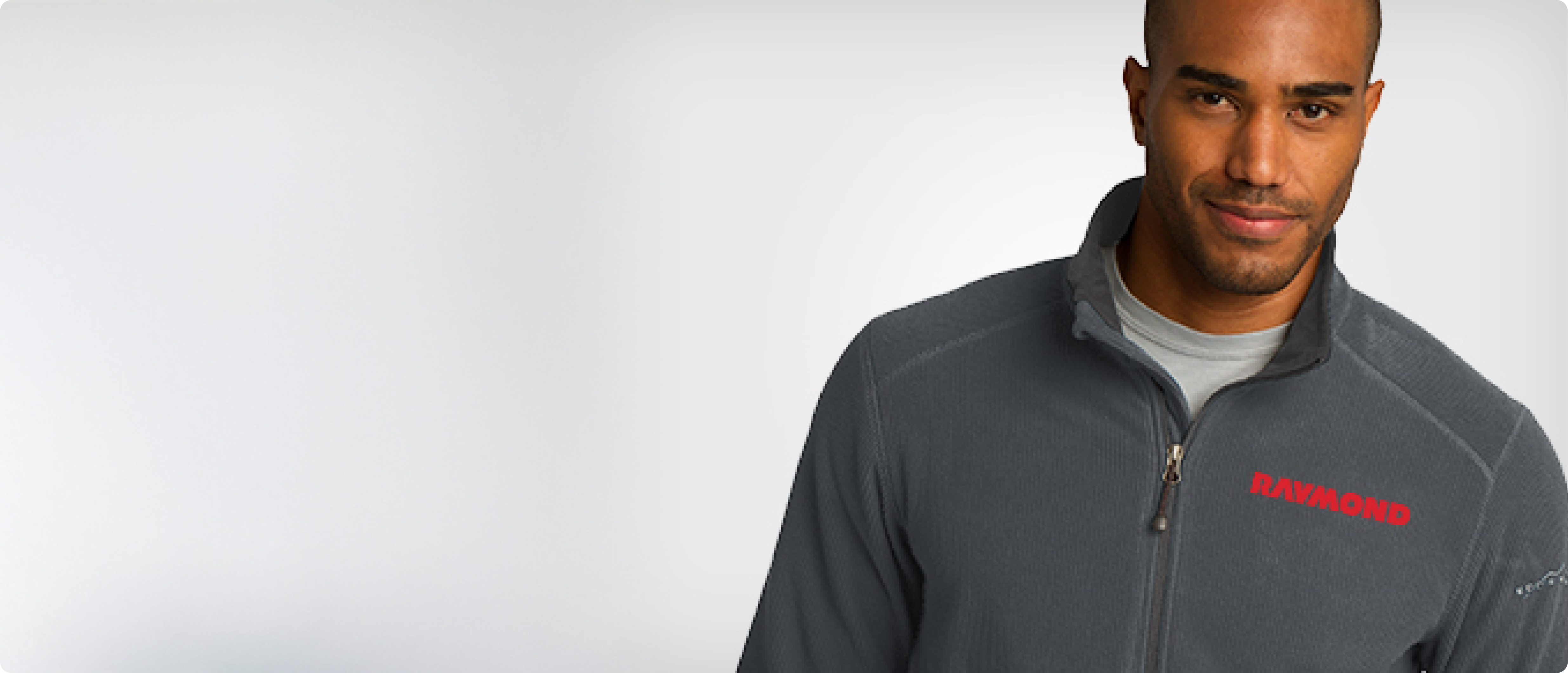
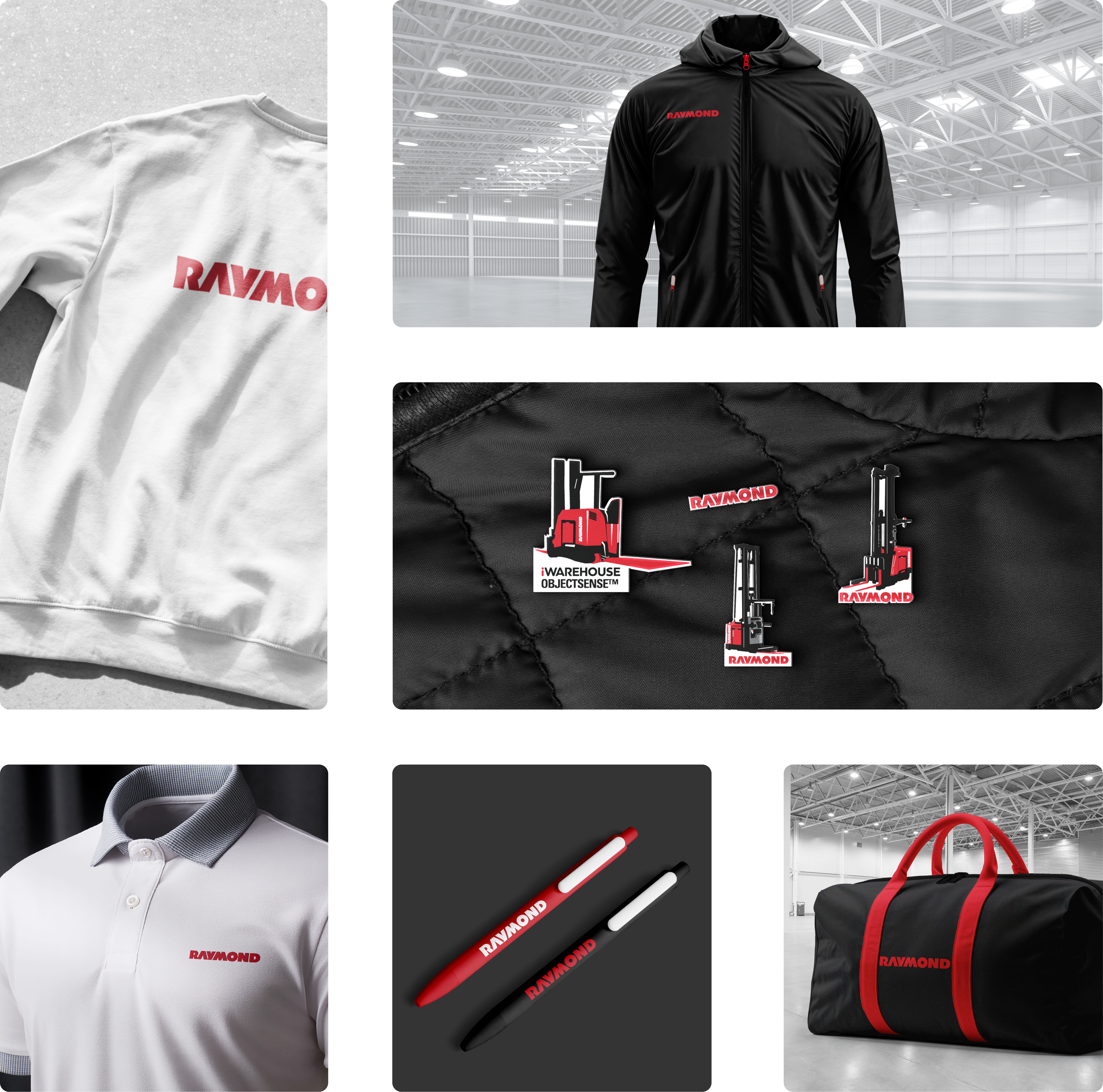
Employee uniforms are an excellent way to reinforce the Raymond brand and ensure a consistent appearance for both employees and customers. Follow the Raymond logo guidelines described previously.
Promotional Items
As a general rule, always use the Raymond logotype and colors whenever practical. Raymond-branded clothing and promotional items should feature the logotype. Any item that bears the Raymond logotype must be of good quality. The logotype may be reproduced using different printing techniques, on fabric, or etched onto the item. Always use approved artwork. Follow all outlined rules for Logos Many items available from the Raymond Store can be customized with additional logos.
Visit Shop
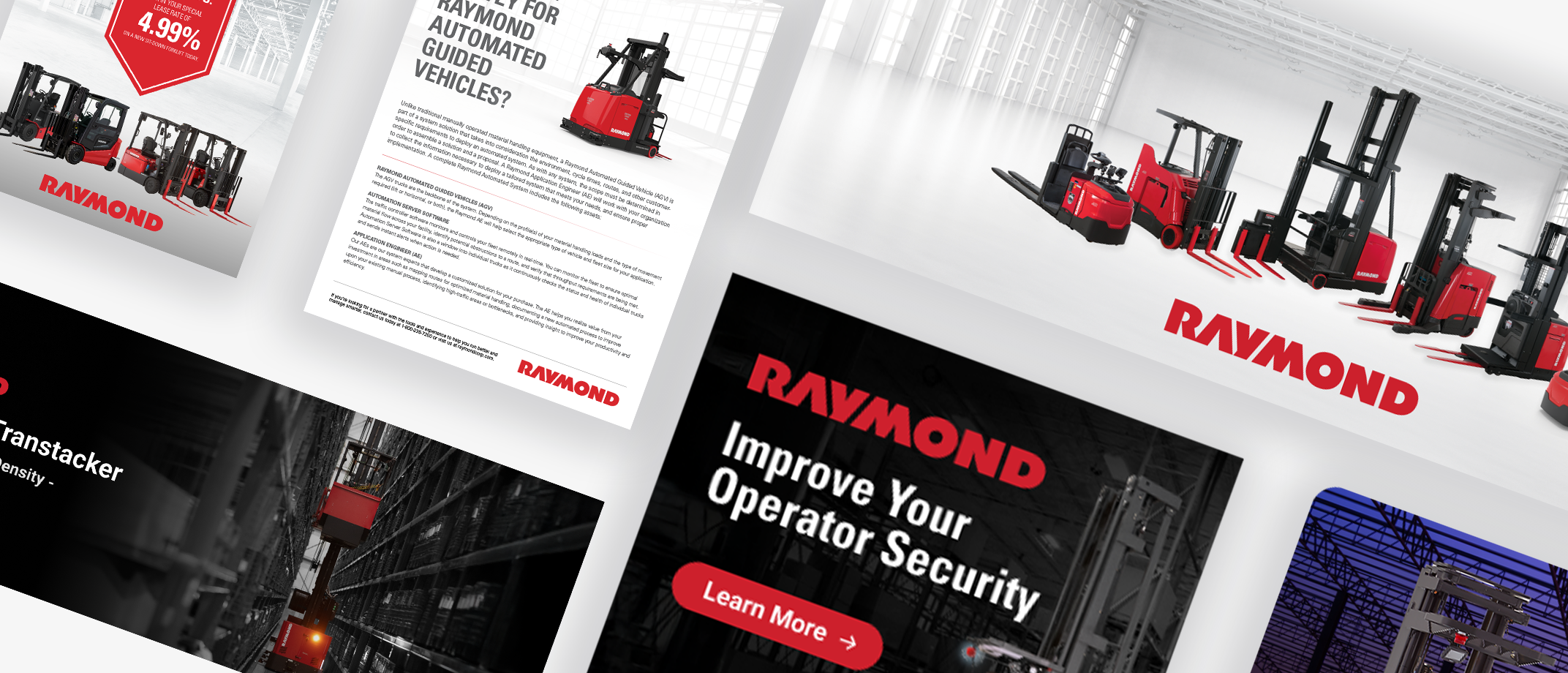
Raymond and its Solutions and Support Centers have undertaken a calibrated branding initiative in an effort to establish a consistent look, feel and style across the enterprise. As such, the Brand Marketing team will continue to publish guidelines and marketing toolkits for the Solutions and Support Centers to help execute and deliver “one” consistent message and platform to customers. Raymond Solutions and Support Centers are expected to adhere to the design standards shared by Corporate and are encouraged to utilize these marketing toolkits throughout the year to support or promote a product or service.
Campaign Deliverables
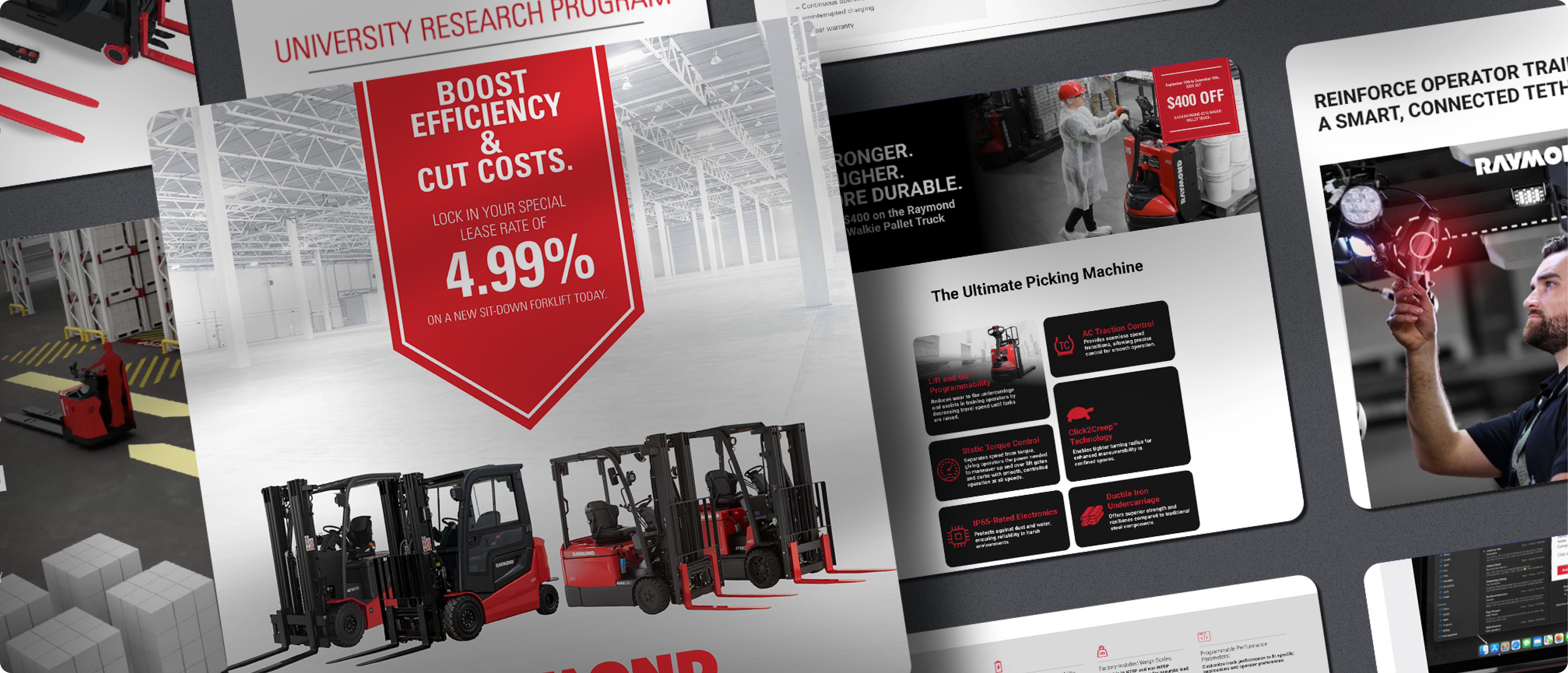
Campaign deliverables will be determined by the Brand Marketing team based on the specific objectives and needs of each initiative. While examples of common deliverables are provided below, they may vary by campaign. All assets must adhere to the approved brand guidelines and reflect the language and visual standards outlined in the branding and marketing strategy.
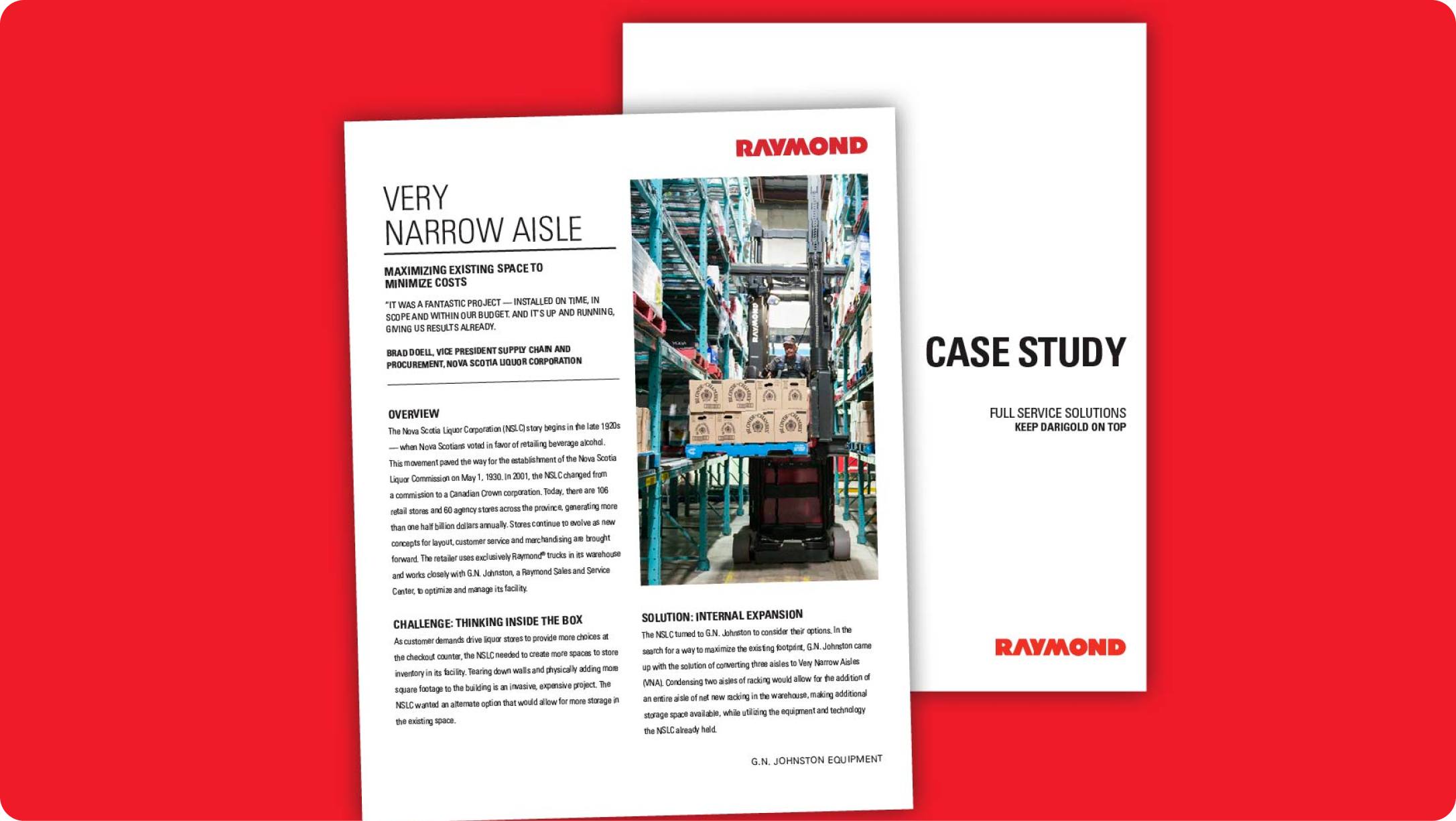
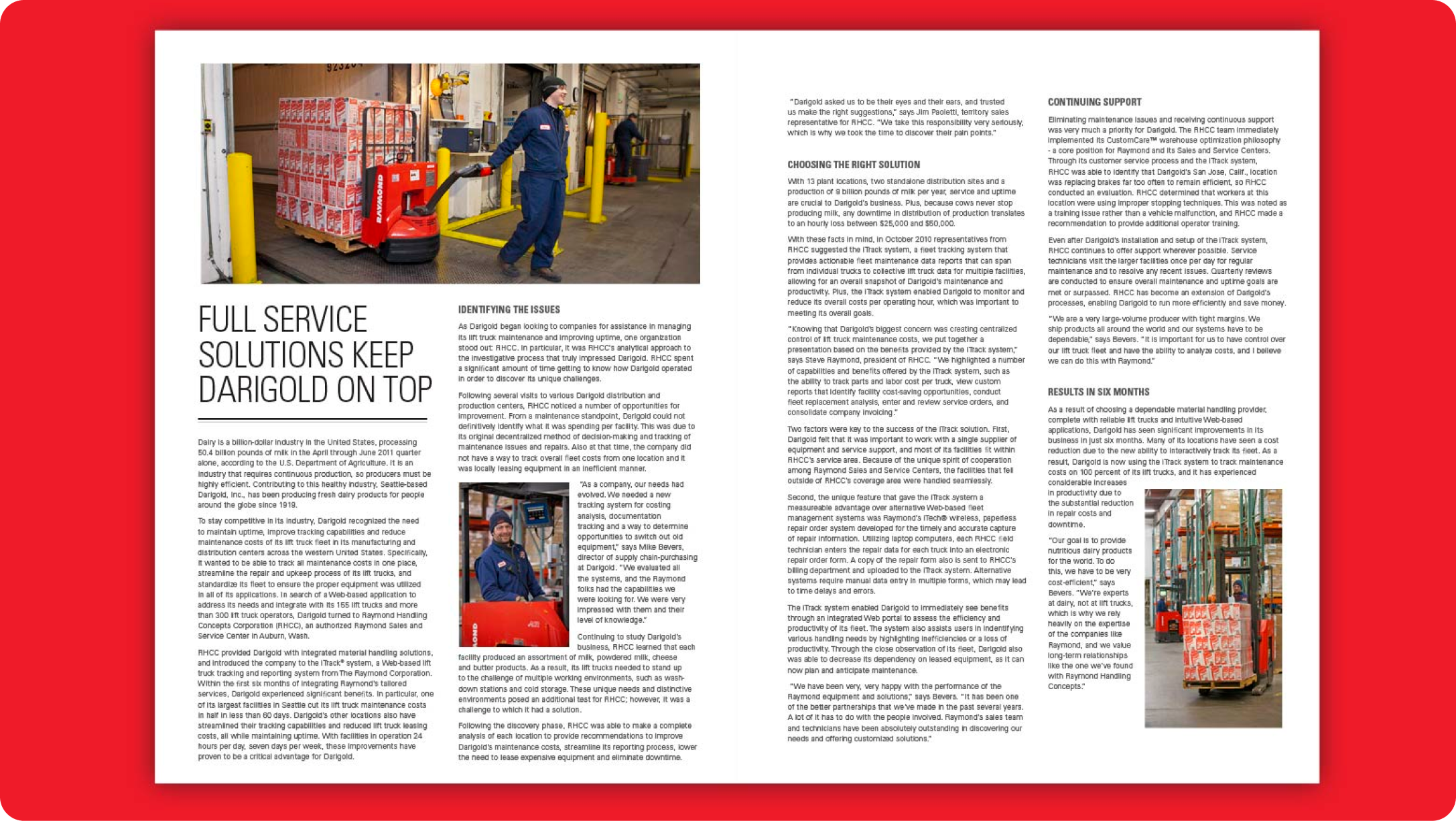
Brand Marketing also works to regularly identify customers for profiling in case study articles, which can be published in trade magazines, posted to websites or used as sales tools. Solutions and Support Centers that wish to suggest Raymond customers for profiling in case study articles should contact Elizabeth Buza to provide details.
Newsletters prepared and distributed by Solutions and Support Centers to their customers should follow branding guidelines. Any questions regarding contact or reference to the Raymond name should be directed to Elizabeth Buza. With regard to any public relations initiatives, please notify Brand Marketing if you plan to reference Raymond. This enables Raymond to properly manage media relationships and accurately track editorial coverage of the company.
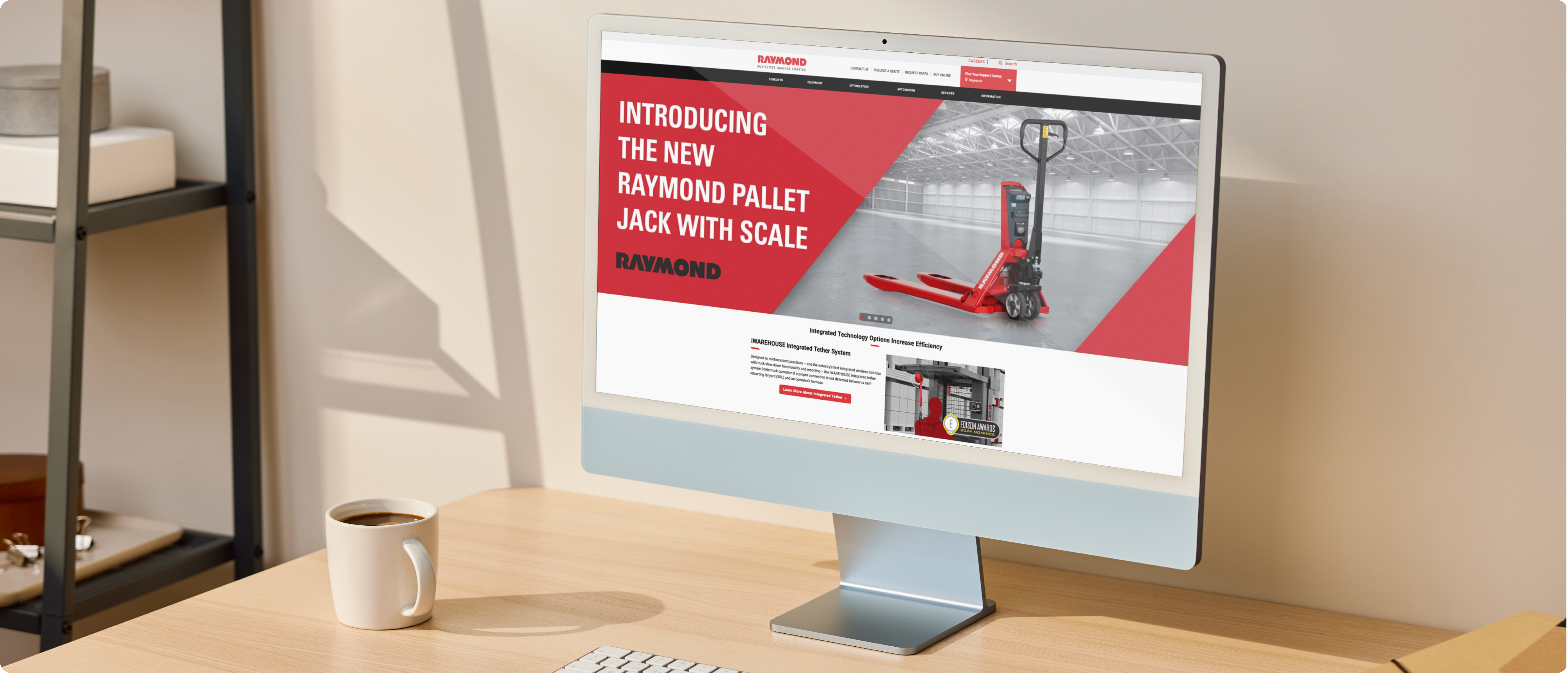
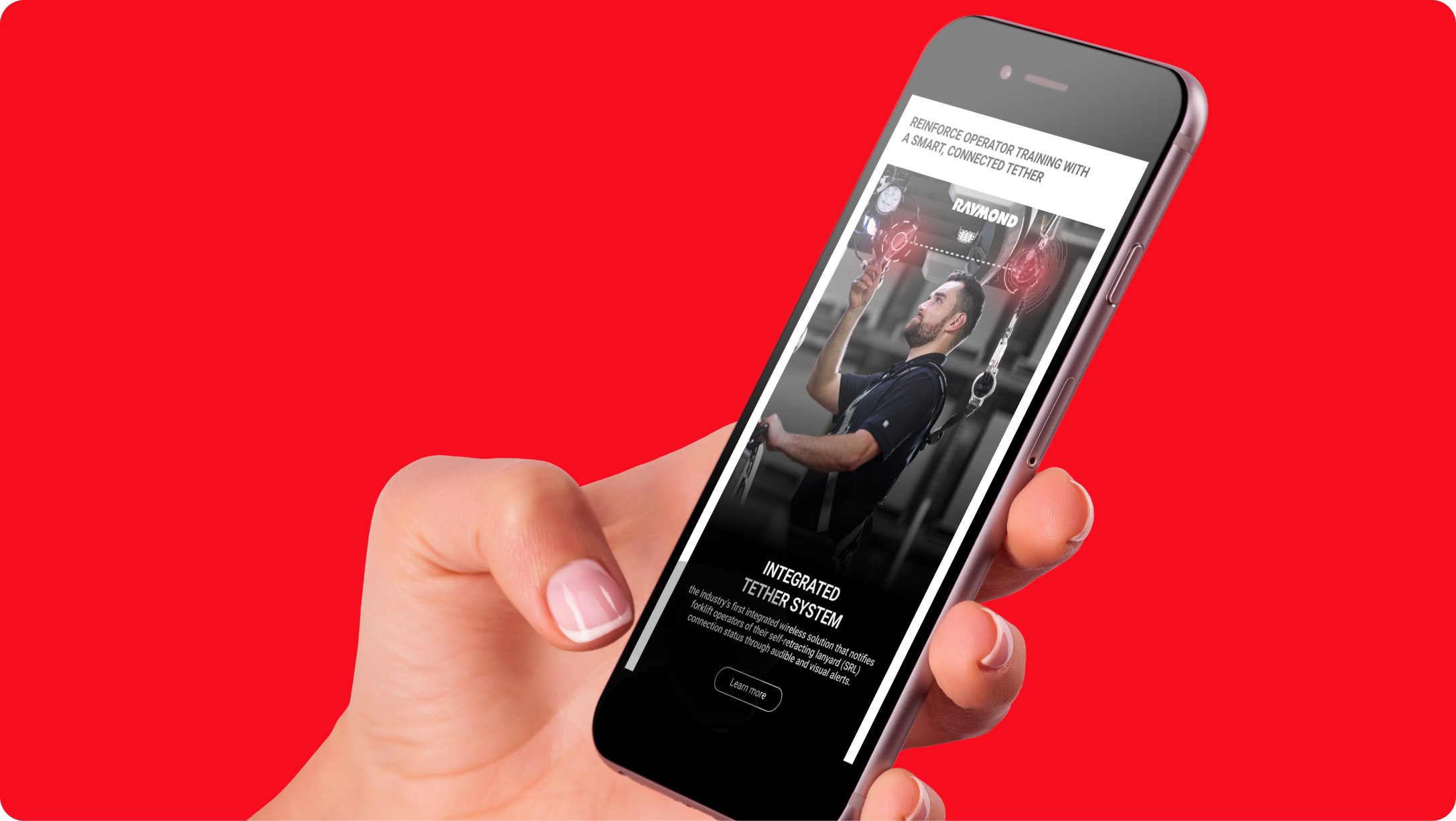
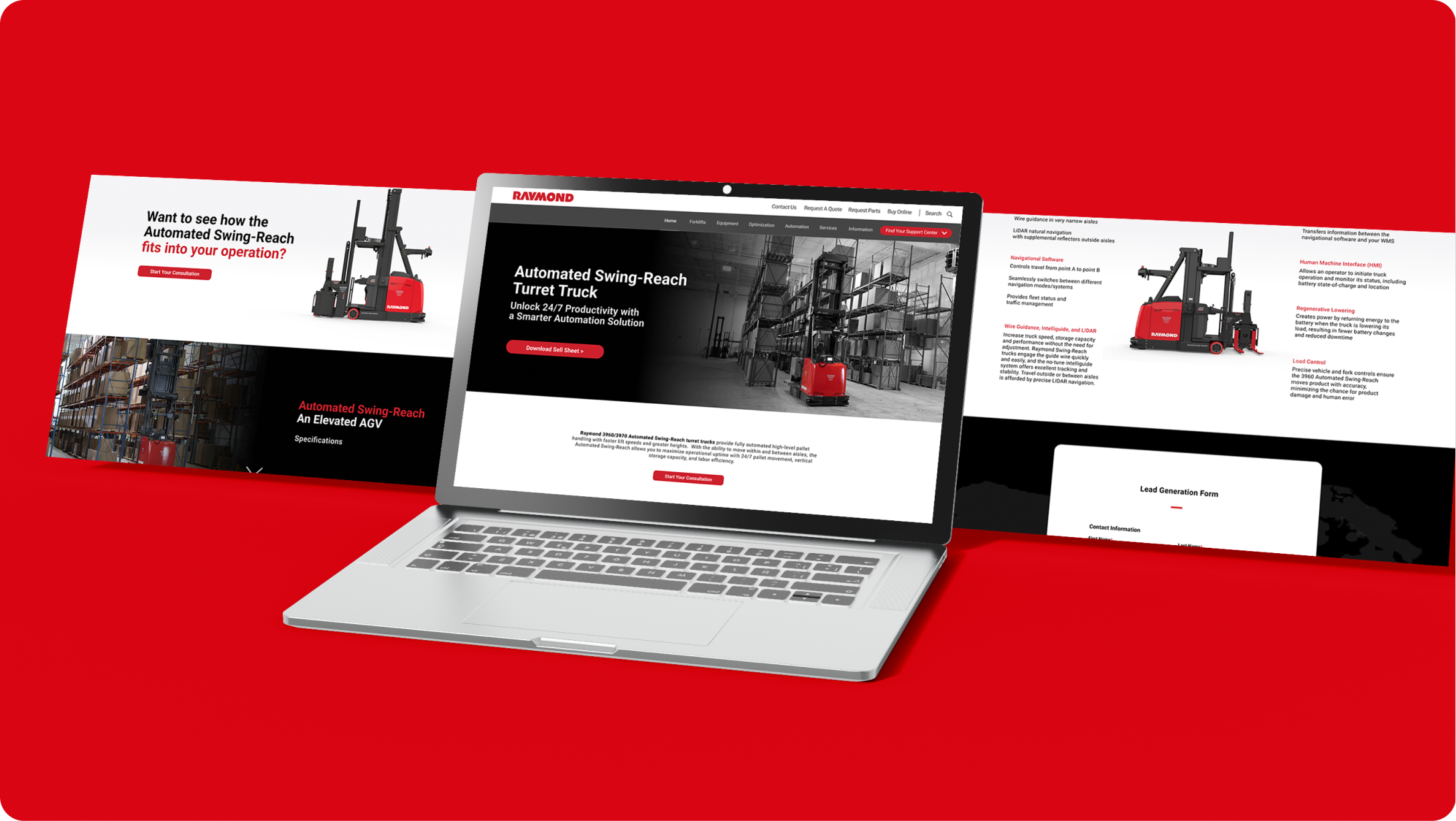
A branded web page designed to support a specific marketing campaign, product, or offer. Landing pages should be visually cohesive with the overall brand, feature clear messaging and calls to action, and be optimized for fast loading and mobile responsiveness.
Landing Page
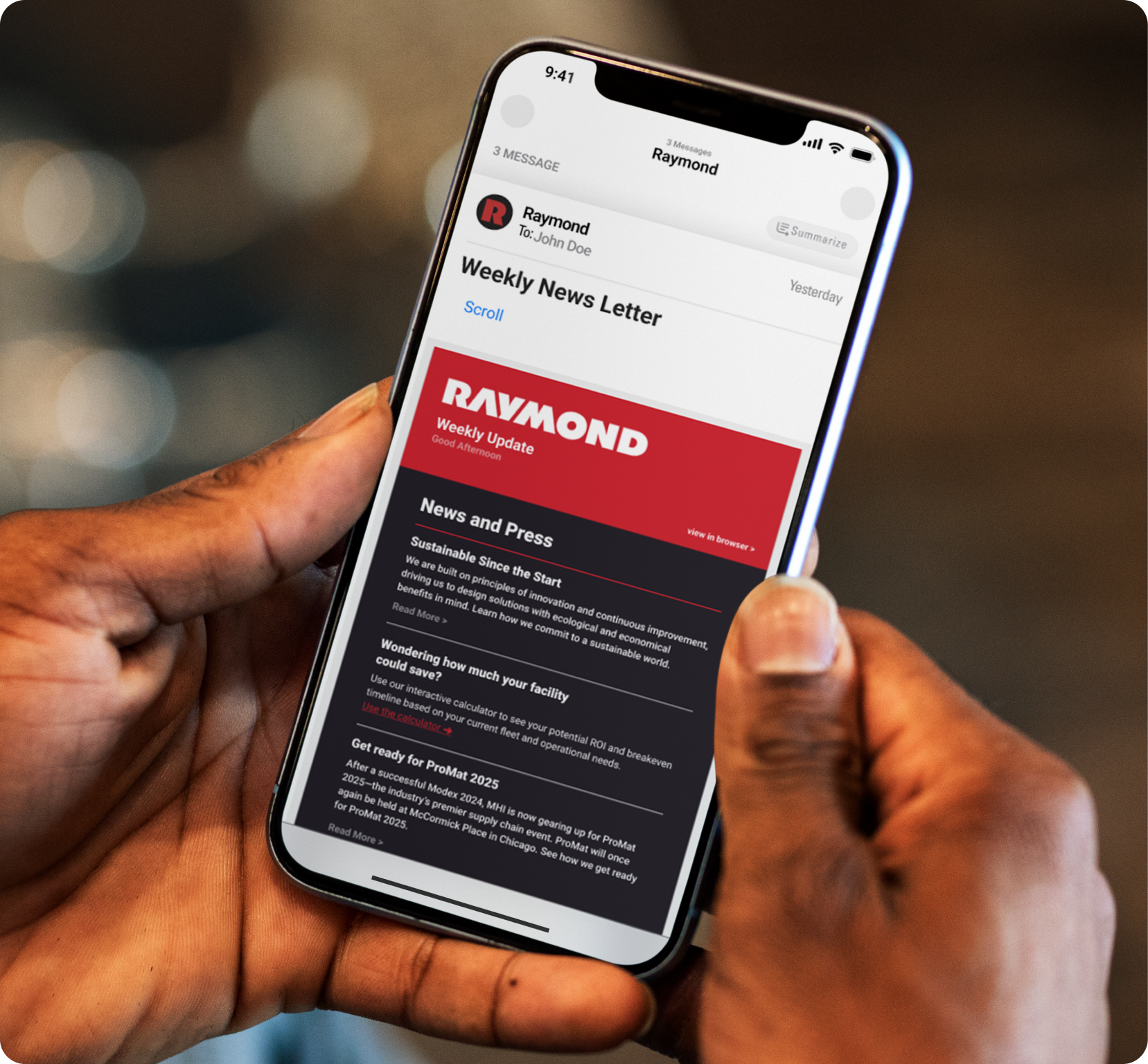
A branded message sent to a targeted audience to share campaign information, updates, or offers. Emails should be concise, visually engaging, and optimized for both desktop and mobile viewing.
Email
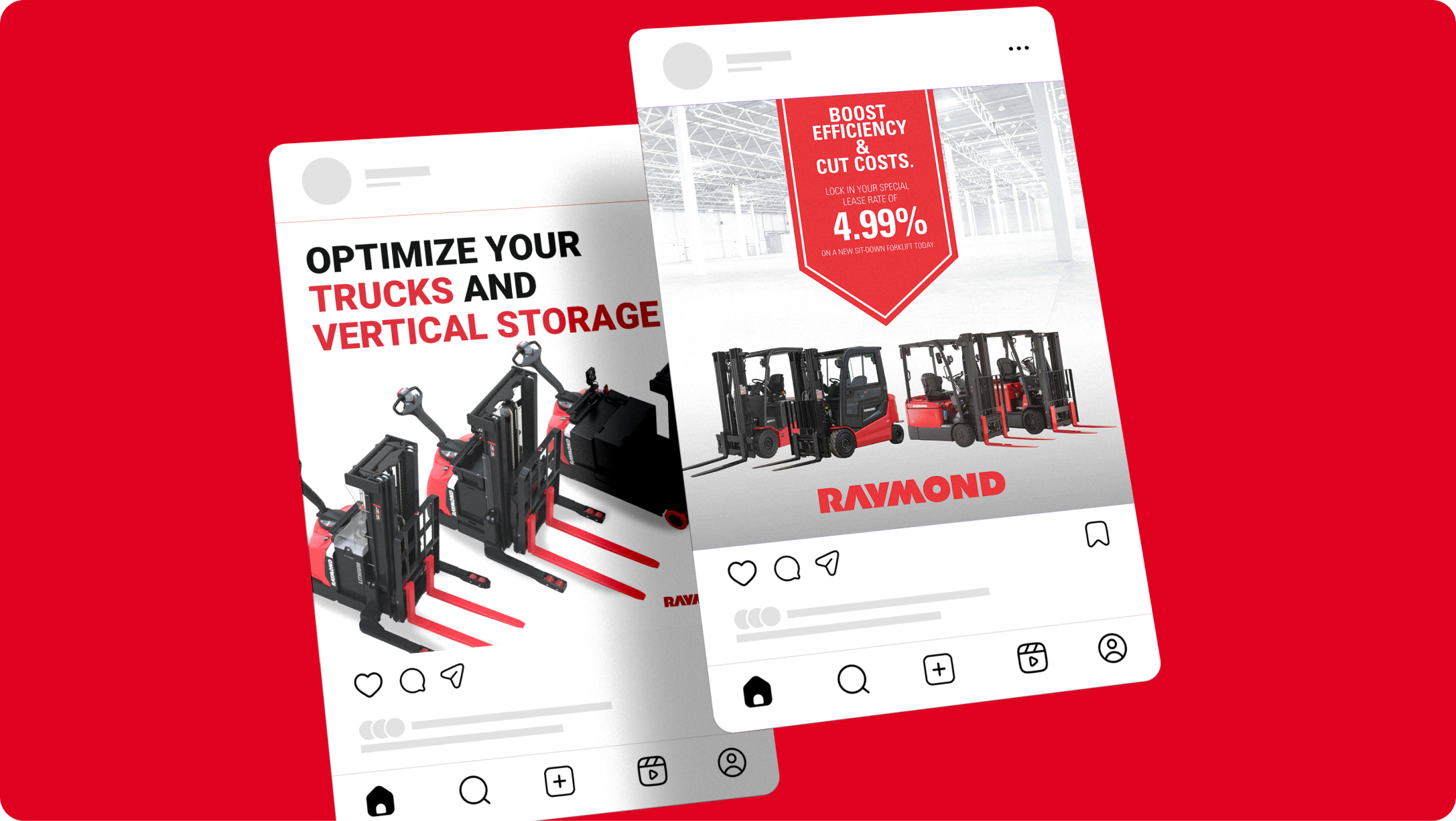
Short, impactful messages created for Raymond’s social media channels. These should be tailored to the platform, use approved imagery or graphics, and reinforce the campaign’s key message.
Social Posts
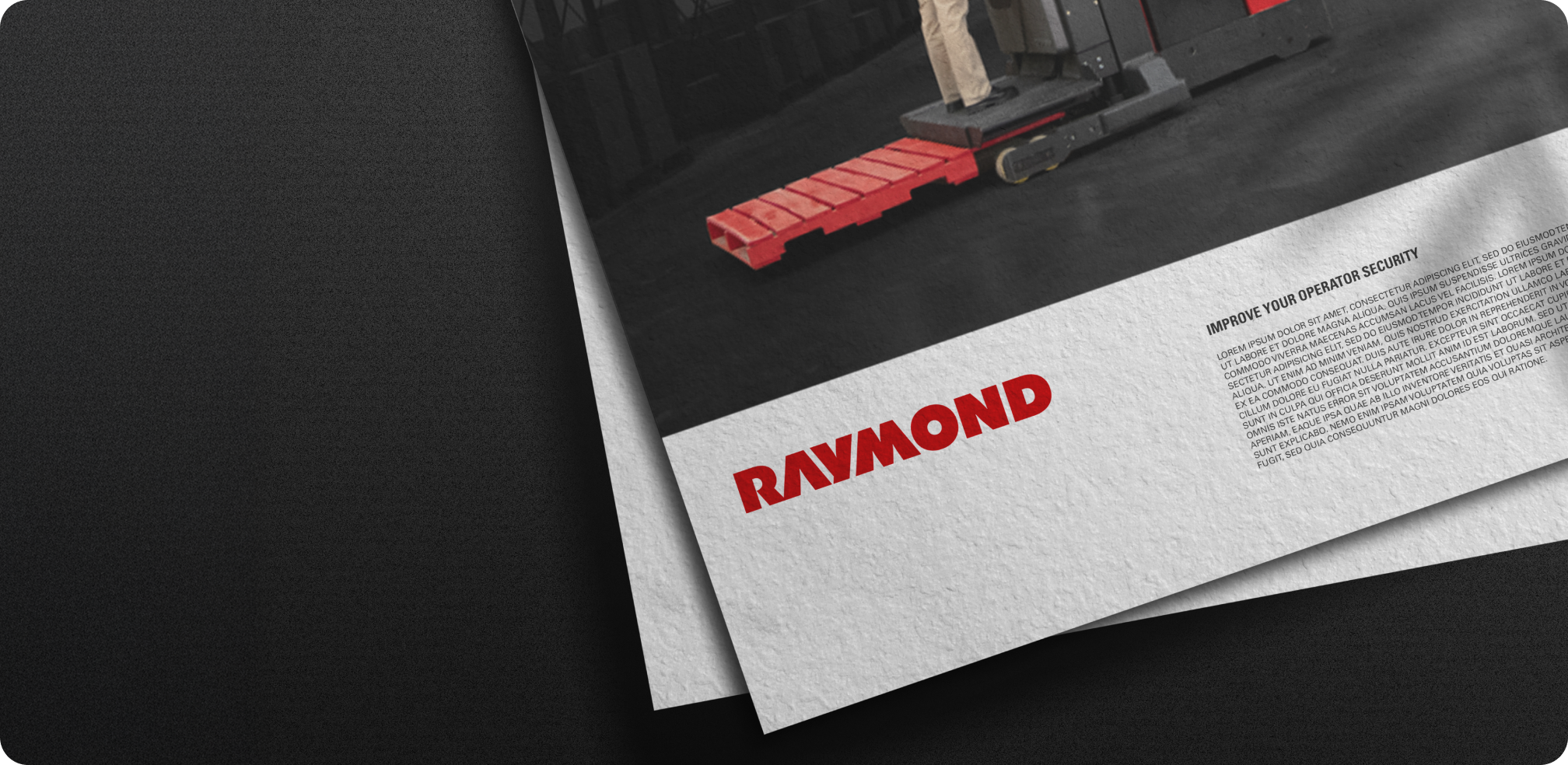
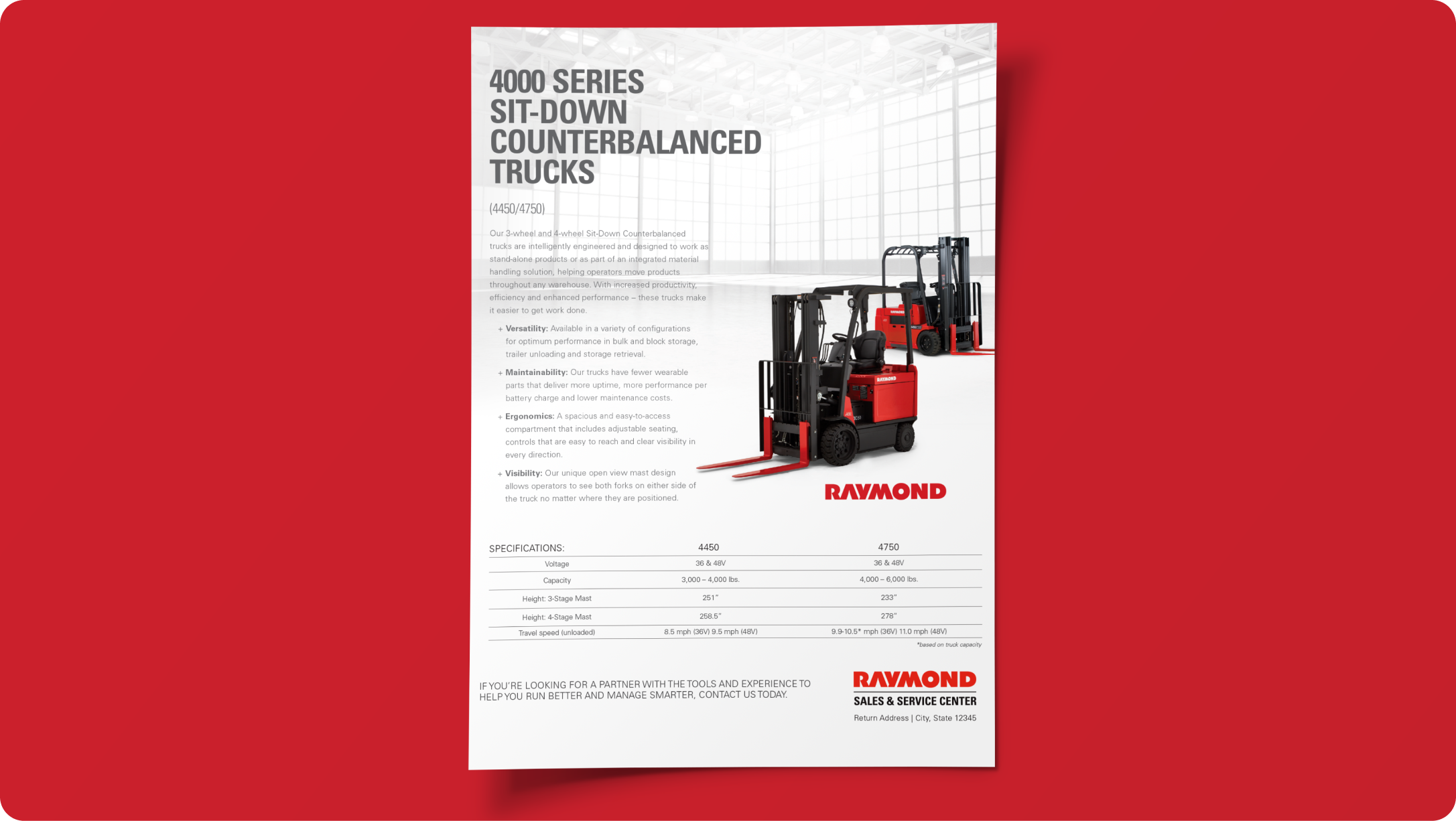
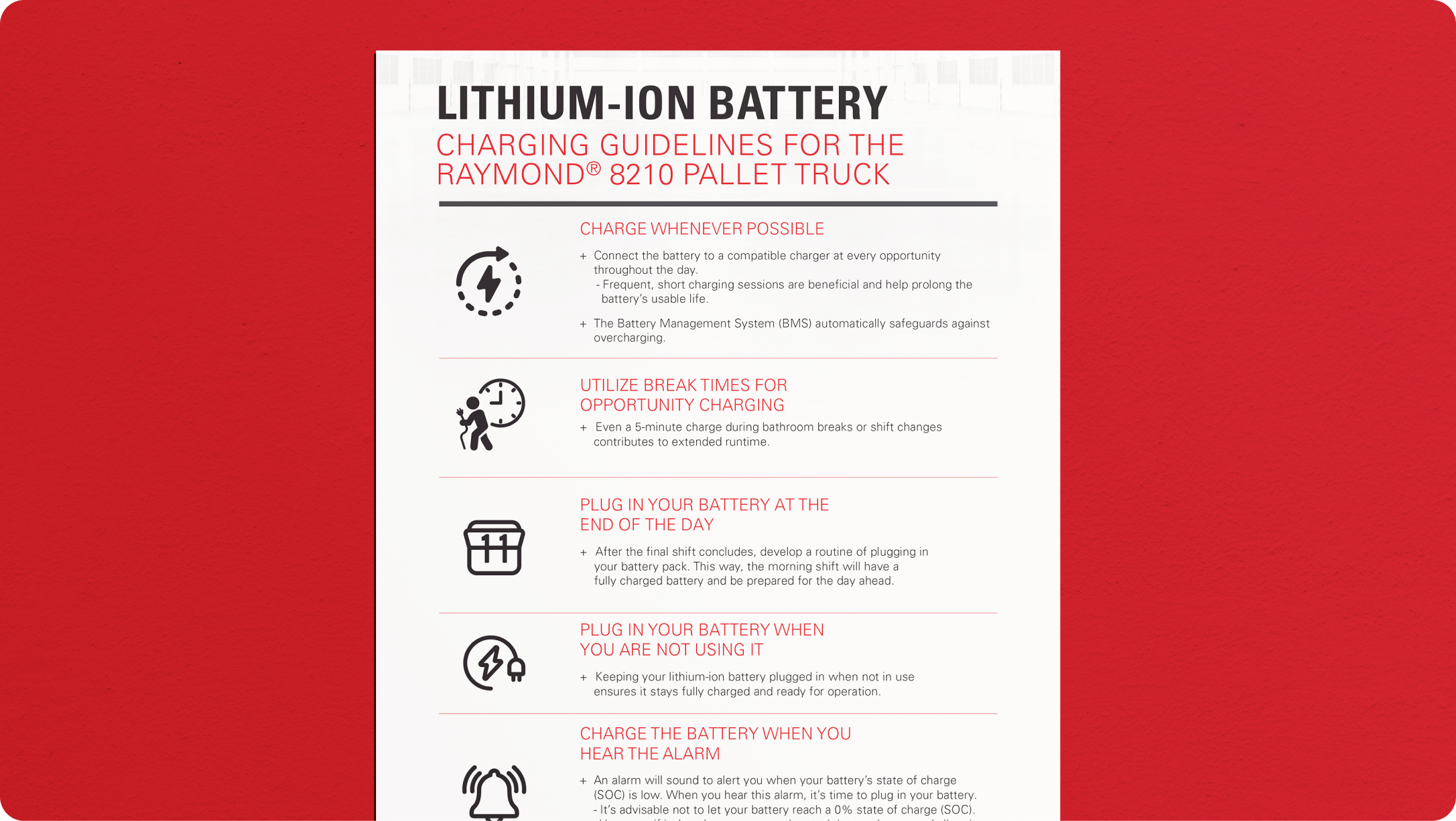
Documents highlighting key features, benefits, and specifications of a product or solution. Designed for quick reference, sell sheets should be visually clean and easy to scan.
Sell Sheets
Branded print or digital materials that provide in-depth information about a product, service, or solution. Brochures should follow the established visual hierarchy and tone, offering both technical and value-driven content.
Brochures
Promotional pieces used for events, product announcements, or campaign awareness. Flyers should grab attention quickly with bold headlines, clear visuals, and concise messaging.
Flyer
Registration & Trademarks
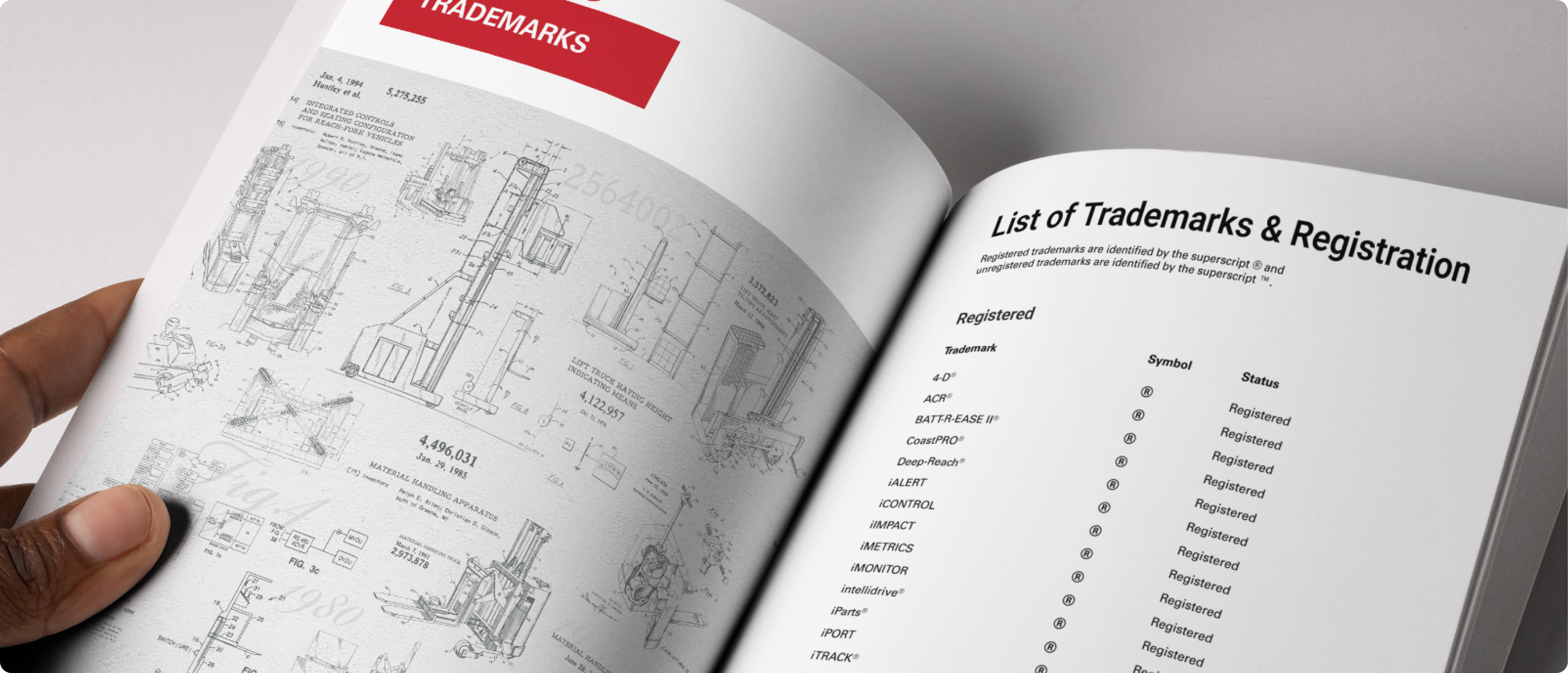
The following product designations are registered and unregistered trademarks of Raymond.
List of Trademarks & Registration
Registered trademarks are identified by the superscript ® and unregistered trademarks are identified by the superscript ™.
Registered
Trademark
Symbol
Status
4-D®
®
ACR®
BATT-R-EASE II®
CoastPRO®
Deep-Reach®
iALERT
iCONTROL
iIMPACT
iMETRICS
iMONITOR
intellidrive®
iParts®
iPORT
iTRACK®
iVERIFY
iWAREHOUSE®
iWAREHOUSE Gateway®
Performance without Compromise
Pro-Fleet
RayBuilt®
Raymond®
Raymond Courier®
Raymond Sales Suite®
Reach-Fork®
Safety On The Move®
SmartSites®
Swing-Reach®
Vantage Point®
ACR System™
™
ALT™
Auto Power Off™
BATT-R-EASE III™
ComfortStance™
DART™
DuraSource™
EASi™
iBATTERY™
intelliguide™
intellispeed™
iTech™
iWAREHOUSE Enterprise™
iWAREHOUSE Essential™
Registered Maintenance Minder™
Raymond Asset Protection™
Ray-DL™
Ray-DL Plus™
Raymond Parts™
Raymond RENEWED™
Run Better. Manage Smarter.
SMARTi™
Steps to Safety™
ThermaKit™
Unregistered
Copyright and Trademark
Overview of Copyright and Trademark.
Copyright
All Raymond press releases and collateral material including, but not limited to, sales manuals, brochures, sell sheets, videos, print ads and so on, must contain the copyright statement, including the year produced or updated (do not put a space between © and the year): ©2025 The Raymond Corporation
Registered trademarks identified by the superscript ® are product designations registered by The Raymond Corporation with the U.S. Patent and Trademark Office. Unregistered trademarks identified by the superscript ™ are product designations of The Raymond Corporation, but are not registered with the U.S. Patent and Trademark Office.
Standards
Standards for using Trademarks
Do not put a space between the last letter of a product name and ™ or ® (e.g., use Swing-Reach® truck).
Do not use a trademarked name in all lowercase letters unless otherwise required in this guide.
Do not italicize a trademarked name unless otherwise required in this guide.
Do not use a trademark as a noun or in the possessive or plural forms. A trademark is to be used as an adjective and must be used with a noun (e.g., use Deep-Reach® truck).
Do not use words similar to the trademark to describe a product, its characteristics or operation. For example, use “a straddle truck with forks that extend the width of two pallets but never use “a straddle truck with deep-reach mechanisms.”
Do not use a trademark twice in the same product name. For example, use “Raymond Swing-Reach® truck,” but never use “Raymond® Swing-Reach® truck.” Use the trademark on the company name the next time it occurs with a product name or references products (e.g., “Raymond® Swing-Reach truck,” or Raymond® 5000 Series).
Certain product names are not trademarks because they describe a generic class of equipment. The generic names Raymond uses include orderpicker, sideloader, straddle, turret and walkie.
One may use the possessive of Raymond (e.g., Raymond’s) when referring to the company, its employees, its factories or its products. Do not, however, use the plural “Raymonds” to refer to generic products (e.g., a new fleet of Raymonds).
The first time a trademark of The Raymond Corporation appears in a document, whether in printed or electronic form, it must be followed by a superscript ®, ™ or an asterisk (*) as appropriate, leading to a footnote at the bottom of the page reading: “… is a U.S. trademark of The Raymond Corporation.” For each subsequent use on the same page and on following pages, the trademark must appear distinctively. In press releases, a trademark statement is included on the last page after the boilerplate copy.
Registered and unregistered trademarks must always appear distinctively in all forms of publication. Bold print or ALL UPPERCASE may be used depending on the trademark.
Always refer to the trademark list to verify usage. Never italicize the symbols ™ or ®.
A registered trademark, when used, must include all punctuation, such as hyphens and periods, that is part of the mark as registered (e.g., Run Better. Manage Smarter.®).
Unregistered trademarks and trademarks for which registration is under way but not complete should never be followed by a superscript ®.
Trademarks that are not owned by Raymond but are utilized in advertising, collateral, public relations or other initiatives should be properly referenced. It is the writer’s responsibility to identify and reference these trademarks (e.g., ShockWatch® is a registered trademark of ShockWatch, Inc.; Smoothy® is a registered trademark of Stellana U.S. Inc.).